 Health
  Find a
  Book an
 Viral Infections: Types, Symptoms, Effects, and Treatment
March 12, 2026
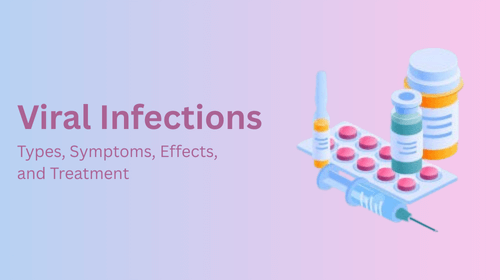
A viral infection is the rapid growth of a harmful virus. Virus infection may be a rapid growth of a dangerous virus inside your body. Viruses cannot procreate without the help of a host. Viruses invade cells by inserting their genetic material and taking over the cell’s machinery to produce additional virus particles. Like those that cause chickenpox and cold sores, certain viruses could also be inactive or “latent” after the initial infection. For example, a cold sore may appear and then eventually heal. The virus that causes cold sores stays dormant within your cells. Later, a trigger like stress, sunlight, or something else, may reactivate the virus and result in new symptoms. Then, the virus makes more copies of itself, releases new virus particles, and kills more host cells.
How Does Viral Infection Affect the Human Body?
Viruses can be named hijackers as they attack healthy, living cells to produce multiple copies of themselves. These small, irresistible, organic entities need a living cell for reproduction. Consequently, they enter the host cell and release their DNA or RNA inside it. This DNA or RNA contains the information required to replicate the virus. The intriguing thing about viruses is that they are profoundly unique microorganisms since they can’t replicate without a host cell. Along these lines, after entering the host cell, the hereditary virus material takes over the host cell and urges it to replicate the virus.
Kinds of Viruses
There are many kinds of viruses.
- Gastrointestinal viruses
- Airway viruses are the most common ones that cause fatigue and fever. Other viruses cause other local symptoms such as laryngitis, shingles, and cold sores.
What are the Common Symptoms of Viral Infection?
- High Fever
- Tiredness or Fatigue
- Headache
- Diarrhoea
- Sore throat
- Abdominal Pain
- Coughing
- Runny nose
- Skin rash
- Nausea and vomiting
- Muscle ache
- Chills
- Stiffness in the neck
- Seizures
- Loss of sensation
- Impaired bladder
- Impaired bowel function
- Paralysis of limbs
- Sleepiness
- Confusion
If the symptoms are low or mild, waiting for a few days is advisable, as most of them disappear independently. This is due to the activation of the body’s mechanism that destroys the virus and makes the symptoms vanish.
Viral Skin Infections
- Pityriasis rosea causes pale red, oval-shaped patches that appear across most of the body, excluding the face and head. It often begins with a larger oval patch on the chest or abdomen, followed by the appearance of many smaller patches.
- Similarly, even though it looks terrible, one can’t feel it with the measles rash.
- Hand, foot, and mouth disease leads to small bumps appearing on the palms, soles, and inside the mouth.
- Chickenpox causes small, itchy spots to appear across the body. They are sore and itchy. They are almost always found on your stomach and chest. If the spots are only on your arms and legs and not on your abdomen, it is likely not chickenpox.
- Cold sores cause an itchy, tingly spot just on the edge of your lip.
- Molluscum contagiosum gives you small spots, usually clustered on your arm or leg, rather than over your body. Sometimes they get infected and feel a bit sore, but this is unusual.
- Herpes simplex gives you tiny red spots, which are painful, more than itchy.
- Orf causes quite a big bump, usually on your finger.
Types of Eye Infections
- Conjunctivitis/pink eyes
- Keratitis
- Endophthalmitis
- Blepharitis
- Sty
- Uveitis
- Cellulitis
- Ocular Herpes
Viral Infection in the Mouth
- Dental Cavities
- Gingivitis
- Periodontal disease
- Thrush
- Herpangina
- Canker sores
- Oral Herpes
Diagnosis
Doctors diagnose viral infections by first asking about your symptoms and medical history. They may ask when the symptoms started, how they have changed, and whether you were recently exposed to someone who was sick.
Next, the doctor may perform a physical examination. They check signs such as fever, throat irritation, skin rashes, or breathing problems to understand the condition better.
In many cases, doctors can identify a viral infection based on symptoms and the time of year, such as during flu season.
To confirm the infection, the doctor may order laboratory tests. These tests may include samples of blood, saliva, mucus, or a swab from the nose or throat. Special tests can detect the virus itself or look for antibodies that show the body is fighting a viral infection.
If the infection seems serious or affects internal organs, the doctor may recommend imaging tests such as X-rays, CT scans, or MRI scans. These tests help doctors see how the virus is affecting the body.
Early diagnosis helps doctors provide the right care and monitor the illness properly.
Treatment
The discovery of antibiotics to combat bacterial infections is recognized as a key advancement in the history of medicine. But unfortunately, bacteria are very adaptable, and therefore, the overuse of antibiotics has made many of them immune to antibiotics. This has created severe problems, especially in hospital settings.
Antibiotics aren’t effective against viruses, and lots of leading organisations now recommend against using antibiotics unless there’s clear evidence of a bacterial infection.
Since the start of the 20th century, vaccines have been developed. Vaccines have drastically reduced the number of recent cases of viral diseases like polio, measles, and chickenpox. Vaccines also help protect against infections like influenza, hepatitis A and B, HPV, and several other viral diseases.
Can Antivirals Cure Viral Infections?
Antiviral drugs can help relieve symptoms and decrease the length of viral illnesses like influenza and Ebola. They will rid your body of those viruses.
Infections such as HIV, hepatitis, and herpes are long-lasting and chronic. Antivirals can’t prevent the virus, which stays in your body. However, antiviral medicines can make the virus latent (inactive) so that you have few symptoms. Symptoms that develop while taking antivirals could also be less severe or get better faster.
Managing viral infections is particularly difficult since viruses are tiny and reproduce inside living cells. As a result, antiviral medications became available for a few viral diseases, like herpes simplex virus infections, HIV/AIDS, and influenza. But the utilisation of antiviral drugs has been related to the development of drug-resistant microbes.
Prevention
Preventing viral infections involves a combination of vaccination, hygiene, and safe practices:
- Vaccination: Stay up to date with recommended vaccines, including those for flu, COVID-19, hepatitis A and B, HPV, measles, mumps, rubella, chickenpox, polio, rotavirus, rabies, and shingles.
- Hand hygiene: Clean your hands frequently using soap and water, or an alcohol-based hand sanitizer.
- Respiratory etiquette: When coughing or sneezing, block the release of droplets by covering your mouth and nose with a tissue or your elbow.
- Avoid contact when sick: Stay home to prevent spreading viruses to others.
- Personal items: Do not share towels, utensils, or other personal belongings.
- Masks and ventilation: Wear masks in crowded or shared spaces and ensure good airflow indoors.
- Food safety: Store and cook food properly, and wash or peel fruits and vegetables.
- Protection from bites and animals: Use insect repellent, wear protective clothing, and avoid contact with wild or aggressive animals.
- Safe sexual practices: Use condoms or dental dams.
- Post-exposure prophylaxis: Seek immediate medical care if exposed to viruses like rabies, HIV, hepatitis B, or chickenpox.
Frequently Asked Questions
1. How long does a viral infection last?
Usually, healthy people get over a cold in 7 to 10 days. Flu symptoms, including fever, should disappear after about five days, but you may still have a cough and feel weak for a few days longer.
2. Are viral infections contagious?
Yes, viral infections are generally contagious. They can spread from person to person through coughing, sneezing, close contact, or touching contaminated surfaces, and some viruses may still be spread even after symptoms have resolved.