 Health
  Find a
  Book an
Paediatric Liver Transplantation
It has been nine years since the inception of Paediatric Liver Transplantation Program at Chennai by Prof. Rela and his team, and over these years, what it garnered is beaming smiles on tender faces and trust of numerous parents. With the increasing need for intensive care beds, Prof. Rela and his team moved to a brand new facility. Dr Rela Hospital, which hosts one of the largest Liver intensive care units in the world.
With more than sixty Paediatric transplants per year, it is the largest Paediatric Liver Transplant Centre in South Asia. So far, more than 300 children have undergone liver transplantation in our centre. But 300 is not just a number; it is the quantum of hope that has been instilled in these children and their loving families, the hope of a better life and a brighter future.
The Liver Transplant program at Dr Rela Hospital is spearheaded by Prof Mohamed Rela, World Renowned Transplant Surgeon, who performed a successful Liver Transplant on a 5-day-old child, which earned him a place in the Guinness Book of World Records in 2000. With over 25 years of experience and 3000 Liver transplants, he is considered a true pioneer and an authority in this challenging field of surgery. Top Master’s in Healthcare Administration recognised him as one of the 20 most innovative Paediatric Surgeons Alive. He is an academic powerhouse and has published over 500 original articles and reviews in the subject of liver transplantation & HPB in international peer-reviewed journals & 19 book chapters, including a chapter in the prestigious “Grey’s Anatomy”. He is the first clinician of Indian origin who is the Chairman of the Paediatric Committee in the International Liver Transplantation Society (ILTS) and also a council member of the Living Donor Liver Transplantation Study Group.
Dr Rela Hospital, an International medical facility, is a quaternary care hospital dedicated to fostering and responding to the needs of a diverse patient population. The hospital provides the highest quality healthcare in India, as well as access to cutting-edge technology and experienced, caring medical professionals. The hospital is committed to being an internationally significant health care system with state-of-the-art infrastructure facilities.
Rela Hospital is designed to provide highly specialised care in all specialities with special focus on care of the critically ill and multi-organ transplantation patients. Established under the formidable leadership of Prof. Mohamed Rela, a World-renowned Surgeon in the field of Liver Surgery and Transplantation, this hospital houses one of the World’s Largest Dedicated Liver Intensive Care Units. In addition to the quality of the quaternary care in all specialities, the hospital is committed to providing day-to-day primary and secondary care to the local population on par with international standards, which may be even a notch higher.
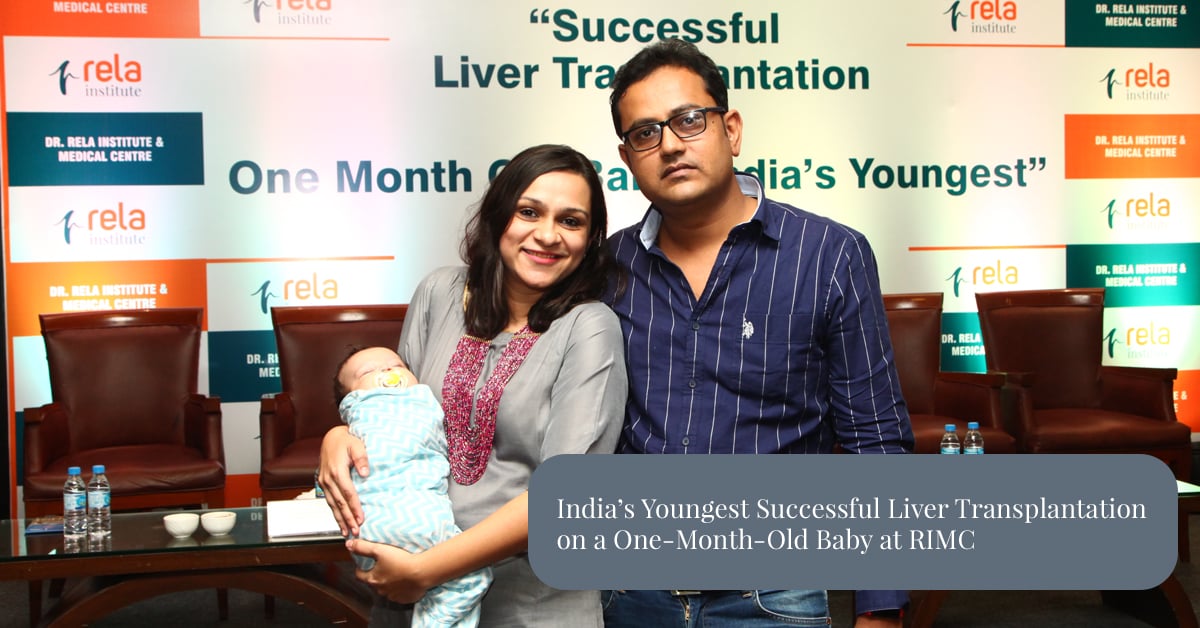
Rela Hospital, one of the finest liver hospitals in Chennai, has the best paediatric liver transplantation program in India for treatment of children with advanced liver diseases and other metabolic diseases / conditions that require an immediate liver transplantation. Rela Hospital offers the most advanced treatments in a multidisciplinary approach.
Headed by none other than Prof. Mohamed Rela, who has been voted among the 20 Most Innovative Paediatric Surgeons Alive Today; the Liver Transplantation Centre at Rela Hospital in Chennai is the most sought after Paediatric Liver Transplant Centre in India, and in fact in the world.
We care for every child’s health, because we believe that every child deserves a better quality and healthy life. Every child matters!
Call us today, we are here to help you!
A pediatric liver transplant is a life-saving surgery in which a child receives a healthy liver (or part of one) from a donor. Because the liver can regenerate, children often receive a segment from a living adult donor or a whole liver from a deceased donor. This procedure is typically recommended when a child’s liver can no longer function well enough to support their growth, development, and overall health.
Why Would a Child Need a Liver Transplant?
Doctors may consider a liver transplant for several reasons, most commonly:
- Biliary Atresia: A condition where bile ducts are blocked or missing, leading to liver damage in infancy.
- Metabolic or Genetic Disorders: Conditions that interfere with how the liver processes nutrients or toxins.
- Acute Liver Failure: A rapid and serious decline in liver function, usually caused by infections or unexpected complications.
- Chronic Liver Disease and Cirrhosis: Long-term conditions that cause scarring and reduced liver performance.
- Liver Tumors: When surgery alone cannot remove the tumor safely.
The goal is always the same: to give the child a chance to grow, thrive, and live a healthier life.
Types of Paediatric Liver Transplantation
Live-related donor
Cadaver Transplant (Split liver transplant)
Combined liver-kidney transplant
Auxiliary liver transplant
Monosegmental Liver Transplant ( for Babies less than 5 KG)
Preparing for a Pediatric Liver Transplant Surgery
Preparing for transplant surgery is a team effort involving the child’s family, medical specialists, and support services. Preparation usually includes:
- Comprehensive medical evaluations to assess the child’s overall health.
- Diagnostic tests such as bloodwork, imaging scans, and heart or lung assessments.
- Nutritional support is necessary because many children with liver disease have difficulty gaining weight.
- Emotional and psychological preparation helps both the child and family understand the process.
- Education sessions that explain what to expect before, during, and after surgery.
- Families are encouraged to ask questions, participate actively, and build a strong partnership with their care team.
Where Will the New Liver Come From?
When a child is scheduled for a liver transplant, one of the first questions families ask is:
“Where will the donor liver come from?” There are two main possibilities:
- Deceased-donor liver: In this scenario, the child receives a liver (or part of one) from someone who has passed away and whose organs were donated. In many cases, the entire liver from a deceased donor is transplanted into the child, or a portion may be used if size and anatomy require it.
- Living-donor liver: A living person often a close family member may donate part of their healthy liver. That portion can be transplanted into the child, while the donor’s remaining liver regenerates and grows. This option can shorten the wait time and align more closely with the child’s size or growth needs. The transplant team evaluates many factors to determine which route is most suitable: the child’s size, the urgency of the transplant, donor compatibility (including blood type and
size), and overall medical condition. Families are encouraged to ask about both donor paths, how they work, and how the centre manages each process.
Process
The Liver Transplantation Process at Rela Hospital
The patient and the family would be seen and counselled by a multidisciplinary team consisting of a Paediatric hepatologist, a transplant surgeon, an anaesthetist and a transplant coordinator.
Recipient evaluation consists of a blood test, a CT scan of the liver, an echocardiogram and a specialist consult (if needed). Donor should be between 18 and 50 years of age with a BMI<30 and no co-morbid illness like diabetes, hypertension, etc. The donor would undergo blood test, CT & MRI scan of liver and would be seen by specialists like cardiologist, pulmonologist, etc. to make sure they do not have any co-morbid illness. Once the evaluation is completed, the donor and recipient will be discussed in a multidisciplinary transplant meeting, and then clearance will be given. Some cases might require special clearance from the Government. Once the whole process is complete, the patient could be posted for liver transplant.
Recovery and Rehabilitation
After surgery, the child is monitored in an intensive care unit to ensure the new liver functions properly. Early recovery focuses on:
- Stabilizing vital signs
- Preventing infection
- Managing pain
- Starting medications to protect the new liver
As the child improves, they transition to a regular hospital room. Rehabilitation includes gentle physical activity, nutrition support, and learning about long-term care routines. Most children begin feeling stronger within weeks, though full recovery can take several months.
What Happens After My Child’s Surgery?
Once the transplant surgery is complete, the recovery journey begins and though it varies for every child, here’s a general roadmap of what to expect:
Immediately after surgery: Your child will typically be closely monitored in a pediatric intensive care setting. Medical staff will watch vital signs, manage pain, and check that the new liver is functioning well.
Hospital stay: The length of time in the hospital depends on how your child responds some children stay longer than others. As they stabilize, they move from intensive care to a regular hospital unit.
Early healing: During the first days to weeks, the team will focus on managing fluid balance, nutrition (sometimes via tube or IV until eating is safe), mobilizing gently (such as helping the child sit up, walk short distances), and tracking lab tests to
monitor liver function.
Going home & “near-hospital” phase: Even after discharge, many families stay close to the transplant center for a couple of weeks to allow for frequent check-ups, adjustments, and monitoring.
Long-term recovery: At home, the child will learn new routines taking daily medications to prevent rejection, attending follow-up visits, doing blood tests, and gradually returning to regular activities and perhaps school or play. Healing may take months, but with support and care, many children resume much of their normal life.
Throughout the process, the transplant team remains your partner: dietitians, physical therapists, nurses, transplant coordinators, and specialists all play a role.
Communication with your care team, watching for changes in your child’s health, and following their guidance are key to a successful recovery.