
 Health
  Find a
  Book an
 Hand, Foot, and Mouth Disease in Adults: Stages & Causes
March 6, 2026
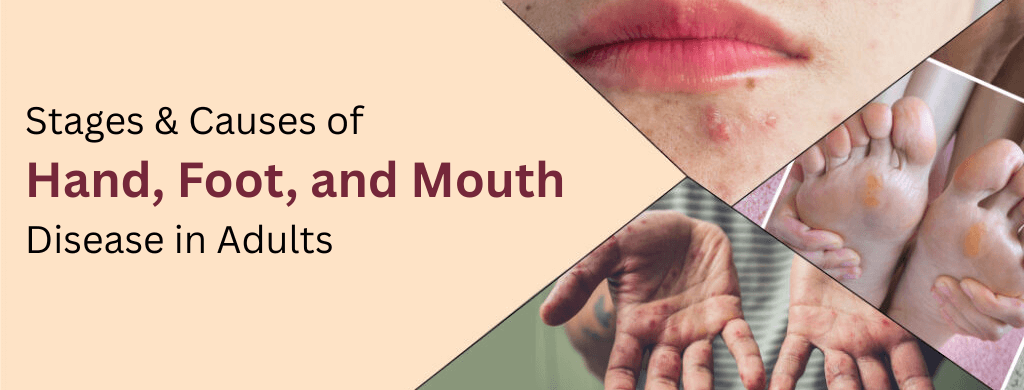
Fever, decreased appetite, sore throat, and lethargy are typically the first signs of hand, foot, and mouth illness. It is possible for uncomfortable oral sores to appear following a fever. These sores, known as herpangina, typically show up as dots in the back of the mouth. These areas may blister and cause pain.
Painful mouth ulcers and rashes on the hands and feet are common symptoms of hand, foot, and mouth disease (HFMD), a viral illness caused by enteroviruses. Although there is no known cure for HFMD, it often goes away on its own in seven to fourteen days without medical intervention.
Adults can also contract this condition, although typically, the symptoms are moderate and can be managed with rest and medication in a matter of days. Even in the absence of symptoms, adults can still spread the illness.
Causes
Hand, foot, and mouth illness is brought on by enterovirus 71 and coxsackievirus A16. The gastrointestinal system plays a major role in the disease’s transmission.
Hand, foot, and mouth disease is a frequent illness in young children, especially those under five years old. The inability of the body’s immune system to combat the virus means that adults can still contract the illness. Adults with hand, foot, and mouth disease are more prone than children to experience major complications from the condition, which can be fatal if treatment is delayed.
Women who are pregnant are the adults most susceptible to hand, foot, and mouth disease. When a pregnant woman has hand, foot, and mouth disease, the fetus may experience major difficulties, such as an elevated risk of infection, stillbirth, or miscarriage.
Stages
Hand, foot, and mouth illness typically lasts three to seven days and is moderate. Not everyone experiences symptoms. Some individuals carry the virus but show no symptoms. The following are the different stages of HFMD in adults:
- Fever: You will initially get a fever that lasts three to five days. A scratchy throat, a sense of fever, an appetite loss, and a decrease in water intake are some of the symptoms.
- Mouth Sores: Mouth sores will appear a few days after the fever first appears. Usually, they begin as little red dots on the tongue and insides of the mouth. They blister and hurt more and more with time. These sores can cause decreased appetite, increased drooling, and a preference for drinking mainly liquids since they make it difficult to chew and swallow meals. It’s best to get your kids checked out right away if you see any of these symptoms so that the illness can be treated before it becomes worse.
- Skin Rash: A hand, foot, and mouth disease infection may cause rashes in many areas of the body. These rashes are noticeable on the palms, the bottoms of the feet, and in certain situations, the buttocks, legs, and arms. Because the sickness can spread to other parts of the body through the blisters that emerge from the rashes, it’s critical to keep them clean and uninfected.
How Is It Spread
The following are the ways in which HFMD spreads:
- coughing
- sneezing
- blisters
- mucus (sputum or phlegm)
- saliva
- poo (faeces)
Risk Factors
Complications from HFMD are rare, most of the time. The biggest risk is dehydration. The following uncommon consequences are also seen in some cases:
- Encephalitis or paralysis like polio
- Loss of fingernails or toenails
- Aseptic meningitis caused by a virus
If a pregnant person has had HFMD symptoms or has come into contact with an infected person, they should notify a medical practitioner.
Diagnosis
Doctors usually diagnose hand, foot, and mouth disease by checking the symptoms and doing a physical examination. They look closely at the rashes on the hands and feet and the sores inside the mouth. These signs often help the doctor identify the condition.
The doctor may also ask questions about the symptoms, such as fever, sore throat, or painful blisters. They may review the patient’s medical history and check when the symptoms started.
In most cases, a physical examination is enough to confirm the disease. However, if the symptoms are unclear or severe, the doctor may suggest laboratory tests. These tests help identify the virus that is causing the infection.
For testing, the doctor may collect samples from the throat, blisters, stool, or sometimes blood. The sample is then sent to a laboratory for analysis.
Early diagnosis helps confirm the illness and rule out other infections with similar symptoms. It also helps doctors recommend the right care and precautions to prevent the spread of the virus.
Treatment
Currently, there is no cure available for this disease. The illness is caused by a virus, so antibiotics do not work. In most cases, the symptoms are mild and improve on their own within 7 to 10 days. Treatment mainly focuses on relieving symptoms and helping the body recover.
Pain and fever relief: Doctors may recommend over-the-counter medicines such as acetaminophen or ibuprofen to reduce fever, body pain, and discomfort. These medicines help patients feel more comfortable while the infection clears.
Drinking plenty of fluids: Staying hydrated is very important during the illness. Drinking water, milk, or other cool fluids can help prevent dehydration and soothe mouth sores.
Eating soft foods: Mouth ulcers can make eating painful. Soft foods such as yogurt, mashed potatoes, oatmeal, or soups are easier to swallow and less irritating.
Soothing mouth sores: Saltwater gargles may help reduce throat pain and irritation. Some adults may also use medicated mouth sprays or mouthwashes recommended by a doctor to ease discomfort.
Relieving skin irritation: Rashes on the hands and feet may cause itching or discomfort. Calamine lotion or other soothing creams can help calm the skin.
Rest and home care: Getting enough rest helps the body fight the infection. Most adults recover fully with simple home care and symptom management.
If symptoms become severe, last longer than expected, or cause dehydration, medical attention may be necessary. Early care can help prevent complications and ensure proper recovery.
Prevention
A vaccine to prevent hand, foot, and mouth disease is not available. Keeping hands and surroundings clean can help prevent infection and control the spread of the virus.
Wash hands often: Clean your hands regularly with soap and water, particularly before eating and after using the restroom.
Avoid close contact: Avoid hugging, kissing, or close contact with people who have the infection.
Do not share personal items: Do not share utensils, cups, towels, or toothbrushes with others.
Cover coughs and sneezes: Use a tissue or your elbow to cover your mouth and nose when coughing or sneezing.
Clean frequently touched surfaces: Disinfect items such as doorknobs, phones, and countertops to remove germs.
Conclusion
A frequent viral infection is hand, foot, and mouth disease. Though it occasionally affects adults and older children, infants and young children are the most vulnerable.
This is a viral infection caused by enteroviruses, often marked by mouth sores and rashes on the hands and feet. Managing the symptoms, if any, is the usual course of treatment. In roughly seven to ten days, a person should recover.
When to Consult a Doctor
Adults with HFMD should seek medical advice if symptoms persist beyond 10 days, worsen, or cause high fever, dehydration, or severe pain. Those with weakened immunity, pregnancy, or infected rashes should also consult a doctor. Early medical attention can help prevent complications.
Frequently Asked Questions
1. Can adults with HFMD go to work?
Despite the fact that the majority of individuals with HFMD may not exhibit symptoms, they may nevertheless be communicative and able to infect others.
Even when their symptoms subside, people can still spread infection for several days or weeks. To prevent the disease from spreading, those who have HFMD should stay home alone and refrain from going to work.
2. How can a doctor diagnose HFMD?
A physical examination is typically used by a doctor to make the diagnosis of HFMD. They may check the hands, feet, and genitalia for blisters or sores. Along with the sores, they might also look for other typical symptoms.
Occasionally, a laboratory test could be required to verify a diagnosis. Physicians may take feces and throat samples for analysis, or they may search for relevant antibodies or viral components in the blood.