 Health
  Find a
  Book an
 Lung Cancer: Causes, Stages, Symptoms, and Treatment
April 28, 2026
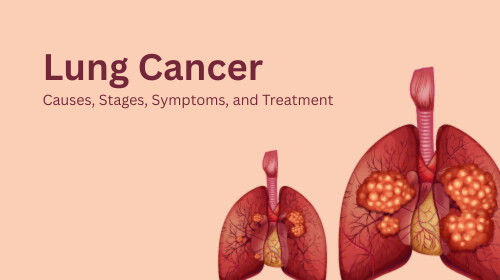
The abnormal growth of cells causes lung cancer. This is because the cells grow into a mass or tumor. An abnormal growth in the body that invades nearby tissues and organs, spreads to other areas, or can return after removal is called “malignant” or cancerous.
Stages
Staging allows the doctor to fully understand the extent of the patient’s cancer to make treatment decisions and predict expected outcomes.
The TNM System
The TNM system is a way to classify diseases by their symptoms.
- T – Your lung cancer stage is based on how big the tumor is and where it is located in your lungs or body.
- N – indicates the number of times a node is involved in a certain path. This test helps determine if your cancer has reached the lymph nodes near your lungs.
- M – stands for metastasis. This indicates whether your cancer has spread or not.
Lung cancer may metastasise to the other lung, liver, bones, brain, kidneys, adrenal glands, or various other organs in the body.
Your doctor can identify your tumor’s stage by listing the letters and numbers 0-4. Your tumor will be measured in centimeters and assigned a number; the larger the number, the more it has grown or spread. They could also use X as a number. This means the tumor cannot be measured, or it is unclear how far it has spread. When your doctor says your lung cancer is “unresectable,” surgeons can’t remove it.
Small-Cell Lung Cancer Stage
If you have this type of cancer, your doctor may use the TNM system to classify it. They will assign your cancer a stage according to its severity.
If you have this type of cancer, your doctor may use the TNM system to classify your cancer. They will then place your cancer in one of two main stages:
- Limited stage: The disease remains in a single lung and may affect nearby lymph nodes, but it hasn’t advanced to the other lung or outside the lung area.
- Extensive Stage: Your tumor has spread to other parts of your lungs and chest. It might have reached the fluid surrounding your lungs (pleura) or spread to other organs.
Non-Small-Cell Lung Cancer
Non-small-cell lung cancer is more common than small-cell lung cancer. Its clinical stage can classify NSCLC. Doctors may use image scans to take pictures of the body to confirm the clinical stage of cancer. A small piece of tissue may be taken from the tumor and biopsied to confirm the diagnosis.
If you undergo cancer surgery, your doctor can examine the tumor to determine the pathological stage of the disease. This report tells your doctor how far the cancer has spread or grown.
NSCLC is most often staged using the TNM system, where each letter is followed by a number ranging from X to 4.
Number and letter combinations include
- The width of your tumor, measured in centimeters, or if it’s too small even to measure
- Where your tumor is in your lungs
- When there is more than one tumor in the same lung
- If your airways are partially blocked or so congested that a collapsed lung or pneumonia may occur
- Whether the tumor has reached your lymph nodes or spread to other organs
Doctors may use general stages to classify NSCLC. For example, your doctor may use the TNM system and numbers to determine the stage of cancer in each of the following cases:
- Occult Stage: Cancer cells can be found in the mucus you cough up. No tumor can be seen by image scan or biopsy. It’s also known as hidden cancer.
- Stage 0: The tumour is microscopic. The cancer cells haven’t spread to other parts of your body or to other people.
- Stage 1: The cancer is located in your lung tissue but is not present in your lymph nodes.
- Stage 2: The disease may spread to the lymph nodes near your lungs.
- Stage 3: There is a possibility that the disease has spread to your lymph nodes near your lungs.
- Stage 4: Cancer has spread throughout your body. It could have spread to your brain, bones, or liver.
Causes
Lung cancer occurs when lung cells undergo abnormal changes, leading to uncontrolled growth. Key causes include:
- Smoking and Tobacco Use: The primary cause of tobacco smoke is carcinogens that damage lung cells and trigger cancer.
- Radon Gas Exposure: Inhaling this radioactive gas from soil and rocks can increase lung cancer risk.
- Air Pollution and Toxins: Long-term exposure to polluted air, asbestos, or industrial chemicals can lead to lung cancer.
- Genetic Mutations: Inherited genetic changes can raise the risk, even in non-smokers.
- Chronic Lung Inflammation: Conditions like COPD or tuberculosis can cause lung tissue damage, increasing cancer risk.
- Unknown Causes: Some cases occur without clear risk factors, possibly due to spontaneous genetic mutations.
Symptoms
In the early stages, lung cancer may not show any symptoms. However, if the cancer is symptomatic, it may cause shortness of breath, coughing, or chest pain. When signs of illness begin to appear, they may include:
- Chronic hacking, raspy cough, sometimes with bloody phlegm
- Changes in a cough that you have had for a long time
- Frequent respiratory infections, like repeated episodes of bronchitis or pneumonia
- Shortness of breath that gets worse
- Wheezing
- Persistent chest pain
- Hoarseness
- Swelling of the neck and face
- Pain and weakness in your shoulder, arm, or hand
- Fatigue, Weakness, weight loss, appetite, and fever that comes and goes
- Severe headache and body aches
- Difficulties swallowing
Risk Factors
Various factors, such as lifestyle habits, environmental conditions, and genetic susceptibility, can raise the risk of lung cancer.
Smoking
Cigarette use is the biggest factor that increases the risk of lung cancer. Tobacco products like cigars and pipes may also increase the chances of developing lung cancer. Tobacco smoke is a mixture of more than 7000 different chemicals. Many things can be poisonous. Smoking cigarettes is a leading cause of lung cancer and death. People who do not smoke are 15 to 30 times more likely to avoid this fate. Even smoking a few cigarettes a day occasionally increases the risk of lung cancer.
Smoking cigarettes is a leading cause of lung cancer and death. People who do not smoke are 15 to 30 times more likely to avoid this fate. Even smoking a few cigarettes a day occasionally increases the risk of lung cancer. A person’s risk of smoking-related diseases increases with both the number of years they smoke and the daily number of cigarettes they consume.
Second-hand Smoke
Secondhand smoke from other people’s cigarettes, pipes, or cigars can cause lung cancer. When a person inhales indirect smoking, it seems that they are smoking.
Family history of lung cancer
A person’s family history may increase lung cancer risk; this risk increases with exposure to other risks, such as smoking. You are twice as likely to have cancer if a family member has lung cancer as if there is no history of the disease in your family.
Diagnosis
A doctor usually diagnoses lung cancer by examining the patient’s symptoms and medical history. A biopsy may also determine the cancer’s stage and how far it has spread. Your doctor may suspect lung cancer if the physical exam shows:
- Swollen lymph nodes above the collarbone
- Abdominal mass
- Weak breathing
- Abnormal lung sounds
- Sluggishness when patted on the chest
- Unequal students
- Sagging eyelids
- Weakness in one arm
- Dilated veins in the arms, chest, or neck
- Swollen face
If lung cancer is causing symptoms, it is usually visible on an X-ray. On a chest X-ray taken for another cause, lung cancer that has not yet shown signs may occasionally be visible.
Your doctor might advise a chest CT scan if they feel that a more detailed exam is necessary. For example, a lung cancer diagnosis is usually confirmed with a lung biopsy. A thin, illuminated tube is passed through your nose or mouth and directed into the airways to access the tumour. They then remove a tiny tissue sample. This is a bronchoscopy with a biopsy performed using endobronchial ultrasound (EBUS) guidance. This is useful for tumours near the centre of the lung.
Treatment
Lung cancer treatment options vary based on the cancer type and the extent of its spread. For example, certain individuals with non-small cell lung cancer may receive surgery, chemotherapy, radiation therapy, targeted therapy, or a mix of these treatments.
- Surgery is a treatment method used to manage many diseases and injuries. A process in which doctors cut out cancerous tissue.
- Chemotherapy is a type of cancer treatment. Cancer can be treated with certain medicines that will shrink or kill it. Medications can be pills you take, medications in your veins, or sometimes both.
- Targeted therapy approaches treat a disease or condition that focuses on specific body areas. For example, cancer cells can grow and spread if not stopped. Drugs can help block the growth and spread of cancer cells. These drugs may be taken in pill form or intravenously as an anaesthetic. You will first be given tests to see if targeted therapy suits your cancer type. If it is, this treatment will be used.
Prevention
No method can fully prevent lung cancer, but healthy habits and avoiding harmful exposures can help reduce the risk.
Do not smoke
Tobacco smoking is the primary reason many people develop lung cancer. If you do not smoke, do not start. If you smoke, quitting now can reduce your risk over time. The earlier you quit, the better it is for your lungs and overall health.
Stay away from secondhand smoke
Breathing smoke from other people’s cigarettes can also increase the risk of lung cancer. Try to stay in smoke-free places and ask people to smoke outside.
Test your home for radon
Radon is a harmful gas that cannot be seen or smelled. It can build up inside homes and increase the risk of lung cancer. Checking your home for radon and reducing high levels can help create a safer living environment.
Protect yourself at work
Some workplaces expose people to harmful substances such as asbestos, dust, and chemicals. Use safety equipment, follow workplace rules, and wear protective masks if needed.
Avoid air pollution
Regular exposure to dirty air for many years can increase the chances of lung problems, including lung cancer. Try to avoid heavy traffic areas when possible and keep indoor air clean.
Eat a healthy diet
Eat a healthy and balanced diet that includes fruits, vegetables, whole grains, and other nutritious foods. Good nutrition supports overall health and may help lower cancer risk.
Exercise regularly
Regular physical activity helps keep your body healthy and supports lung function. Try to stay active most days of the week.
Maintain a healthy weight
Keeping a healthy weight may help reduce the risk of many diseases, including some cancers.
Get screened if you are at high risk
People with a heavy smoking history may benefit from lung cancer screening. Screening may find cancer early, when treatment usually has a better chance of success. Speak with a doctor to know if screening is right for you.
Complications
Lung cancer can cause several complications, especially in advanced stages. These problems may result from the tumor itself or from treatment.
Shortness of Breath
A tumor may block the airways or fluid may build up around the lungs, making breathing hard.
Coughing Up Blood
Lung cancer may cause bleeding in the air passages, which can result in coughing up blood.
Pain
Cancer may cause chest pain or bone pain if it spreads.
Infections
People with lung cancer may develop infections like pneumonia or bronchitis.
Spread to Other Organs
Cancer of the lung may move to the brain, bones, liver, or other organs and cause new symptoms.
Blood Clots
The disease can increase the risk of dangerous blood clots.
Treatment Side Effects
Cancer treatments may cause tiredness, nausea, weakness, or infections.
Frequently Asked Questions
1. What is the life expectancy for someone with lung cancer?
Over the last ten years, the median survival for lung cancer has risen from 11 months to a 5-year survival rate of 17.8%. This advantage is primarily due to the availability of targeted therapy medications and the proper patient selection. In other words, precision oncology and customised medicine. To a considerable extent, this is only achievable because of molecular oncology.
2. Can lung cancer be cured permanently?
Remission success is dependent on how early the condition is detected and what other health issues you may be dealing with. And there is always a possibility (often a very small one) that lung cancer will resurface even after years or decades of remission.