 Health
  Find a
  Book an
 Endometriosis: Symptoms, Causes, Diagnosis, and Treatment
March 4, 2026
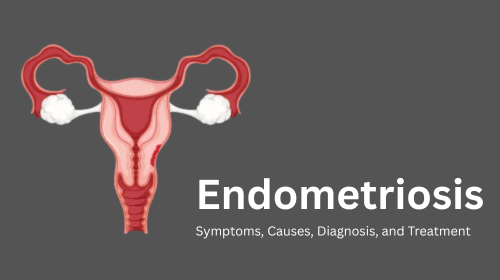
Endometriosis is frequently an ailment that can interfere with your daily life. Endometriosis occurs when tissue resembling the uterine lining grows in areas outside the uterus, such as the abdomen and pelvic region. Endometriosis may cause heavy, painful periods and can also lead to infertility.
The endometrium is the uterus’s inner lining. This is the tissue that a woman sheds during her menstrual cycle. Consider the endometrial layers of tissue that form on the inside lining of the uterus. These layers separate from the uterine walls when they have a period and exit the body. If a woman becomes pregnant, the endometrium aids in the early stages of development.
Endometriosis involves the growth of endometrial-like tissue outside the uterus, affecting other organs or tissues. For example, this tissue might grow in your belly, pelvis, or chest. This hormone-sensitive tissue can become inflamed during your menstrual cycle. In addition, these patches of endometrial-like tissue within your body can create ovarian cysts, superficial lesions, deeper nodules, adhesions, and scar tissue.
Endometriosis can occur in any part of your body, including
- Outside and behind your uterus
- The fallopian tubes
- Ovaries
- Vagina
- Peritoneum
- Ureters and bladder
- Intestines
- Rectum
- Diaphragm
How Serious is Endometriosis?
Endometriosis commonly affects women between the ages of 25 and 40. However, it could also occur to young individuals during their adolescence. Although many women see improvement in endometriosis symptoms after menopause, it can still be uncomfortable and painful.
Stages
Endometriosis is divided into four stages based on how much the tissue has grown and where it is found in the body. Doctors consider the number, size, depth, and location of the implants, along with the presence of scar tissue or cysts.
Stage 1: Minimal – This stage involves a few small and shallow implants. There is little or no scar tissue.
Stage 2: Mild – More implants are present, and they may grow deeper into the pelvic tissue.
Stage 3: Moderate – At this stage, there are several deep implants. Small cysts on the ovaries and scar tissue may also develop.
Stage 4: Severe – This is the most advanced stage. Many deep implants, large ovarian cysts, and thick scar tissue may be present.
The stage of endometriosis does not always reflect how severe the symptoms are.
Risk Factors
Numerous variables might increase your chances of having endometriosis. These elements may include
- Family history of endometriosis.
- The age at which menstruation begins can influence risk; starting periods before age 11 may increase the likelihood.
- The risk may also be affected by shorter menstrual cycles and longer bleeding durations.
- Defects in your uterus or fallopian tubes.
Can Endometriosis be Genetic?
Although no one knows what causes endometriosis, scientists believe there is a link between a family history of the ailment and an increased chance of having it at some time. So, if another member of your family has endometriosis, such as your mother, grandmother, or sister, discuss your risk with your doctor.
Symptoms
Endometriosis causes a variety of symptoms. The most prominent sign is pain. It is usually felt in the belly, pelvic area, and lower back. Unfortunately, endometriosis might often go undetected until it discovered through another treatment is or infertility examination.
People who have endometriosis may have the following symptoms
- Excruciatingly painful menstrual cramps.
- Abdominal pain or back pain during the period.
- Pain during sex.
- Experiencing heavy menstrual bleeding or spotting between periods may also be a contributing factor.
- Infertility (difficulty becoming pregnant)
- Painful bowel movements.
There is no link between endometriosis symptoms and the intensity of the ailment. Some women may have only a few spots of endometriosis and yet suffer from extreme discomfort. Other people may have severe endometriosis, yet not be afflicted.
First Symptoms
Endometrial-like tissue growing outside the uterus can lead to the formation of scar tissue and adhesions. These scar tissues can bind organs together, creating abnormal connections that may lead to pain and discomfort.
Causes
Endometriosis has no known cause. Endometriosis causes tissue identical to the womb’s lining to develop in the incorrect locations. It may lead to pain when this tissue grows on areas such as the outer surface of the uterus, the fallopian tubes, ovaries, intestines, or other parts inside the pelvic region. This type of discomfort is caused by increased inflammation, as well as fibrosis and adhesions.
When endometrial-like tissue develops outside your uterus (adhesions), scar tissue can form. This may cause discomfort and anguish.
Diagnosis
In many circumstances, your symptoms will lead to an endometriosis diagnosis. For instance, you might reach out to your healthcare provider if you have painful or heavy menstrual periods. When you arrive for your visit, your physician (usually an Ob-Gyn) may ask you about your medical history, prior pregnancies, and whether anybody in your family has endometriosis. Then, a pelvic exam may be performed by your physician.
If your doctor requires additional information, they will likely recommend pelvic imaging, beginning with an ultrasound. Next, an MRI may be requested for other endometriosis mapping based on your symptoms, physical exam, and ultrasound results. Finally, a laparoscopy may be recommended for both diagnosis and therapy. Since a surgeon can use a small camera (laparoscope) to view the inside of your body, this method is an effective way to confirm endometriosis.
A biopsy (small tissue sample) may be collected during this technique. The biopsy will be sent to a laboratory for confirmation of the diagnosis. Endometriosis can be discovered by chance. Endometriosis does not affect everyone in the same way. In many circumstances, your doctor may find the issue during another treatment.
Treatment
Your doctor will assist you in developing an endometriosis treatment plan based on several criteria, including
- The severity of your endometriosis.
- Your plans for future pregnancies.
- Your age.
- The severity of your symptoms
Your treatment approach may prioritize pain management and fertility enhancement in many circumstances. Medication and surgery can be used to do this. In addition, drugs are frequently used to help endometriosis symptoms. Pain relievers and hormone therapy are examples of such treatments.
- Birth control: Hormonal suppression alternatives include estrogen and progesterone combinations and progesterone-only treatments. These are available in various forms, including oral birth control pills, patches, vaginal rings, birth control shots, Nexplanon implants, and IUDs. This hormone medication frequently results in lighter, less painful periods. However, these are not alternatives for patients who are seeking to conceive. Endometriosis is a chronic condition. Many patients find that surgery relieves their endometriosis discomfort, although the signs may recur after a few years. The intensity of your endometriosis may influence how fast, if at all, it returns following surgery. Your specialist may recommend combining a surgical treatment with drugs for the most significant results. For central nerve pain, your doctor may offer pelvic floor physical therapy in addition to or instead of medication.
Endometriosis surgical treatment options include
- Laparoscopy: In this surgery, your surgeon will create a 1-centimeter incision in your belly and insert a tiny tube-like gadget called a laparoscope into your body. This instrument can see inside your body with a high-definition camera and detect endometriosis. The lesions can then be excised and removed using additional 5-millimeter tools.
- Hysterectomy: If you have severe endometriosis and scar tissue, other uterine disorders such as adenomyosis, and a desire for future conception, your surgeon may recommend removing your uterus. Endometriosis must still be removed if you undergo a hysterectomy to maximize pain alleviation.
Lifestyle and Home Remedies
Finding an effective treatment for endometriosis may take time. Meanwhile, you can explore different home remedies to ease the pain.
- Use heat therapy: Taking warm baths and using heating pads can help soothe pelvic muscles, relieving cramps and discomfort.
- Take pain relievers: Nonsteroidal anti-inflammatory drugs (NSAIDs) like ibuprofen (Advil, Motrin IB) and naproxen sodium (Aleve) can help relieve menstrual cramps.
- Consider physical therapy: Consult your healthcare provider about physical therapy. A therapist can teach techniques to relax the pelvic floor muscles, which support the uterus. Loosening these tight muscles may help reduce pelvic pain associated with endometriosis.
Prevention
Endometriosis is not something that can be avoided. Specific changes can lower your likelihood of getting the illness, but you may still have endometriosis in some situations. Some people may acquire endometriosis due to a hereditary factor. If someone in your family (mother or grandmother) has been diagnosed with endometriosis, talk to your doctor about your chances of acquiring the illness.
Endometriosis can be reduced by several causes, including
- Breastfeeding.
- Maintaining a weight that’s healthy for you.
- Pregnancy.
- Starting your menstrual period at a later age.
When to See a Gynecologist?
Consult a gynecologist if you experience signs and symptoms of endometriosis. Endometriosis is a complex ailment to treat. However, early diagnosis, a multidisciplinary medical team, and understanding of your diagnosis may result in improved symptom treatment.
Frequently Asked Questions
1. What are the four stages of endometriosis?
Endometriosis is generally categorized into four stages: Stage I (minimal), Stage II (mild), Stage III (moderate), and Stage IV (severe). The classification also employs a point system to measure endometriotic lesions. This point system enables a numerical scale of the sickness. A score of 15 or less shows that the illness is limited or moderate. A score of 16 or above indicates that the condition is reasonable to severe.
2. What happens if endometriosis is left untreated?
Endometrial-like tissue outside your uterus can create cysts, adhesions, and scar tissue over time. This can result in long-term (chronic) discomfort, particularly during menstruation. As a result, many women with endometriosis may have difficulty getting pregnant. However, this problem can occasionally be helped by treatment.
3. Can endometriosis occur after menopause?
Endometriosis after menopause is uncommon. If it occurs, it is usually because the condition existed before menopause and may become active again, sometimes due to hormone replacement therapy (HRT).