 Health
  Find a
  Book an
 Liver Diseases
The liver is a robust organ of the human body, undertaking several key functions in metabolism. Liver diseases reduce the ability of the organ to undertake its functions and therefore easily develop into the disease & complications.
There are various liver diseases that are detrimental to human health. One of the most common liver disorders is fatty liver disease, caused by an accumulation of excess fat in the liver. Other liver complications could be caused by excessive alcohol consumption, cancer, injury, and other complications.
The common liver diseases include:
- Alcoholic liver disease
- Nonalcoholic Steatohepatitis
- Liver Cirrhosis
- Fatty Liver Disease
- Hepatitis – A, B, C
- Fatty Liver of Pregnancy
Liver disease refers to any condition that disrupts the liver’s normal function, leading to illness. The liver is crucial for many body functions, so when it becomes diseased or damaged, it can lead to major health issues. This condition is also known as hepatic disease.
Liver disease is a general term encompassing any condition that prevents the liver from carrying out its normal functions. Typically, liver function declines only after about 75% of the liver tissue is damaged.
The liver, the body’s largest solid organ, also functions as a gland because it produces and secretes bile. It sits in the upper right side of the abdomen, shielded by the rib cage, and consists of two main lobes composed of small lobules. Liver cells receive blood from two sources: the hepatic artery delivers oxygen-rich blood from the heart, while the portal vein carries nutrient-rich blood from the intestines and spleen.
Normally, veins return blood from the body to the heart, but the portal vein allows nutrients and chemicals from the digestive tract to enter the liver for processing and filtering prior to entering the general circulation. The portal vein also efficiently delivers the chemicals and proteins that liver cells need to produce the proteins, cholesterol, and glycogen required for normal body activities
As part of its function, the liver makes bile, a fluid that contains, among other substances, water, chemicals, and bile acids (made from stored cholesterol in the liver). Bile is stored in the gallbladder, and when food enters the duodenum (the first part of the small intestine), bile is secreted into the duodenum to aid in the digestion of food.
The liver is the only organ in the body that can easily replace damaged cells, but if enough cells are lost, the liver may not be able to meet the needs of the body.
Causes
Liver disease can result from multiple causes, such as heavy alcohol use, viral infections like hepatitis, non-alcoholic fatty liver disease (NAFLD), autoimmune conditions, and exposure to specific drugs or toxins. Additionally, genetic predisposition and conditions like bile duct obstruction can also contribute to liver damage. Liver disease has many causes:
1. Infection
The liver can get infected by parasites and viruses, which cause swelling and irritation, called inflammation. Inflammation prevents the liver from functioning properly. Infection with these viruses can occur through exposure to infected blood or semen, consuming unsafe food or water, or close interaction with an infected individual. Liver infections are most frequently caused by the Hepatitis A, B, and C viruses.
2. Immune System Condition
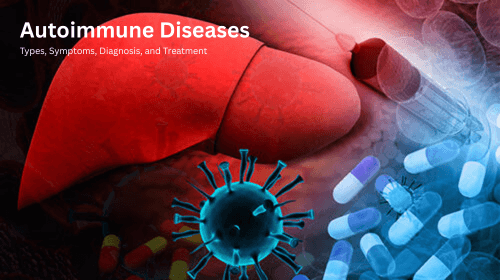
When your own immune system attacks certain parts of the body, it is called an autoimmune disease. Autoimmune liver diseases are autoimmune hepatitis, primary biliary cholangitis, and primary sclerosing cholangitis.
3. Genetics
Occasionally, inherited genetic mutations from one or both parents can cause certain substances to accumulate in the liver. This can cause liver damage. Genetic liver disorders include Hemochromatosis, Wilson’s disease, and Alpha-1 antitrypsin deficiency.
4. Cancer and Other Growths
Cancer, including liver cancer, Bile duct cancer, and Liver adenoma, can be a cause.
5. Common Causes
Other common causes of liver disease are:
- Long-term alcohol use.
- Fat accumulation in the liver, known as metabolic dysfunction-associated steatotic liver disease (previously called nonalcoholic fatty liver disease), occurs without significant alcohol consumption.
- Certain prescription or other medicines.
- Certain herbal mixes.
- Being in contact often with toxic chemicals.
Symptoms
It is possible that in the early stages of chronic liver disease, you often will not notice any symptoms. However, it could begin with an episode of acute hepatitis. As liver function starts to decline in the advanced stages of liver disease, you may begin to experience more noticeable symptoms. A common early sign of declining liver function is the slowing or blockage of bile flow in the biliary tract. This occurs when the liver can no longer produce or transport bile efficiently to the small intestine, causing bile to spill into the bloodstream. This causes specific symptoms, including:
- Jaundice is the condition where the skin and the sclera (whites of the eyes) turn yellow.
- Belly pain and swelling
- Swelling in the legs and ankles
- Itchy skin
- Dark urine
- Pale stool
- Constant tiredness
- Nausea or vomiting
- Loss of appetite
- Bruising easily
Risk Factors
Certain factors that can increase the risk of liver disease are:
- Moderate or heavy use of alcohol
- Obesity
- Type 2 diabetes
- Tattoos or body piercings
- Shared needles to inject drugs
- Blood transfusion before 1992
- Contact with other people’s blood and body fluids
- Sex without protection
- Contact with chemicals or toxins
- Family history of liver disease
Diagnosis
Liver disease is identified using a mix of blood tests, imaging scans, and occasionally a liver biopsy. These may include:
- Blood tests – These tests assess liver function by measuring levels of liver enzymes, proteins, and bilirubin in your blood. Blood tests could also indicate inflammation, specific diseases or side effects, like reduced blood clotting.
- Imaging tests – Physicians may use an abdominal ultrasound, CT scan, or MRI to examine the liver’s size, shape, and texture. These imaging tests can detect inflammation, swelling, abnormal growths, and signs of fibrosis in the liver.
- Elastography – An imaging test called elastography uses ultrasound or MRI technology that measures the level of stiffness or fibrosis in your liver.
- Endoscopy – Endoscopic imaging is used to see inside your biliary tract. A tiny camera (endoscope) is passed through your upper GI tract to see your bile ducts.
- Nuclear medicine imaging – In a nuclear liver and spleen scan, a safe radioactive tracer is injected into the body and captured by a gamma camera for imaging. This will highlight the areas that aren’t functioning normally.
- Liver biopsy – A small tissue sample from your liver is taken through a minor procedure to test in a lab. This is done to check for cancer or confirm cirrhosis and help determine the cause.
Liver Disease Treatment
Our centre is experienced in the treatment of all diseases of the liver, including the following:
- Hepatitis B and C
- Fatty liver disease
- Metabolic liver disease
- Alpha A antitrypsin deficiency
- Hemochromatosis
- Wilson’s Disease
- Alcoholic liver disease
- Auto immune liver disease
- Primary biliary cirrhosis
- Cirrhosis of the liver
- Liver failure
Prevention
You can help prevent liver disease by:
- Getting vaccinated – You can get vaccines to prevent viral hepatitis A and B.
- Practicing good hygiene – It is important to wash your hands after using the bathroom. Also, handling food and needles safely can help prevent infections from spreading.
- Moderate alcohol use and proper medication use – If you have a substance-use disorder (SUD), treatment can help prevent toxic hepatitis.
- Managing metabolic factors such as your blood sugar and blood lipids.
Multidisciplinary Team
The team consists of surgeons highly skilled with impeccable credentials who are ably supported by anaesthesiologists and intensivists trained in this field. Competent nursing and technical support team ensure optimum and uncompromising patient care.
Liver Transplantation
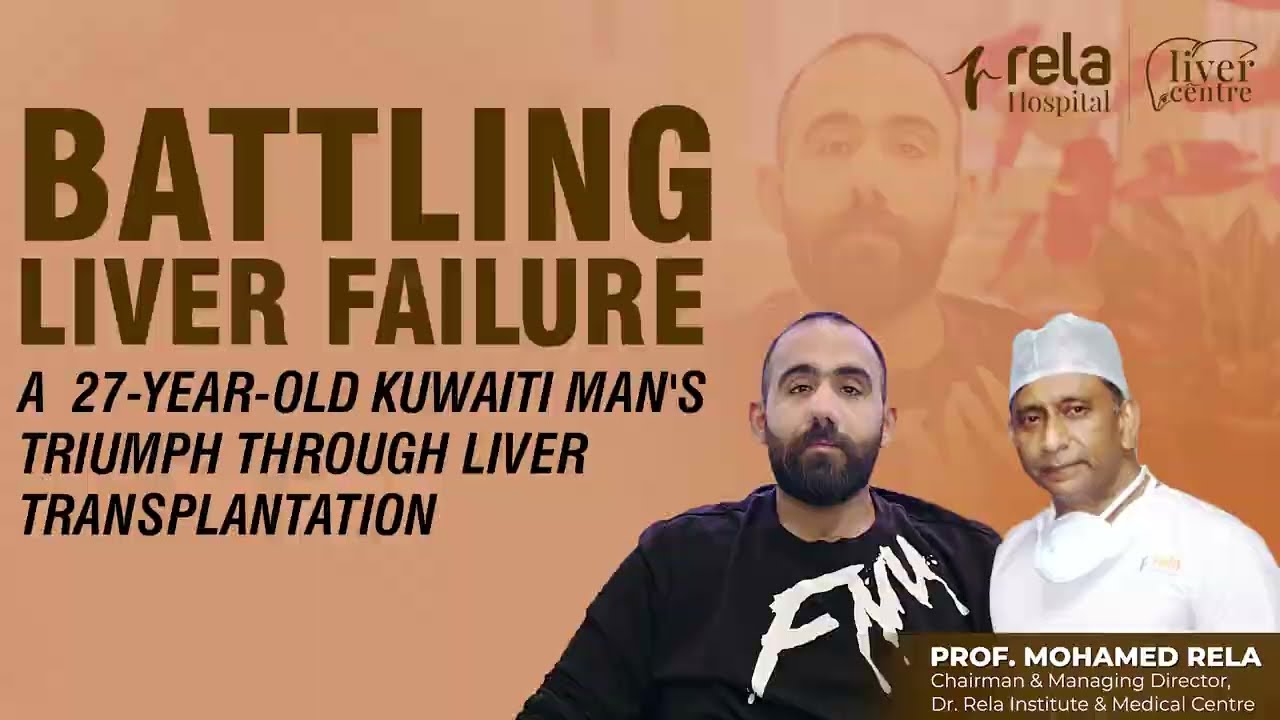
All patients with liver disease do not need transplantation. However, for patients with serious liver disease who fit into internationally accepted clinical and laboratory criteria, liver transplantation may be the only hope and Rela Hospital is the only answer as it excels in treatment of liver disease and transplantation.
At Rela Institute of Liver Disease & Transplantation , patients with liver disease will get a detailed evaluation to assess the need for liver transplantation and also to ensure that the patient can safely undergo a transplant. The options for transplantation usually include deceased donor or living liver transplant donor. Undergoing liver transplantation means a lifelong commitment to looking after your new liver and following the advice of your liver team.
We have a large team of internationally trained surgeons, physicians, intensivists and associated specialties to help you during this process. We have garnered the titles of having the best liver transplant doctor in Chennai, of being the best liver transplant hospital in Chennai, of having the best liver transplant specialist in Chennai, of having best liver transplant surgeon in Chennai and even of having best liver transplant surgeons in India. With so many titles being rendered, we are truly honoured to be treated as the best for liver care.