 Health
  Find a
  Book an
 Tuberculosis (TB): Causes, Treatment & Prevention Explained
August 30, 2025
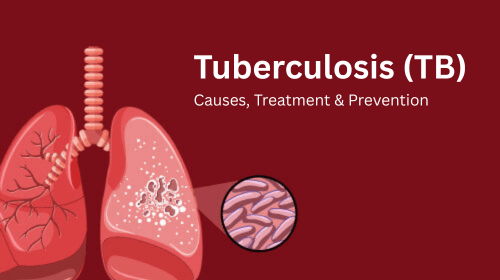
TB, or tuberculosis, is an infectious condition triggered by Mycobacterium tuberculosis. It usually attacks the lungs but can also involve the spine, brain, and other organs.
During the 20th century, tuberculosis was one of the major causes of death. Today, Most illnesses can be treated with antibiotics. However, it takes a while. Medications for tuberculosis must be taken for at least 6 to 9 months.
In 2020, tuberculosis caused 1.5 million deaths worldwide, according to the World Health Organization (WHO). Tuberculosis is also the thirteenth leading cause of death worldwide. Currently, it is the second leading cause of infectious death after COVID-19.
Causes
Tuberculosis (TB) is an infectious illness triggered by the bacterium Mycobacterium tuberculosis. It mainly attacks the lungs but may also spread to other parts of the body. The infection spreads through airborne droplets expelled when a person with active TB in the lungs or throat talks, coughs, sneezes, or sings. Breathing in these droplets can result in transmission of the disease.
This disease is more likely to spread in crowded or enclosed environments where people spend extended periods together, such as households, workplaces, or healthcare settings. However, casual interactions like touching, sharing food, or kissing do not contribute to TB transmission.
Drug-Resistant TB
In some cases, the TB bacteria become resistant to medications, leading to drug-resistant TB. This occurs when bacteria develop genetic mutations that make them immune to standard antibiotic treatments. Factors contributing to drug resistance include:
- Improper or incomplete use of prescribed TB medications
- Incorrect treatment plans
- Poor-quality or unavailable medicines
- The body’s inability to absorb the medications properly
Drug-resistant TB presents a major global health challenge, necessitating more intricate and extended treatment approaches.
Symptoms
Typical symptoms of tuberculosis include:
- A long-lasting cough persisting for over three weeks, often producing phlegm that may contain blood
- Weight loss
- Night sweats
- High fever
- Tiredness
- Chest pain
- Chills
- Loss of appetite
- Neck swelling
You should see a doctor if you have a cough that lasts longer than three weeks or if you are coughing up blood. If your TB infection is inactive, you won’t feel sick or notice any symptoms, but your TB test may still come back positive.
Types
There are two forms of the disease:
Latent TB: Germs are present in your body, but your immune system keeps them from multiplying or spreading. As a result, you have no symptoms and are not contagious. But the infection is still alive and could one day become active. If you’re at high risk of reactivation, such as having HIV, a prior infection within the last two years, an abnormal chest X-ray, or a weakened immune system, your doctor may prescribe medication to prevent active TB.
Active TB: You can transmit the disease to others. About 90% of active TB cases in adults develop from a latent tuberculosis infection.
Three Stages of TB
The three stages of TB are:
- Exposure – This takes place when an individual is exposed to or comes in close contact with someone infected with TB.
- Latent TB infection – A person with TB bacteria in their body, but no disease symptoms. The person’s immune system walls off TB organisms, and the TB remains inactive throughout life.
- TB disease – This describes a person exhibiting the signs and symptoms of an active infection. In addition, the person would have a positive skin test and a positive chest X-ray.
Risk Factors
Factors that raise the likelihood of becoming infected with the bacteria that cause TB include:
- Suffering from diabetes, end-stage renal failure, or certain cancers
- Malnutrition
- Tobacco or alcohol for long periods
- A diagnosis of HIV or another weakened immune system condition
- People taking medications that weaken the immune system are more vulnerable to developing active TB disease.
Other factors include:
- Cancer
- Rheumatoid Arthritis
- Crohn’s disease
- Psoriasis
- Lupus
Diagnosis
Healthcare experts can diagnose TB with a few different tests, including a skin check, a blood test, etc. A false-negative result can happen if your immune system isn’t running well or if it’s been less than eight weeks since exposure to TB.
Skin Test
Your physician can use a purified protein derivative (PPD) skin test to diagnose if you have TB bacteria. For this test, the doctor will inject 0.1 millilitres (mL) of PPD (a small quantity of protein) under the top layer of your skin. After 2 to 3 days, you’ll return to your doctor’s office to have the results. A raised area larger than 5 millimetres (mm) at the PPD injection site may be regarded as a positive result. Reactions between 5 and 15 mm in length may be positive depending on risk factors, health, and medical history.
All responses over 15 mm are considered active, irrespective of risk factors. The test isn’t perfect, though. It can inform you whether or not you’ve got a TB infection. People who’ve recently taken the TB vaccine may also test positive.
Blood Check
Your health practitioner can use a blood test to follow up on TB skin outcomes. They might also suggest a blood test first, particularly when you have an existing health condition that can affect your response to the skin check.
Chest X-ray
If your skin or blood test shows a positive result, your doctor will likely suggest a chest X-ray to check for small spots on the lungs. These spots, which signal a TB infection, show that your body is trying to contain the bacteria. A negative chest X-ray may indicate latent TB, but it is also possible that the test results are inaccurate. Therefore, your physician may also recommend further testing. If the test indicates you’ve got active TB disease, you’ll have to begin treatment for active TB. Otherwise, your health practitioner may also suggest getting treated for latent TB. This helps stop the bacteria from reactivating and causing illness later on.
Treatment
Tuberculosis (TB) is managed using a combination of antibiotics designed to eliminate the Mycobacterium tuberculosis bacteria. The treatment plan depends on whether the infection is latent or active.
For Latent TB
For individuals with latent TB, where the bacteria are present but inactive, treatment helps prevent the infection from becoming active in the future. Patients typically take antibiotics for several months, with common regimens lasting between 3 to 9 months.
For Active TB
Treatment for active TB usually spans 4 to 9 months and involves a combination of antibiotics, including:
- Isoniazid
- Rifampin (or Rifapentine)
- Pyrazinamide
- Ethambutol
Strictly following the prescribed medication regimen is vital to completely removing the bacteria. Stopping treatment prematurely can lead to drug-resistant TB, making the disease more difficult to cure.
Drug-Resistant TB
Some strains of TB bacteria have developed resistance to commonly used antibiotics, leading to Multidrug-Resistant TB (MDR-TB) or Extensively Drug-Resistant TB (XDR-TB). Treating drug-resistant TB requires alternative medications that are often more expensive, have more side effects, and must be taken for a longer period, sometimes over a year.
TB and HIV Co-Infection
Individuals with HIV have a greater likelihood of developing TB because of their compromised immune systems. A combination of TB treatment and antiretroviral therapy (ART) is recommended to manage both conditions effectively.
Importance of Completing Treatment
Although symptoms may subside within a few weeks, finishing the entire treatment regimen is vital to avoid relapse or the development of drug resistance. Patients undergoing treatment should also take precautions, such as wearing masks and maintaining good ventilation, to prevent spreading the disease to others.
Prevention
- Manage the environment: As TB is an airborne infection, the TB bacteria are released into the air when a person with TB coughs or sneezes. Therefore, the threat of disease may be decreased by using a few correct yet easy precautions.
- Proper ventilation: TB can remain suspended in the air for numerous hours without ventilation.
- Natural light: UV light kills off TB microorganisms
- Good hygiene: Shielding the mouth and nose during coughing or sneezing helps minimize the spread of TB germs. In healthcare environments, TB transmission is reduced through protective masks, proper ventilation systems, isolating potentially infectious patients, separating non-infectious ones, and routinely screening healthcare workers for TB.
- A healthy immune system: The strongest protection against TB is a healthy immune system, as about 60% of adults with robust immunity can eliminate TB bacteria.
Frequently Asked Questions
1. How Long Does TB Last?
After taking TB medicine for several weeks, doctors can tell when TB patients can no longer spread TB germs to others. Still, the majority of TB patients must take medication for a minimum of six months to achieve a full cure.
2. Is tuberculosis life-threatening?
Yes, tuberculosis can be life-threatening if left untreated. It can damage the lungs and spread to other organs, leading to severe complications. However, with proper treatment, most cases can be cured.
3. How easily can tuberculosis spread from one person to another?
Tuberculosis can spread when the infection is active. However, catching it usually requires close and prolonged contact with someone who is infected. The bacteria travel through tiny droplets in the air that are breathed in. Most people who are exposed to TB are able to stop the bacteria from growing and prevent the disease from becoming active.
4. Is a vaccine available to prevent tuberculosis?
Yes, there is a vaccine for tuberculosis called the Bacillus Calmette-Guérin (BCG) vaccine. It is mainly used in countries where TB is common and is usually given to infants and young children. The vaccine helps protect against severe forms of TB in children, such as TB affecting the brain and spinal cord. However, it does not always protect well against TB of the lungs, which is the most common form in adults. Several new TB vaccines are also being researched and tested.