 Health
  Find a
  Book an
 Rheumatoid Arthritis: Symptoms, Causes, and Natural Remedies
March 26, 2026
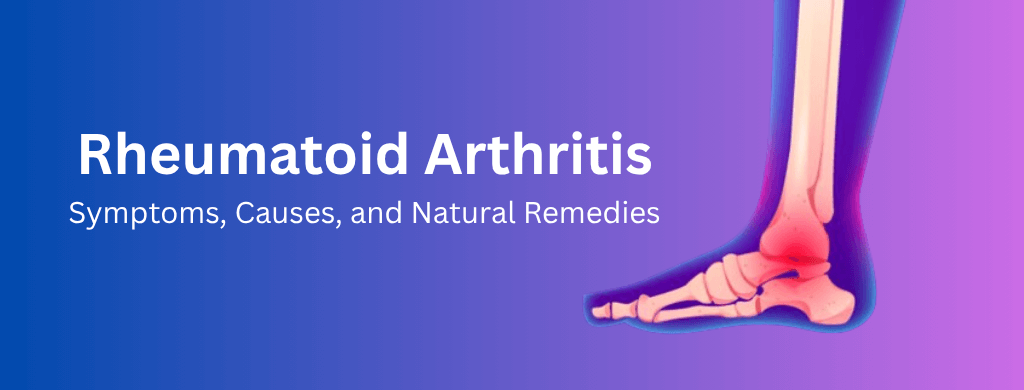
Rheumatoid arthritis (RA) is a chronic autoimmune disease. Rheumatoid arthritis is distinct from other forms because it usually impacts the same joints on both sides of the body. As a result, you can experience discomfort and inflammation in your:
- Fingers
- Hands
- Wrists
- Knees
- Ankles
- Feet
- Toes
Unchecked inflammation can damage the cartilage in your joints, which normally acts as a “shock absorber,” eventually leading to joint deformity. In addition, your bone itself erodes with time. This can result in your joints “fusing,” an effort by your body to protect itself from constant irritation.
Although these substances form in the joints, they can circulate through the entire body and trigger symptoms in other areas. Rheumatoid arthritis may extend its effects beyond the joints, affecting:
- Skin
- Eyes
- Mouth
- Lungs
- Heart
Symptoms
Rheumatoid arthritis (RA) symptoms can vary widely from person to person but commonly include:
- Joint pain and stiffness: Pain, swelling, and warmth in the joints, particularly in the smaller joints such as fingers and toes, are common early signs.
- Morning stiffness: Joint stiffness is most severe in the morning or after long periods of inactivity.
- Fatigue and weakness: Extreme tiredness and a general sense of weakness are common symptoms.
- Systemic symptoms: Fever, decreased appetite, and unexplained weight loss can also occur as the disease impacts the body’s immune system.
- Symmetrical symptoms: RA commonly impacts matching joints on both sides of the body, like the wrists, knees, and elbows.
In some individuals, RA can progress without showing symptoms in the joints, affecting other areas of the body, such as the skin, eyes, lungs, or heart.
Causes
Though the root cause of rheumatoid arthritis is not clearly understood, it is believed to result from a complex interaction between genes, environmental exposures, and an overactive immune response.
- Genetics: Individuals with certain genetic markers, especially variations in the HLA genes, have a higher likelihood of developing RA.
- Immune System Dysfunction: RA develops when the immune system erroneously targets and attacks the body’s own joints, leading to inflammation and damage.
- Environmental Factors: Smoking, infections, or physical and emotional stress can trigger or worsen RA.
- Hormonal Influences: Hormonal changes, particularly in women, may contribute to the development of RA, suggesting a possible connection to sex hormones.
Although the precise cause is still uncertain, recognising these risk factors can assist in identifying those who may be more prone to developing RA.
Four Stages of Rheumatoid Arthritis?
Rheumatoid arthritis progresses in four stages, with each stage representing increasing severity of joint damage and mobility loss:
1. Stage 1 (Early-stage RA):
- Inflammation affects the joint lining (synovium), causing pain and stiffness. However, there is no bone damage visible on X-rays.
- Treatment at this stage can lead to remission, preventing further joint destruction.
2. Stage 2 (Moderate RA):
- The inflammation begins to damage cartilage and the surrounding bones. Joint movement becomes more restricted, and pain increases.
- Despite cartilage and bone damage, blood tests may still not show signs of RA antibodies.
3. Stage 3 (Severe RA):
- Bone erosion and deformities occur. The joint cartilage wears away, causing bones to rub together, leading to severe pain and limited mobility.
- Permanent changes such as twisted fingers or thickened knuckles may be visible, and symptoms can include muscle weakness.
4. Stage 4 (End-stage RA):
- Joint inflammation ceases, but significant damage remains. Severe pain, swelling, and stiffness persist, with loss of joint function.
- In advanced cases, bones may fuse, leading to total loss of mobility in affected joints.
The progression of these stages can differ significantly from person to person, with some experiencing a slow or halted progression due to treatment, while others may see a faster advancement.
Unusual Symptoms
RA can cause a variety of symptoms beyond joint pain. Some unusual symptoms to watch for include:
- Lung issues: Inflammation caused by RA can affect the lungs, resulting in chest pain, difficulty breathing, or a chronic cough.
- Hearing loss: RA may affect the tiny bones in the inner ear, leading to hearing difficulties.
- Skin nodules: Raised bumps under the skin, often seen in severe RA, may indicate more aggressive disease progression.
- Eye inflammation: Dry eyes, redness, and pain can occur due to inflammation in the eye tissues.
- Heart problems: RA can cause inflammation around the heart, resulting in chest pain or other cardiovascular issues.
- Blood vessel inflammation: Thickening and narrowing of blood vessels due to RA can lead to circulation problems.
- Balance and coordination issues: RA can impact the inner ear, causing issues with balance and dizziness.
- Tinnitus: RA-induced damage to the ear can result in ringing, buzzing, or whistling sounds in the ears.
These symptoms highlight the systemic nature of RA and the importance of recognizing its impact on areas beyond the joints.
Risk Factors
Rheumatoid arthritis (RA) does not have a single known cause, but several factors can increase a person’s risk of developing the condition. These risk factors are linked to genetics, lifestyle, and overall health.
One of the most important risk factors is sex. People assigned female at birth are more likely to develop rheumatoid arthritis than those assigned male at birth. Hormonal differences may play a role in this increased risk.
Age is another key factor. Although rheumatoid arthritis can occur at any stage of life, it most commonly begins in middle age. However, younger individuals, including children, may develop a related condition known as juvenile idiopathic arthritis.
A family history of rheumatoid arthritis or other autoimmune diseases can also increase risk. If a close relative has RA, the chances of developing the condition may be higher due to genetic predisposition.
Smoking is a major lifestyle-related risk factor. Long-term cigarette smoking not only increases the likelihood of developing rheumatoid arthritis but can also worsen the severity of the disease in those already affected.
Poor oral health, especially gum infections such as periodontal disease, may contribute to the risk. These infections can cause inflammation and damage to tissues, which may trigger or worsen autoimmune responses.
Excess body weight or obesity is another contributing factor. People who are overweight have a slightly higher risk of developing rheumatoid arthritis, possibly due to increased inflammation in the body.
Which Doctor is Best for Rheumatoid Arthritis?
While you might first discuss your symptoms with your physician, he or she may recommend that you have additional testing from a rheumatologist or an orthopedist, a physician who focuses on the treatment of inflammatory diseases like arthritis.
Diagnosis
Diagnosing rheumatoid arthritis (RA) can be challenging, especially in its early stages, because its symptoms often resemble those of other joint conditions. There is no single test that can confirm RA. Instead, healthcare professionals use a combination of clinical evaluation, medical history, and diagnostic tests to make an accurate diagnosis.
The process usually begins with a detailed medical history. The doctor asks about symptoms such as joint pain, stiffness, swelling, and difficulty in movement. They may also ask when the symptoms started, how severe they are, and whether they come and go. Family history of rheumatoid arthritis or other autoimmune diseases is also considered.
A physical examination plays an important role in diagnosis. The healthcare provider checks the joints for swelling, tenderness, warmth, and limited movement. They may also look for other signs such as nodules under the skin, redness, or mild fever. In addition, reflexes and muscle strength may be assessed.
Blood tests help identify signs of inflammation and specific antibodies linked to RA. Common tests include erythrocyte sedimentation rate (ESR) and C-reactive protein (CRP), which indicate inflammation in the body. Doctors may also test for rheumatoid factor (RF) and anti-cyclic citrullinated peptide (anti-CCP) antibodies, which are often present in people with rheumatoid arthritis.
Imaging tests are used to examine joint damage and monitor disease progression. X-rays can show changes in joints over time, while ultrasound and MRI scans provide more detailed images. These tests help detect early signs of joint damage and assess how severe the condition is.
In many cases, doctors may monitor symptoms over time before confirming the diagnosis, especially if the disease is in an early stage. Patients are often referred to a specialist called a rheumatologist, who has expertise in diagnosing and managing arthritis.
Early and accurate diagnosis is essential for effective treatment. It helps reduce joint damage, manage symptoms, and improve overall quality of life.
Treatment
Rheumatoid arthritis (RA) has no cure, but early and effective treatment can control symptoms, slow disease progression, and prevent joint damage. The main goals of treatment are to reduce inflammation, relieve pain, improve joint function, and enhance overall quality of life. Doctors often use a combination of therapies based on the severity of the condition and the patient’s overall health.
Medications play a central role in managing rheumatoid arthritis. Doctors usually begin treatment as early as possible to achieve better outcomes. Common types of medications include:
- Nonsteroidal anti-inflammatory drugs (NSAIDs): These help reduce pain, swelling, and inflammation. They are often used for symptom relief but do not stop disease progression.
- Corticosteroids: These medicines quickly reduce inflammation and pain and may slow joint damage. Doctors often prescribe them for short-term use and gradually reduce the dose once symptoms improve.
- Disease-modifying antirheumatic drugs (DMARDs): These are the most important drugs for RA treatment. They slow the progression of the disease and help protect joints and tissues from long-term damage.
- Biologic agents: These advanced medications target specific parts of the immune system. They are often used along with conventional DMARDs to improve effectiveness.
- Targeted synthetic DMARDs (JAK inhibitors): These are newer drugs used when other treatments do not work well. They help control inflammation by targeting specific pathways in the immune system.
Doctors may use a combination of medications to achieve better results while minimizing side effects. Regular follow-ups are necessary to monitor the effectiveness of treatment and adjust medications when needed.
Therapy is another important part of treatment. Physical and occupational therapists guide patients with exercises to maintain joint flexibility and strength. They also suggest ways to perform daily activities with less strain on the joints. Assistive devices, such as specially designed tools, can help reduce stress on affected joints.
In some cases, surgery may be recommended if medications do not control symptoms or if joints are severely damaged. Surgical options include joint repair or joint replacement, such as knee or hip replacement. Surgery can help restore function and reduce pain.
Lifestyle changes also support the treatment process. Staying physically active, maintaining a healthy weight, avoiding joint strain, and quitting smoking can improve symptoms and overall health. These changes can also enhance the effectiveness of medical treatments.
Overall, early diagnosis and a well-planned treatment approach can significantly improve the quality of life for people living with rheumatoid arthritis.
Natural Home Remedies
The basic goal of rheumatoid arthritis treatment is to lessen joint pain and swelling. By doing this, joint performance should be maintained or improved. The long-term objective of treatment is to slow or stop joint degeneration. Controlling joint inflammation can improve your quality of life and lessen your discomfort.
Some natural therapies may be able to reduce the pain and stiffness brought on by rheumatoid arthritis, while you’ll still need to receive your normal medical care (RA).
Many of these, like applying heat and cooling, are simple to carry out. However, some, like acupuncture, necessitate the assistance of a trained expert.
If you wish to try natural and at-home therapies, talk to your doctor about what would be best for you and whether there are any limitations on what is appropriate for you. You might wish to look into a few of these well-known treatments, starting with the first three that call for medical advice if your doctor gives you the all-clear.
1. Acupuncture
This form of traditional Chinese medicine is among the oldest known methods for natural pain relief. Using extremely fine needles stimulates energy via meridians, or pathways, in your body. Correcting energy, or qi (pronounced “chee”) imbalances is the aim.
There isn’t much evidence specifically on acupuncture for RA, although studies do indicate that treatment lowers levels of chemicals in the body connected to inflammation. Additionally, it eases chronic pain, particularly back pain. Osteoarthritis may also benefit from it.
Consult your rheumatologist for a referral to an acupuncturist experienced in treating RA, as the procedure involves sterile, accurately placed needles.
2. Biofeedback
Using this technique, you can learn to control instinctive reactions like your heart rate and blood pressure. You accomplish it by using body sensors that provide information to a monitor. You gain control over how you react when a therapist puts pressure on you.
3. Massage
This time-tested natural therapy has been shown to be effective in reducing pain by modern research. It has been put to use for countless years. There are many different kinds. You should speak with your doctor before trying it. You can also ask for recommendations. A good option is to select a massage therapist who has experience working with RA patients. Tell them about any uncomfortable areas they should stay away from. You can also ask them to stop using scents that make your skin uncomfortable.
4. Cold and Heat Massage
To help ease rheumatoid arthritis symptoms, some specialists suggest incorporating hot and cold treatments into your care routine. Each provides several advantages:
Cold: It lessens joint swelling and inflammation. For instance, apply an ice pack to the affected joint when RA flares up. But be careful not to go overboard. Apply the cold compress for 15 minutes each time. Between treatments, give yourself at least 30 minutes.
Heat: It relaxes your muscles and encourages blood flow. Apply a warm, moist towel or a damp heating pad to the affected area. Popular hot-pack heating methods include the microwave. Try not to become too heated. Your skin shouldn’t be burned. You can also employ heat treatment in the shower. Let the warm water touch the area of your body that is hurting. That might make things less tense. A hot tub is another useful tool for relaxing stiff muscles.
If you have high blood pressure or heart problems or are pregnant, you should limit how often you use hot tubs or spas.
5. Exercise
You may not feel like moving, but it’s okay and good as it won’t worsen your RA and might reduce joint swelling and lessen your pain.
Before you begin, discuss your RA with your physician or a physical therapist. They can assist in developing the ideal program for you. It’ll presumably focus on the following:
Aerobic exercise to get your heart pumping, such as walking or swimming
Strength training helps maintain strong muscles around your joints.
Range-of-motion exercises that improve joint range of motion can help your joints function properly.
Balance drills to prevent falls
6. Deep breathing
Take calm, deep breaths from your belly. After turning off the stress receptors that cause your muscles to stiffen up and intensify discomfort, you might feel calmer. Additionally, while you focus on breathing, your thoughts are removed from pain-related ones.
7. Meditation
Simply concentrating on your breathing and monitoring each inhalation and exhalation is a simple way to use this technique. It is independent of extreme tranquility or spiritual convictions. It is doable by everybody, and even a brief period can have an impact. You can be sure that your mind will wander. It’s okay. Simply return your attention to your breathing or another activity of your choice.
8. Turmeric
This golden spice is a member of the ginger family and is commonly used in curries. Originating from India and Indonesia, it has been a staple in traditional medicine practices in those regions for centuries. According to research, it may reduce pain by blocking proteins that produce inflammation.
9. Visualization
This can lessen pain and tension. To attempt this easy exercise:
- Shut your eyes
- Take a deep breath
- Imagine yourself in a tranquil environment
10. Aromatherapy
This natural remedy doesn’t seem to affect the amount of discomfort or the chemicals that lead to inflammation. But it might make you feel better. Lemon fragrance may improve your mood, according to a small study, but that’s about it.
11. Aromatic oils
Using essential oils in a massage can provide a soothing and enjoyable experience. Exercise caution if you apply them to your skin or let someone else do it. Some oils are known to cause irritation. Test a small patch first to check for any reaction, and avoid use on broken or damaged skin.
Frequently Asked Questions
1. What foods reverse rheumatoid arthritis?
Fatty Fish: Salmon, mackerel, and tuna provide significant amounts of vitamin D and Omega-3 fatty acids.
Dark Leafy Greens: Spinach, kale, broccoli, and collard greens are excellent sources of vitamins E and C.
Nuts
Olive oil
Berries
Onions and garlic
Green Tea