 Health
  Find a
  Book an
 Obstructive Sleep Apnea: Symptoms, Diagnosis & Treatment
September 12, 2025
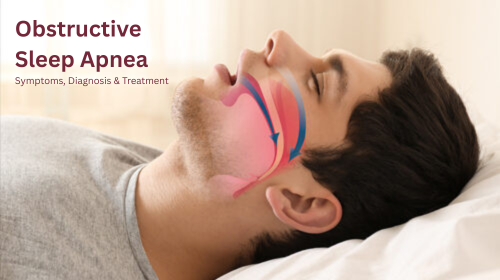
Obstructive sleep apnea (OSA) is a sleep disorder where airflow is partially or completely blocked, even though breathing effort continues.
Physiology
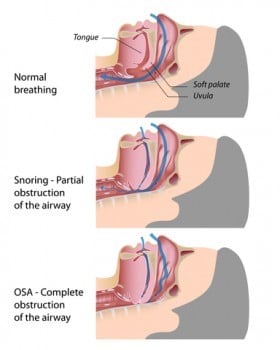
As the body enters sleep, muscle relaxation can lead to the soft tissues in the throat collapsing inward, resulting in a blocked upper airway. This leads to partial reduction in the airflow ( hypoapnea) or complete pause of airflow (apnea) for at least 10 seconds during sleep. Most pauses last for 10-30 seconds, and a few may last for more than one minute. During this period, there is an abrupt reduction in the oxygen saturation in the body. When oxygen saturation drops below 70–80 percent, the brain reacts to this low-oxygen state by signaling the body to wake briefly, allowing breathing to return to normal. This pattern of sleep happens about a hundred times during one night . This type of fragmented, poor-quality sleep results in excessive daytime sleepiness .
People with OSA mostly snore very loudly; the snoring sound is accompanied by a pause , where there is a period of silence when the airflow is reduced or blocked . Then they choke or gasp for breath, and the airways reopen; this is the time during which the awakening happens from sleep.
Prevalence
The prevalence of OSA is more common in the middle and older age groups. It’s more common in middle-aged men than in women. Almost 90 per cent of the OSA is undiagnosed. About 24 per cent of men and 9 per cent of women have breathing symptoms of OSA without the symptom of daytime sleepiness. About 2 per cent of the children have OSA, and it’s common among the preschool age group
Types of Obstructive Sleep Apnea (OSA)
A common measurement of Obstructive sleep apnea (OSA) is the apnea-hypoapnea index (AHI). This is an average index that measures the number of apneas and hypoapneas that occur per hour of sleep.
Mild OSA: AHI of 5-15. Involuntary sleepiness occurs during activities that require little attention, such as watching TV or reading.
Moderate OSA: AHI of 15-30, involuntary sleepiness during activities that require some attention, such as meetings and presentations.
Severe OSA: An AHI greater than 30, causing involuntary sleepiness during activities that demand higher alertness, like driving or conversing.
Risk Groups
- People who are overweight (BMI 25 to 30) and obese individuals(BMI above 30).
- People with large neck circumference: men-17 inches or more, women-16 inches or more
- Middle-aged and older men and post menopausal women
- People with bony and soft tissue abnormalities of the face and neck
- Children and adults with Down syndrome
- Children with large tonsils or adenoids
- Family history of obesity or OSA
- People with endocrine abnormalities
- Smokers
- People with recurrent rhinitis or abnormal nasal morphology
Signs and Symptoms
- Sudden awakenings are marked by gasping or choking.
- Rising from sleep with a parched mouth or throat discomfort
- Decreased libido
- Difficulty concentrating during the day
- Excessive daytime sleepiness
- Mood changes, including feelings of depression or increased irritability
- High blood pressure
- Loud snoring
- Morning headache
- Nighttime sweating
- Observed episodes of stopped breathing during sleep
When to See a Doctor
See a healthcare professional if you or your partner notice any of the following symptoms:
- Snoring is loud enough to interrupt your sleep or disturb others around you
- Sudden awakenings accompanied by gasping or choking
- Periodic pauses in breathing while sleeping
- Severe daytime sleepiness that may cause you to doze off during activities such as work, watching TV, or driving
Many people don’t realize that snoring can indicate a serious condition, and not all snorers have obstructive sleep apnea.
Make sure to consult your doctor if you have loud snoring, particularly if it’s interrupted by silent pauses. In obstructive sleep apnea, snoring tends to be loudest when sleeping on your back and often lessens when you sleep on your side.
Talk to your doctor if you experience persistent fatigue, excessive sleepiness, or irritability related to sleep issues. Feeling overly sleepy during the day might result from other medical conditions, including narcolepsy.
Effects of Obstructive Sleep Apnea
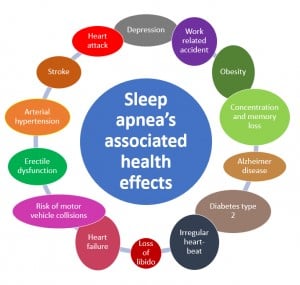
Without treatment, sleep apnea can raise the risk of developing various health complications, such as:
- High blood pressure
- Stroke
- Heart failure
- Diabetes
- Depression
- Lack of concentration
- Early morning headaches
- Motor vehicle accidents
- Loss of libido
Diagnosis
To diagnose your condition, the evaluation is based on signs and symptoms, an examination, and tests.
A physical examination of the ear, mouth, and nose is done to look for extra tissue or abnormalities. Your doctor may assess your neck and waist circumference and check your blood pressure.
To check the severity of the condition, an overnight sleep study will be done, which monitors the breathing and other body functions as you sleep.
Tests
Tests to detect obstructive sleep apnea include:
Polysomnography: In this sleep study, the patient is connected to equipment that tracks heart, lung, and brain activity, breathing patterns, limb movements, and blood oxygen levels throughout sleep.
A full-night study involves monitoring the patient throughout the entire night, while a split-night sleep study monitors the first half of the night and provides treatment in the second half if needed.
In a split-night sleep study, monitoring is done during the first half of the night. If you’re diagnosed with obstructive sleep apnea, you are given continuous positive airway pressure for the second half of the night and monitored
Polysomnography allows your doctor to diagnose obstructive sleep apnea and fine-tune positive airway pressure therapy as needed.
The sleep study can also identify other sleep disorders that cause excessive daytime sleepiness but need different treatments, such as periodic limb movements or narcolepsy.
Home sleep apnea testing: In certain situations, your doctor might provide a home-based polysomnography test to diagnose obstructive sleep apnea. This test usually monitors airflow, breathing patterns, and blood oxygen levels, and can also record limb movements and snoring intensity.
Your doctor may also refer you to an ENT specialist to check for any structural blockages in your nose or throat.
Treatment
Continuous Positive Airway Pressure
Continuous Positive Airway Pressure (CPAP) is widely used to treat moderate to severe OSA and can also help patients with mild sleep apnea. CPAP, first introduced in 1981, provides a constant flow of pressurized air via a mask worn while sleeping. This airflow keeps the airway open, prevents pauses in breathing, and restores normal oxygen levels. Modern CPAP machines are lightweight, quiet, and compact, offering various mask sizes and styles for a comfortable fit. Additionally, heated humidifiers can be connected to CPAP devices to enhance comfort during therapy.
Oral Appliances
Oral appliances offer an effective alternative for individuals with mild to moderate OSA who prefer them over CPAP or struggle with CPAP compliance. Resembling sports mouthguards, these devices keep the airway open by repositioning or stabilizing the lower jaw, tongue, soft palate, or uvula. Some are designed solely for snoring, while others address both snoring and sleep apnea.
Surgery
Surgery is considered for OSA when noninvasive treatments like CPAP or oral appliances fail. It works best when a correctable anatomical issue is causing airway obstruction. Common procedures include uvulopalatopharyngoplasty (UPPP), which reduces the size of the soft palate and may remove the tonsils and uvula, and adenotonsillectomy, the removal of tonsils and adenoids, which is the most frequent surgical option for children with OSA.
Behavioral Changes
Losing weight can improve symptoms for many individuals with sleep apnea, and switching from sleeping on your back to your side may help those with mild OSA.
Position Therapy
This approach is used for individuals with mild OSA, recommending they avoid sleeping on their backs and elevate the head of the bed to alleviate symptoms.
Can I Prevent Obstructive Sleep Apnea
While obstructive sleep apnea (OSA) cannot be prevented entirely, certain lifestyle changes can lower the risk and enhance sleep quality. Maintaining a healthy weight through a balanced diet and regular physical activity is key to improving sleep quality and lowering OSA risk. Following proper sleep hygiene, like keeping a regular bedtime schedule and limiting screen use before bed, also promotes more restful sleep. It’s important to manage existing health conditions like high blood pressure, high cholesterol, and Type 2 diabetes, as they can contribute to OSA. Managing existing health issues such as high blood pressure, high cholesterol, and Type 2 diabetes is crucial, as they can increase the risk of OSA. Annual health check-ups are recommended to keep track of your overall well-being and identify any potential issues early.
Frequently Asked Questions
1. How does sleep apnea affect life expectancy?
If moderate to severe sleep apnea is left untreated, it can considerably reduce life expectancy by increasing the likelihood of death from various health issues. People with severe sleep apnea may have up to three times the risk of dying from any cause compared to those without the disorder.
2. What is the difference between central sleep apnea and obstructive sleep apnea?
The main difference between central sleep apnea (CSA) and obstructive sleep apnea (OSA) lies in their cause. Central sleep apnea (CSA) happens when the brain does not send signals to the muscles responsible for breathing, leading to a complete pause in respiratory effort. On the other hand, OSA arises when the throat muscles collapse, blocking the airway and causing pauses in breathing despite the body’s efforts to breathe. CSA is less common and often linked to conditions like heart failure or stroke, while OSA is more common and often related to obesity, age, or anatomy.