 Health
  Find a
  Book an
 Mild Hepatomegaly: Causes, Symptoms, and Treatment
June 12, 2025
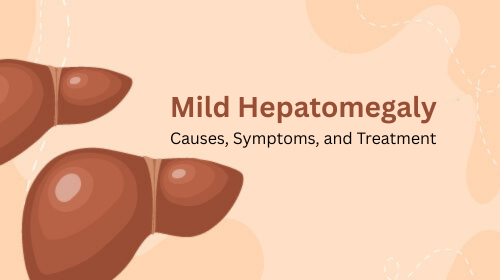
Mild Hepatomegaly is the medical term for an enlarged liver compared to a normal liver. Mild Hepatomegaly is more of a wake-up call than a disease. It indicates liver disease, congestive heart failure, or cancer.
Is Mild Hepatomegaly Reversible?
Yes, the liver has an outstanding capability to heal itself. If the preventive measures are followed correctly, mild hepatomegaly can easily be reversed.
Symptoms
Mild Hepatomegaly does not have any symptoms. Slight pain in the upper right abdomen is experienced occasionally by some people. The enlargement of the liver itself is a symptom of other underlying diseases like congestive heart failure, liver disease, or cancer. In the case of liver disease, the commonly seen symptoms are as follows:
- Abdominal pain
- Fatigue
- Nausea and vomiting
- Jaundice
- Itchy skin (pruritus)
- Enlarged spleen
Causes
Mild hepatomegaly can result from various diseases, and liver size naturally differs based on a person’s age, sex, and body build. Liver size naturally differs based on an individual’s age, gender, and overall body build. Some of the infections that cause Mild Hepatomegaly include viral hepatitis, toxins, and genetic diseases. Some cancer tumors may also cause liver enlargement. There are many other conditions due to which the liver enlarges,
1. Liver Diseases
- Cirrhosis
- Hepatitis A, Hepatitis B, and Hepatitis C
- Nonalcoholic fatty liver disease
- Alcoholic fatty liver disease
- Amyloidosis
- Wilson’s disease
- Hemochromatosis
- Gaucher’s disease
- Fluid-filled pockets in the liver (liver cysts)
2. Cancers
- Cancer that spreads to the liver
- Leukaemia
- Liver cancer
- Lymphoma
3. Heart and Blood Vessel Problems
- Obstruction of the liver’s draining veins (Budd-Chiari syndrome)
- Congestive heart failure
- Inflammation of the heart’s surrounding tissue (pericarditis)
Risk Factors
An enlarged liver is an effect of liver disease. Some of the common factors that increase the risk of liver disease are
- Excessive alcohol consumption – Alcohol consumption beyond a normal rate is detrimental to the liver.
- Consuming heavy doses of medications or supplements – Taking medications not prescribed or in excessive amounts can affect the liver.
- Herbal supplements – Some dietary supplements, such as black cohosh, ma huang, and valerian, may elevate the risk of liver damage.
- Infections – A few infectious diseases, such as viral, bacterial, or parasitic, can increase the risk of liver disease.
- Poor eating habits – Obesity is a considerable risk factor for liver disease. And so is the pattern of unhealthy eating habits.
Prevention
To reduce the risk of liver disease
Eat a healthy, balanced diet – Consume a diet full of all the nutrients required for the body: fruits, Vegetables, and Whole grains.

Drink alcohol in moderation – It is advisable to consume alcohol in moderation, even occasionally.
Taking medications in the right amount – Always take medicines as advised by the doctor.
Limit contact with chemicals – While working with chemicals, wear gloves, long sleeves, and a mask.

Maintain a healthy weight – If you feel like you are overweight, consult a nutritionist about the best way to lose weight organically.
Quit smoking – Smoking can affect your liver through inflammatory pathways. Quit smoking to help you prevent the increased risk of liver disease.

Diagnosis
Mild Hepatomegaly is often diagnosed during a physical examination. Therefore, your healthcare provider will primarily take a history of your results and perform a physical examination, searching for risk factors for liver disease. In addition, they will be looking for signs and symptoms of liver enlargement.
Imaging tests are used to confirm Mild Hepatomegaly. In addition, blood tests are used to determine if there is ongoing liver inflammation. These tests will also give us a combined study as to why the liver is enlarged.
An abdominal ultrasound is the first study in imaging tests. During an ultrasound, a sonographer places a device on the skin and records the resulting images. These ultrasound machines are painless, non-invasive, fast, and inexpensive.
Some additional procedures also include
- Blood tests – A blood test is performed to measure liver enzyme levels and investigate the reason behind the liver enlargement.
- Liver biopsy – A liver biopsy is typically performed by inserting a long, thin needle through the skin directly into the liver.
- Magnetic resonance elastography – It serves as an alternative to a liver biopsy, using sound waves to produce a visual map (elastogram) that shows the stiffness of liver tissue.
Occasionally, a liver biopsy is needed to attain a final diagnosis. Like paracentesis, this procedure is also performed with an anesthetic by placing a small needle into the liver through the skin.
Treatment
Mild Hepatomegaly is a symptom of an underlying disease in the liver. It may or may not require treatment in the first place. The cause of your liver enlargement determines treatment for Mild Hepatomegaly. Being aware of the symptoms that caused your liver enlargement is a must before you meet with the doctor for treatment.
When to Visit a Doctor
Mild hepatomegaly may not always cause noticeable symptoms, but certain signs indicate the need for medical attention. If you experience persistent discomfort in the upper right abdomen, unexplained fatigue, or digestive issues, it’s essential to consult a doctor.
Additionally, seek immediate medical care if you notice:
- Yellowing of the skin or eyes (jaundice) -A rapid, unexplained weight loss could indicate an underlying liver issue.
- Unexplained weight loss – An unexpected loss of weight could be a sign of an underlying liver disorder.
- Swelling in the abdomen or legs – The accumulation of fluid in the body can be a potential indicator of worsening liver disease.
- Persistent nausea or vomiting – Frequent digestive disturbances may suggest liver stress.
- Dark-colored urine or pale stools – Changes in urine and stool color can indicate bile-related issues.
People with risk factors like heavy alcohol use, exposure to viral hepatitis, or existing liver diseases should have regular check-ups to track liver health. Early detection and medical guidance can help manage hepatomegaly and prevent complications.
Frequently Asked Questions
1. Can mild enlargement of the liver be reversed?
Yes, in many cases, mild liver enlargement can be reversed, especially when detected early and the underlying cause is treated. The liver has a strong ability to heal itself if enough healthy tissue remains. If the condition is sudden, proper treatment can help it return to normal. Even in long-term conditions, it can often improve with lifestyle changes such as avoiding alcohol, maintaining a healthy weight, managing blood pressure, cholesterol and blood sugar, eating a balanced diet, and staying physically active.