 Health
  Find a
  Book an
 Kasai Procedure for Biliary Atresia Treatment
September 12, 2025
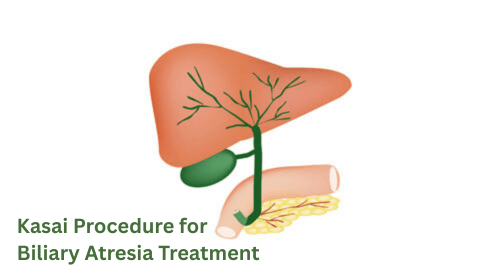
The ducts of the liver play a crucial role in producing bile, which must be drained into the intestine to aid in the digestion of food. In a situation where these ducts are blocked, the Kasai procedure is used to bypass them surgically and prevent any further liver damage. The treatment for biliary atresia in India is innovative and unique, yielding excellent results. The Kasai procedure is also known as Kasai portoenterostomy or hepatoportoenterostomy.
To conduct this procedure, surgeons must remove the damaged ducts outside the liver. The ducts are replaced by using a small part of the patient’s intestine where bile should drain. This part not only connects to the liver but also to the major portion of the intestine. The Kasai procedure forms a Y-shaped path through which bile flows from the liver and into the intestine.
Benefits
- Restore bile flow effectively.
- Ensure your baby receives essential nutrients.
- Eliminate jaundice symptoms.
- Support healthy growth and development in your baby.
Preparing Your Baby for the Kasai Procedure
Your baby’s healthcare team will get them ready for surgery by giving IV fluids. These fluids help keep your baby hydrated, control blood sugar levels, and provide essential nutrients. IV antibiotics are also given to lower the risk of infection. During the operation, your baby may need blood products, such as red blood cells or platelets.
Before performing the Kasai procedure, the surgeon must confirm that your baby has biliary atresia. This is done using a test called a cholangiogram, which allows the surgeon to check the bile ducts.
For the cholangiogram, the surgeon makes a small cut below the ribs on the right side of your baby’s abdomen or uses a laparoscopic method to insert a thin tube into the gallbladder. A special dye is then injected, and X-ray images are taken to view the bile ducts. If the bile ducts are blocked and bile cannot flow from the liver, biliary atresia is confirmed.
What to Expect During a Kasai Procedure
During the Kasai procedure, the surgeon removes your baby’s gallbladder and any abnormal bile ducts near the liver. They then use a section of your baby’s small intestine (jejunum) to replace the damaged bile ducts, creating a new pathway for bile to flow from the liver into the intestine.
If the surgery is successful, this new connection allows bile to drain properly, helping to reduce the effects of biliary atresia.
The procedure typically takes several hours to complete.
Kasai Post-Procedure
After this procedure, the patient will need to remain in the hospital for approximately 1 to 2 weeks. The procedure conducted will heal during this period, and doctors will medicate the child so that there’s no excessive build-up of fluid.
Results of the Kasai Procedure
Both bile flow and liver function will be restored to normalcy in at least 1/3 of children undergoing this procedure. They may not need liver transplantation, unlike the 2/3 who undergo the kasai procedure and do not have sufficient bile flow and liver function. Half of this group will need to have liver transplantation after the Kasai procedure, while the other half will need to have it at some later date.
Post-Operative Recovery
The child will be taken to the recovery area after the Kasai procedure. Here, the child will be taken to the paediatric floor and will remain there for a few days. Once the child demonstrates that they have been eating well, are pain-free, and do not have a fever, they will be sent home.
Is it Necessary for the Child to be Seen by a Surgeon After the Kasai Procedure?
Yes. About two weeks after the child is discharged, a nurse from the hospital will contact you to inquire about their health. The child will need to be met by the gastroenterologist and surgeon soon.
Why Should You Choose Rela Hospital?
Liver diseases of all kinds are diagnosed and treated at the Rela Hospital, a multispeciality hospital in Chennai. This includes the Kasai Procedure, complex though it might seem. If this means that the patient is an innocent child, we take as much care and consideration as is required to treat the patient quickly, efficiently, and accurately, so that they are back on their feet again.
Our hospital is proud to announce that, apart from all the disciplines it houses and focuses on, it also houses and focuses on liver diseases. Yet, our founding father is also endowed with the knowledge and know-how of being one of the few Kasai procedure doctors in India.
Our teams of doctors and specialists in liver disease are also well-versed with this procedure and perform it with aplomb and ease. Additionally, we are recognized as a prominent Pediatric liver surgery hospital in India, equipped with all the necessary technology, techniques, and manpower to facilitate such surgeries.
Each well-known paediatric liver specialist in Chennai works at Rela Hospital and is committed to giving their best at all times.
Frequently Asked Questions
1. When is the Kasai procedure done?
The Kasai procedure is done at an early age (younger than three months), and about 80 percent of patients have some bile flow. In about 30 percent of these infants, sufficient bile drains from the liver, allowing bilirubin levels to return to normal.
2. How successful is the Kasai procedure?
The initial success rate of the Kasai procedure (for achieving bile flow) is 60-80%. The most important factor influencing the outcome is the age at which the operation is performed.
3. What are the complications of the Kasai procedure?
The Kasai procedure plays a crucial role in treating biliary atresia, but it can lead to several complications. Common challenges include cholangitis, portal hypertension, and intrahepatic biliary cyst formation. In more serious cases, the child might experience liver failure and ultimately need a liver transplant.