 Health
  Find a
  Book an
 Hyperthyroidism: Causes, Symptoms, Diagnosis, and Treatment
February 25, 2026
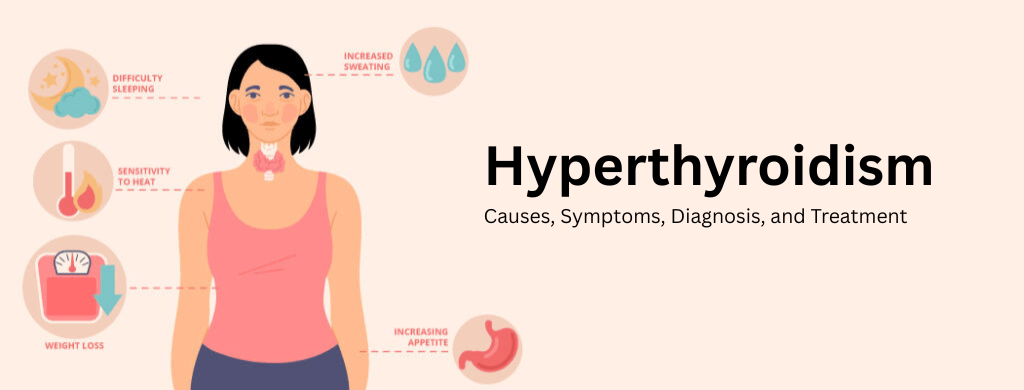
When you have hyperthyroidism, your thyroid produces and releases more hormones than you require. Another name for this is hyperactive thyroid. Triiodothyronine (T3) and thyroxine (T4) are the primary hormones your thyroid produces. A doctor must treat hyperthyroidism because it can impact the entire body.
How Does My Thyroid Work?
The thyroid is a butterfly-shaped gland at the front of your neck. You have glands, which are organs, all over your body. Hormones, which support your body’s growth and function, are produced and released by a few of your glands. The thyroid gland is vital for many of your body’s essential processes, such as:
- Controlling the temperature of your body.
- Regulating the rate of your heart.
- The management of metabolism.
Your body is in equilibrium, and all your systems perform properly when your thyroid gland functions appropriately. However, your entire body may be affected if your thyroid ceases to produce thyroid hormones as it should, either in excess or insufficiently.
What Distinguishes Hypothyroidism from Hyperthyroidism?
The difference between hyperthyroidism and hypothyroidism is how much thyroid hormone your thyroid produces and releases. Both disorders are medical conditions.
Just think of anything hyper-related. Most likely, all you did was think of anything fast or energetic. Your thyroid is overactive and creates and releases an excessive amount of thyroid hormone when you have hyperthyroidism.
The prefix “hypo” denotes “low” or “not enough” in the medical field. For example, your thyroid is underactive when you have hypothyroidism, and it doesn’t produce and release as much thyroid hormone as your body requires.
Who is Prone to Hyperthyroidism?
Hyperthyroidism can affect anyone, but women are more likely to get it.
Symptoms
The various symptoms of hyperthyroidism can affect every part of your body. Some of these symptoms might be present for you at once, while others might not. Hyperthyroidism symptoms can include:
- Rapid heartbeat (palpitations)
- Trembling and/or being anxious
- Loss of weight
- Increased appetite
- Tachycardia
- Arrhythmia
- Sweating
- Increased frequency of bowel movements and diarrhea.
- Vision changes
- Warm, thin, and moist skin
- Menstrual changes
- Excessive perspiration and heat intolerance
- Sleep issues
- Neck expansion and swelling brought on by an enlarged thyroid gland (goiter)
- Hair texture changes and hair loss (brittle)
- Eyeballs that bulge (as with Graves’ illness)
- Weakened muscles
- Increased blood pressure
Causes
Several factors can lead to hyperthyroidism, including
- Graves’ disease
- Overactive thyroid nodules
- Thyroiditis – inflammation of the thyroid gland
- Too much iodine NIH external link
- Too much thyroid hormone medicine
- A noncancerous tumor of the pituitary gland
Graves’ illness
Graves’ disease is the most frequent autoimmune illness that results in hyperthyroidism. Your thyroid is attacked by this illness, which causes it to produce an excessive amount of thyroid hormone.
Thyroiditis
Your thyroid gland is inflamed when you have thyroiditis. In addition, thyroid hormone may leak into your bloodstream due to several types of thyroiditis. You might, therefore, get hyperthyroidism symptoms.
Various kinds of thyroiditis might result in hyperthyroidism.
- A painfully inflamed and swollen thyroid is a symptom of subacute thyroiditis.
- A woman may experience postpartum thyroiditis after giving birth.
- Similar to postpartum thyroiditis, but without pregnancy, it is painless thyroiditis. You might have an enlarged thyroid. Experts believe that painless thyroiditis is likely an autoimmune disorder.
- Hypothyroidism, or an underactive thyroid, can also result from thyroiditis. Your thyroid may occasionally go from overactive to underactive after being overactive for a while.
Too much iodine
Your thyroid relies on iodine to generate thyroid hormones. The iodine you consume directly affects the amount of thyroid hormone your thyroid produces. Iodine overdose may result in the thyroid gland producing excessive levels of thyroid hormone in some individuals.
There may be a lot of iodine in several cough syrups and medications, including some cardiac medications. In addition, iodine is present in large quantities in seaweed and supplements made from seaweed.
Overtreatment with Thyroid Hormone
Some individuals on thyroid hormone therapy for hypothyroidism may overdo it. If you use thyroid hormone medication, have your thyroid hormone levels evaluated by your doctor at least once a year. If your doctor finds your thyroid hormone levels too high, they may adjust your dosage.
Thyroid hormone medications may potentially interact with other medications and cause hormone levels to rise. When taking new medications, consult your doctor about potential interactions if you use thyroid hormone medication.
Non-cancerous Tumour
A noncancerous growth of the pituitary gland, found near the base of the brain, can occasionally lead to hyperthyroidism.
TSH-Releasing Pituitary Adenoma
A TSH-secreting pituitary adenoma, also known as thyrotropinoma, is a rare tumor in the pituitary gland that produces excessive thyroid-stimulating hormone (TSH). Under normal conditions, the pituitary gland releases TSH to regulate thyroid hormone production. However, an overproduction of TSH due to this tumor can result in an excess of thyroid hormones, leading to hyperthyroidism.
Risk Factors
Certain factors can make a person more likely to develop hyperthyroidism. These include:
- Being female
- Older age
- Family history of thyroid or autoimmune conditions
- Pregnancy or the period after childbirth
- High intake of iodine from diet or medicines
- Smoking
- Having other autoimmune or long-term health conditions
Having one or more of these factors does not mean you will definitely develop hyperthyroidism, but it can increase the chances. Early medical advice can help with timely diagnosis and care.
Diagnosis
To diagnose this condition, your doctor will start with your medical history and a physical exam. They check for signs like a fast heartbeat, hand tremors, warm skin, and changes in your eyes or reflexes. The thyroid gland is examined for size, bumps, or tenderness.
Blood tests are the main way to confirm hyperthyroidism. These tests measure thyroid hormones (T3 and T4) and thyroid-stimulating hormone (TSH). High T3 and T4 with low TSH usually indicate an overactive thyroid. Be sure to tell your doctor if you take biotin or multivitamins, as these can affect results.
If needed, your doctor may order imaging tests to find the cause of hyperthyroidism. These can include:
- Radioactive iodine uptake and scan – shows how much iodine your thyroid absorbs to detect overactivity or nodules
- Thyroid ultrasound – It uses sound waves to produce images and identify thyroid nodules without exposing you to radiation.
These tests together help your healthcare provider understand if your thyroid is overactive and why.
Treatment
Treatment depends on the cause, severity, age, and overall health. Your doctor will recommend the best plan for you. Common treatments include:
1. Antithyroid Medicines – Medications like methimazole or propylthiouracil help reduce thyroid hormone production. Symptoms may improve within weeks, but treatment usually continues for several months. Some people achieve long-term remission, while others may need further treatment.
2. Radioactive Iodine Therapy – This treatment destroys overactive thyroid cells. It usually cures hyperthyroidism but often leads to hypothyroidism. People who undergo this therapy usually need lifelong thyroid hormone replacement.
3. Surgery (Thyroidectomy) – Surgery removes part or all of the thyroid gland. It corrects hyperthyroidism but typically causes hypothyroidism, requiring lifelong thyroid hormone pills. Surgery may be an option if medicines or radioactive iodine are not suitable.
4. Beta-Blockers – These medicines do not lower thyroid hormone levels but help control symptoms like rapid heartbeat, tremors, and anxiety until other treatments take effect.
5. Thyroid Eye Disease Management – Mild eye symptoms can be eased with artificial tears and protective measures. More severe cases may need medications like corticosteroids or, rarely, surgery to relieve pressure and improve eye position.
6. Lifestyle and Diet – A balanced diet with fruits, vegetables, whole grains, and lean proteins supports thyroid health. Avoid excess iodine and iodine supplements. Always consult your doctor before taking supplements.
Hyperthyroidism is treatable, and with proper care, most people can manage symptoms and maintain a good quality of life.
Who to Consult for Hyperthyroidism?
Most likely, you’ll begin by visiting your primary care physician. However, an endocrinologist, an expert in hormone issues, may be recommended to you directly.
Frequently Asked Questions
1. How long does it take to recover from hyperthyroidism?
Depending on what triggered the hyperthyroidism, the length of time it takes to treat it may vary. If your doctor uses antithyroid medications to treat your condition, your hormone levels should fall to a healthy level in six to twelve weeks.
2. What are the foods to avoid with hyperthyroidism?
People with hyperthyroidism should avoid iodine-rich foods (fish, seaweed, dairy, iodized salt), soy products (tofu, soy milk), gluten-containing foods (bread, pasta), processed foods, added sugar (candy, soft drinks), alcohol, and nightshade vegetables (tomatoes, eggplant, potatoes).
3. What do hyperthyroidism TSH levels indicate?
In adults who are not pregnant, hyperthyroidism TSH levels are typically below 0.4 mIU/L, indicating an overactive thyroid. A very low or undetectable TSH level with normal T3 and T4 levels is known as subclinical hyperthyroidism. Additional evaluations, like measuring T3 and T4 levels, assist in determining how well the thyroid is functioning. If you have symptoms, consult a healthcare provider for proper evaluation.
4. Can hyperthyroidism occur while you are pregnant?
Yes, hyperthyroidism can develop during pregnancy. In the early stages, your body naturally produces more thyroid hormones to support the baby’s growth, and slightly higher levels are usually normal. However, if the hormone levels rise too much, your healthcare provider may recommend treatment. Excess thyroid hormones can affect both the mother and the developing baby.
It can be hard to diagnose hyperthyroidism during pregnancy because thyroid hormone levels naturally rise, and common pregnancy symptoms may cover up the signs of the condition.