 Health
  Find a
  Book an
 Seizures vs. Epilepsy: Symptoms, Diagnosis, and Treatment
April 21, 2026
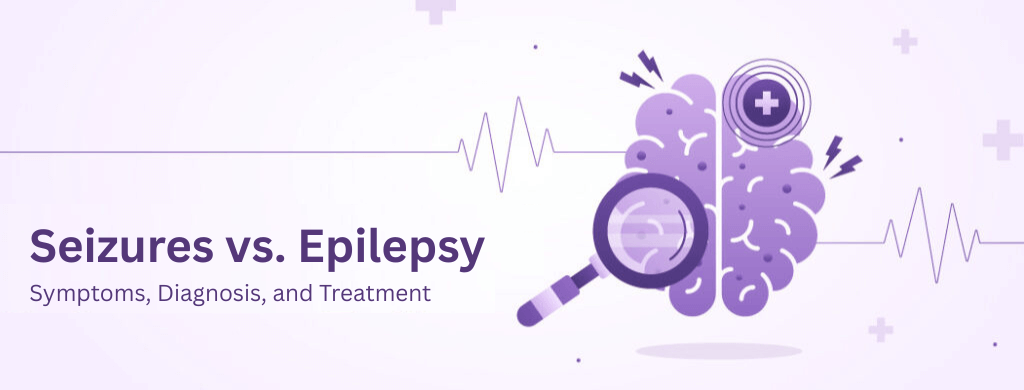
A seizure is a sudden, temporary disturbance in the brain’s electrical activity that can cause changes in behavior, movement, feelings, and consciousness. In contrast, epilepsy is a neurological condition marked by repeated, unprovoked seizures. So, while seizures are a symptom of epilepsy, not all seizures mean someone has epilepsy.
What’s a Seizure?
A seizure is a sudden, temporary disruption of electrical signals in the brain that can cause changes in behavior, movement, feelings, and consciousness. Seizures can vary in duration, lasting from a few seconds to several minutes, and may be mild or intense depending on the type and individual.
Generalized Seizures
Generalized seizures involve the whole brain and typically cause a loss of consciousness along with a lack of control over body movements. They can be further classified into six types: tonic-clonic seizures, absence seizures, myoclonic seizures, atonic seizures, tonic seizures, and clonic seizures.
Focal Seizures
Focal seizures, or partial seizures, originate in a specific area of the brain and may extend to other regions as they progress. Focal seizures are classified into two types: simple and complex. Simple focal seizures do not affect consciousness, while complex focal seizures can cause changes in consciousness or awareness.
What is Epilepsy?
Epilepsy is a brain disorder marked by repeated seizures that occur without a known trigger. It can affect people of all ages and be caused by various factors, such as genetics, brain injury, infection, or tumours. Epilepsy can greatly affect a person’s quality of life, limiting their ability to work, drive, and engage in everyday activities.
Types of Epilepsy
There are many different types of epilepsy, and the type of epilepsy someone has will depend on the affected part of the brain. Some of the most common types of epilepsy include:
- Idiopathic Epilepsy: The cause of seizures is unknown, but there is often a genetic component.
- Symptomatic Epilepsy: Seizures are caused by an underlying condition or injury, such as a stroke, brain infection, or brain injury.
- Cryptogenic Epilepsy: Seizures have no identifiable cause, but there may be evidence of structural brain abnormalities.
- Juvenile Myoclonic Epilepsy: This form of idiopathic epilepsy usually begins during adolescence and is marked by myoclonic seizures and generalized tonic-clonic seizures.
- Absence Epilepsy is generalized epilepsy characterized by brief lapses in consciousness.
Some types of epilepsy are specific to childhood, including:
- Infantile Spasms: A rare type of epilepsy that usually begins in infancy and is characterized by brief, sudden spasms of the arms, legs, or trunk.
- Lennox-Gastaut Syndrome: A severe form of epilepsy that typically begins in childhood, marked by multiple types of seizures, developmental delays, and intellectual disabilities.
Why Do People Get Epilepsy?
There are many different factors that can cause epilepsy, including genetics, brain injury, infection, or tumor. Some people may also develop epilepsy due to an unknown cause. Other risk factors for epilepsy include age, family history of epilepsy, and certain medical conditions, such as stroke or brain infection.
Can you Prevent Epilepsy?
Unfortunately, there is no known way to prevent epilepsy, as the condition is often caused by factors that are beyond an individual’s control, such as genetics or brain injury. However, there are ways to reduce the risk of seizures, such as taking medication as prescribed by a doctor, avoiding triggers that can cause seizures (such as alcohol or sleep deprivation), and wearing a medical alert bracelet to alert others in case of an emergency.
What are the Symptoms of Epilepsy?
Seizures are the hallmark symptom of epilepsy, presenting in diverse ways based on the individual and the specific type of seizure. Other symptoms may include temporary confusion, loss of consciousness, staring spells, sudden falls, or convulsions.
Who Has a Higher Chance of Developing Epilepsy and Seizures?
Epilepsy can affect anyone. It occurs in people of all ages, genders, and backgrounds.
In many cases, the exact reason for epilepsy is not known. However, it may develop when normal brain activity is disturbed. This can happen due to inherited factors, brain injuries, infections, stroke, tumors, or problems in brain development.
Sometimes, the brain’s nerve cells send signals in an unusual way. Certain cells may become too active, or communication between brain cells may be interrupted. These changes can lead to seizures.
Genetic Factors
Genes can play an important role in some types of epilepsy. In some families, epilepsy may affect more than one person. In other cases, gene changes may happen on their own, even without a family history.
These gene changes may affect how brain cells work, how the brain develops, or how a person responds to epilepsy medicines.
Medical Conditions Linked to Epilepsy
Certain health conditions may increase the chance of developing epilepsy, such as:
- Brain tumors
- Head injuries
- Stroke
- Lack of oxygen to the brain
- Alzheimer’s disease
- Brain infections like meningitis or encephalitis
- Brain swelling or inflammation
- Cerebral palsy
- Bleeding in the brain
- Autism spectrum disorder
- Intellectual disabilities
- Alcohol misuse or sudden alcohol withdrawal
Common Seizure Triggers
Triggers do not directly cause epilepsy, but they may lead to seizures in people who already have the condition. Common triggers include:
- Emotional stress
- Lack of sleep
- Drinking alcohol or alcohol withdrawal
- Missing meals
- Dehydration
- Hormonal changes during periods
- Flashing lights or moving images
- Exposure to harmful substances or drugs
Among these, stress is one of the most common triggers reported by many people.
Diagnosis
Diagnosing seizures and epilepsy requires a comprehensive approach that includes medical history, neurological evaluation, and advanced imaging techniques. Since seizures can occur due to various underlying conditions, a proper diagnosis helps distinguish between epilepsy and other potential causes, such as metabolic imbalances, infections, or structural brain abnormalities.
1. Medical History and Physical Examination
A doctor begins by gathering detailed information about seizure episodes, including their frequency, duration, and potential triggers. Since individuals experiencing seizures may not always recall the event, input from witnesses can provide valuable insights. Additionally, a physical examination assesses neurological functions such as reflexes, coordination, and cognitive abilities to identify possible abnormalities.
2. Electroencephalography (EEG)
An EEG is one of the primary diagnostic tools used to evaluate abnormal electrical activity in the brain. Electrodes attached to the scalp detect irregular brain wave patterns that may indicate epilepsy. In some cases, prolonged EEG monitoring or video EEG recordings are conducted to capture seizure activity over extended periods.
3. Imaging Studies (MRI and CT Scans)
Brain imaging is essential for detecting structural abnormalities that may trigger seizures. MRI captures high-resolution images of brain tissues, aiding in the detection of tumors, lesions, or scarring. Computed Tomography (CT) scans, which use X-rays, are often used in emergency settings to rule out acute conditions like bleeding or trauma-related abnormalities.
4. Blood Tests and Metabolic Screening
Lab tests assist in identifying underlying medical conditions that may trigger seizures, including electrolyte imbalances, infections, or autoimmune disorders. Blood tests can also check for genetic markers that may contribute to inherited forms of epilepsy.
5. Functional and Advanced Imaging
For more in-depth evaluation, advanced imaging techniques such as Positron Emission Tomography (PET) and Single-Photon Emission Computed Tomography (SPECT) help analyze blood flow and metabolic activity in the brain. These tests help pinpoint the specific brain regions involved in seizure activity.
6. Neuropsychological Evaluation
A neuropsychological assessment examines cognitive functions such as memory, attention, and problem-solving skills. This evaluation is especially useful for individuals with epilepsy to determine how seizures may be affecting brain function and daily life.
A precise diagnosis ensures that appropriate treatment plans, including medication, lifestyle modifications, or surgical interventions, are tailored to the individual’s condition.
Treatment
Managing seizures and epilepsy involves medications, surgery, lifestyle changes, and advanced therapies.
- Medications: Anti-seizure drugs help control seizures, but finding the right one may take time. Side effects like dizziness or fatigue usually improve with adjustments.
- Surgery: For drug-resistant cases, options include resective surgery (removing affected brain tissue) and deep brain stimulation (DBS) to regulate brain activity.
- Neurostimulation Devices: Vagus nerve stimulation (VNS) and responsive neurostimulation (RNS) help control seizures by sending electrical signals to the brain.
- Dietary Therapy: The ketogenic or modified Atkins diet may reduce seizures in some individuals.
- Lifestyle Changes: Identifying triggers, maintaining sleep hygiene, managing stress, and engaging in safe exercises like yoga or walking can help.
- Alternative Therapies: Meditation, acupuncture, and supplements may provide additional support but should be used under medical guidance.
- Emerging Technologies: Wearable devices and AI-driven monitoring improve seizure tracking and management.
A personalized approach combining medical and lifestyle strategies offers the best seizure control. Consulting a doctor is crucial for tailored treatment.
When to Consult the Doctor and Who to Consult?
If you or someone around you has a seizure, it is important to get medical help as soon as possible. The first step is to call an ambulance or the local emergency number. A doctor who specializes in epilepsy, known as an epileptologist, can help diagnose and treat the condition.
Frequently Asked Questions
1. Does a seizure always mean epilepsy?
No, not all seizures mean someone has epilepsy. A variety of factors, including fever, head injury, infection, or medication side effects, can cause seizures. A doctor will need to perform a complete evaluation to find the cause of the seizure.
2. Can you have a seizure and not epilepsy?
Yes, it is possible to have a seizure and not have epilepsy. A variety of factors, such as fever, head injury, infection, or medication side effects, can cause seizures. However, if someone experiences more than one unprovoked seizure, they may be diagnosed with epilepsy.