 Health
  Find a
  Book an
 Cobblestone Throat: Causes, Symptoms, & Prevention
July 3, 2025
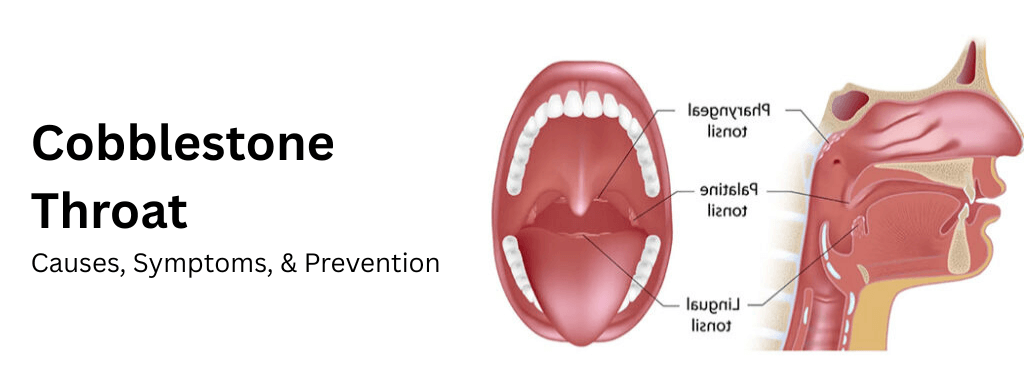
Cobblestone throat can develop due to excess mucus buildup in the throat and is often a symptom of conditions like allergies, postnasal drip, or pharyngitis. Adenoids and tonsils are glands in the back of the nasal canal that help filter out bacteria and viruses. Enlarged lymphatic tissue in these glands can result in a cobblestone throat.
When too much mucus builds up in the back of the throat, the immune system responds by enlarging the lymphatic tissues, leading to the formation of lumps. The name “cobblestone throat” comes from the lumps’ resemblance to a cobblestone path. Medical professionals will occasionally use the term when discussing sore throats or pharyngitis.
Causes
Bumps in the back of the throat can be caused by various infections and other ailments. Some of the infections can be:
- Viruses: The most typical reason for a sore throat is a viral illness. The following viruses can cause bumps on the back of the throat.
- Viruses responsible for the common cold
- Viruses causing influenza
- Viral herpes simplex that causes chickenpox
- Infectious mononucleosis (mono) group
- Bacteria: Bacterial infections can also lead to the formation of lumps at the back of the throat. This may occur after being exposed to the bacterial group A Streptococcus.
- Additional potential reasons include breathing in dry air, allergies, postnasal drip, and acid reflux.
Symptoms
The bumps typically resemble pebbles and appear red, itchy, or inflamed. Depending on the cause of cobblestone throat, other symptoms may include:
- Dry cough that won’t go away
- Sibilant voice
- Nausea and vomiting
- Foul breath
- A high temperature
- Discomfort while conversing
- Discomfort when swallowing
- Hoarse voice
- Irritable throat
- A feeling as though something is stuck in one’s throat
Diagnosis
Doctors can usually tell if someone has a cobblestone throat and what might be causing it by doing a physical exam. They look closely at the throat for any swelling or signs of infection. If a viral infection seems unlikely, doctors may recommend additional tests like a blood test or a throat swab to detect bacteria or less common viruses. They will also ask how long the throat has been sore and whether the person has allergies or conditions like acid reflux that could be contributing to the problem.
Prevention Tips
To avoid cobblestone throat, the following practices can be implemented:
- Recognize and stay away from things that make your allergies flare up.
- Avoid inhaling secondhand smoke, vaping, and smoking.
- Live a healthy lifestyle by following a balanced diet, staying active, sleeping 7–8 hours nightly, and keeping stress levels low.
- To prevent bacterial and viral infections, avoid close contact with sick individuals, wear a mask or practice social distancing when needed, and wash your hands frequently.
- Follow the doctor’s or healthcare provider’s recommendations when using allergy medicine.
- When sneezing or coughing, cover your mouth and nose with your elbow.
- Don’t share towels or cutlery.
- Keep surfaces clean on a regular basis.
Treatment Options
Cobblestone throat treatment varies depending on the underlying cause. Doctors prescribe antibiotics, which destroy germs and stop them from proliferating, to treat bacterial illnesses.
Viral infections such as the flu don’t respond to antibiotics and generally improve without medical treatment. Pharyngitis often goes away in seven to ten days.
The following natural therapies at home could aid with pain and relief from discomfort:
- Consuming a lot of water
- Relaxing
- Consuming warm liquids, such as tea
- Gargling with salt water
- Sucking on a throat lozenge
- Using nasal sprays to treat post-nasal drip
Cobblestone Throat Requires No Cancer Concern
Excess mucus in the throat often leads to cobblestone throat, a usually harmless condition. While its bumpy appearance might seem alarming, it has no link to cancer. Work with your doctor to find out what’s causing the mucus buildup and start managing it.
Frequently Asked Questions
1. How long does a cobblestone throat last?
A cobblestone throat usually clears up within one to two weeks when triggered by a cold or flu. However, it may last longer if underlying causes like allergies, acid reflux, or other factors are involved.
2. Does a cobblestone throat cause bad breath?
This can vary based on what is causing the cobblestone throat. For instance, pharyngitis may be accompanied by halitosis, also known as bad breath.
3. Is cobblestone throat a contagious condition?
Cobblestone throat itself is not contagious, but it can be caused by infections that spread from person to person. For example, viral infections such as the flu or bacterial infections like strep throat can be contagious and may lead to throat irritation that results in a cobblestone appearance. In contrast, non-infectious causes such as allergies or acid reflux do not spread to others.
Even when someone catches the same infection, they may not develop cobblestone throat. This varies depending on individual immune response and how sensitive or irritated the throat becomes.