 Health
  Find a
  Book an
 Aortic Dissection: Causes, Symptoms, & Prevention
April 22, 2026
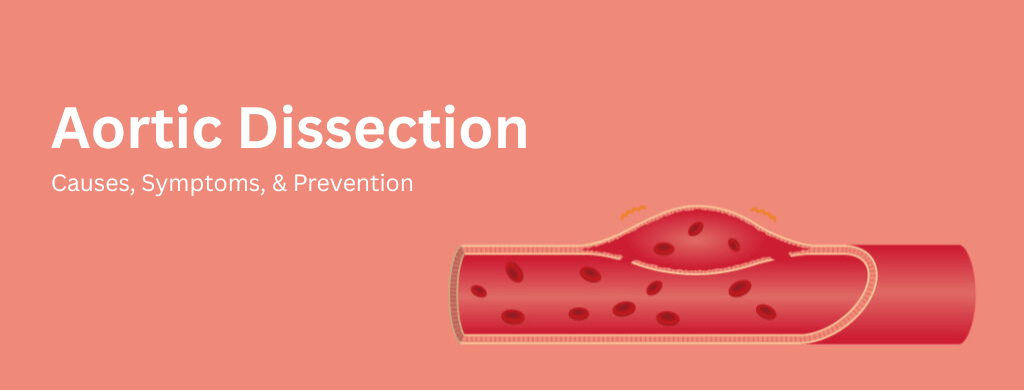
The aorta, the body’s largest artery, carries oxygen-rich blood from the heart to the rest of the body. Aortic dissection is a critical condition where a tear in the inner layer of the aorta allows blood to enter between the layers of the vessel wall, causing them to split apart. This can lead to a number of life-threatening complications, including organ damage, stroke, and death.
Where is the Aorta?
The aorta is the largest artery in the human body, originating from the heart’s left ventricle and extending down through the chest and abdomen. It divides into smaller arteries that deliver oxygen-rich blood to various parts of the body.
Types
Aortic dissection is classified into two primary types, depending on where the tear occurs in the aorta.
- Stanford Type A aortic dissection occurs when the tear or rupture is located in the ascending aorta, the first part of the aorta that emerges from the heart. Stanford Type A aortic dissection is a medical emergency due to its potential to cause fatal complications like aortic rupture, cardiac tamponade, and malfunction of the aortic valve
- Stanford Type B aortic dissection involves a tear in the descending aorta, the section that runs through the chest and abdominal area. Stanford Type B aortic dissection is typically managed with medical therapy, although some cases may require surgery.
Signs and Symptoms
Aortic dissection symptoms may present differently based on how severe the tear is and where it occurs along the aorta. Some of the common symptoms of aortic dissection include:
- Sudden and severe chest or back pain, which may feel like a tearing or ripping sensation
- Shortness of breath or difficulty breathing
- Rapid heartbeat or palpitations
- Sweating
- Nausea or vomiting
- Weakness or numbness on one side of the body
- Fainting or loss of consciousness
- Pain in the belly
- Weak pulse
Causes
Aortic dissection is typically caused by a weakening of the inner lining of the aorta, which can be due to a number of factors, including:
- High Blood Pressure: This is the primary contributor to aortic dissection, as it steadily damages the aortic walls by exerting excessive pressure over time.
- Atherosclerosis: This condition involves the accumulation of fatty plaques along the arterial walls, including the aorta, which results in the arteries becoming narrowed and structurally weakened.
- Connective Tissue Disorders: Certain inherited conditions, such as Marfan syndrome and Ehlers-Danlos syndrome, can cause weakness in the walls of the aorta and increase the risk of aortic dissection.
- Trauma: Aortic dissection can also occur as a result of a traumatic injury to the chest or abdomen.
Risk Factors
Some of the factors that can increase the risk of developing aortic dissection include:
- Age: Aortic dissection tends to occur more frequently in individuals over the age of 60.
- Gender: Aortic dissection occurs more frequently in men than in women.
- High Blood Pressure: Persistent hypertension can strain and weaken the aortic wall, making aortic dissection more likely.
- Smoking: Smoking or using tobacco products raises the risk of aortic dissection by harming arterial walls and elevating blood pressure.
- Atherosclerosis: Fatty deposits that collect in the arteries can raise the risk of aortic dissection.
- Connective Tissue Disorders: Genetic connective tissue disorders like Marfan syndrome and Ehlers-Danlos syndrome can compromise the strength of the aortic wall, raising the risk of aortic dissection.
Complications
Aortic dissection can lead to a number of serious complications, including:
- Aortic rupture occurs when the weakened walls of the aorta tear completely, causing blood to leak out into the chest or abdomen.
- Organ damage: Aortic dissection can disrupt blood flow to the organs of the body, causing damage to the kidneys, liver, or other vital organs.
- Stroke: If the aortic arch is involved in the dissection, it may interrupt blood flow to the brain and potentially cause a stroke.
- Cardiac tamponade happens when blood collects in the sac around the heart, creating pressure that hinders the heart’s ability to pump blood efficiently.
- Aortic valve dysfunction: Aortic dissection can damage the aortic valve, leading to aortic regurgitation, in which blood flows back into the heart instead of out to the body.
Diagnosis
Aortic dissection is a serious emergency that requires immediate diagnosis. Its symptoms can look similar to a heart attack, stroke, or other serious conditions. Because of this, doctors act quickly to confirm the problem and begin treatment.
Medical History and Physical Examination
Doctors first ask about symptoms such as sudden chest pain, back pain, fainting, weakness, or trouble breathing. They also review personal and family medical history.
During the physical exam, doctors check the pulse in the arms and legs. They may compare blood pressure in both arms because aortic dissection can cause different readings on each side. They also listen to the heart and lungs for unusual sounds.
Chest X-Ray
A chest X-ray is often one of the first tests done in an emergency. It helps doctors look at the heart, lungs, and aorta. It may show a widened aorta or other warning signs.
CT Scan
A CT scan is one of the most common tests used to diagnose aortic dissection. It creates detailed images of the chest and aorta. Doctors often use contrast dye to clearly see the tear and check its size and location.
Echocardiogram
An echocardiogram uses sound waves to create moving pictures of the heart and nearby blood vessels.
A transthoracic echocardiogram (TTE) is done from outside the chest. A transesophageal echocardiogram (TEE) gives clearer images by passing a small probe through the mouth into the food pipe.
MRI Scan
Doctors use MRI technology to capture highly detailed views of the aorta through magnetic waves and radio pulses. It helps doctors see the tear and blood flow clearly. It is useful in stable patients but may take longer than a CT scan.
Blood Tests
Doctors may request blood tests to exclude other urgent conditions, including a heart attack. These tests also help check the patient’s overall condition before treatment.
Why Quick Diagnosis Matters
Early diagnosis can save life and reduce serious complications. Once confirmed, doctors decide the type of aortic dissection and choose the best treatment immediately.
Treatment
Aortic dissection is a life-threatening emergency that needs immediate treatment. The treatment depends on where the tear is located in the aorta and how severe the condition is. Doctors aim to stop the tear from worsening, protect blood flow, and prevent serious complications.
Emergency Care
Doctors first stabilise the patient in the hospital. They give medicines to lower blood pressure and slow the heart rate. This reduces stress on the aorta and helps prevent further tearing. Strong pain relief medicines are also commonly used.
Treatment for Type A Aortic Dissection
Type A aortic dissection affects the part of the aorta closest to the heart. It usually requires emergency surgery.
During surgery, doctors remove the damaged section of the aorta and replace it with an artificial tube called a graft. If the aortic valve is damaged, they may repair or replace it at the same time.
Treatment for Type B Aortic Dissection
Type B aortic dissection affects the lower part of the aorta. Some cases can be treated with medicines alone, especially if there are no complications.
Doctors closely monitor the patient and use medicines to control blood pressure and heart rate. If the tear blocks blood flow or causes organ damage, surgery may be needed.
Endovascular Repair
Many Type B cases are treated with a minimally invasive method called endovascular repair. Doctors guide a thin tube through a blood vessel, usually from the groin, and place a stent graft inside the aorta. This helps support the weakened area and improve blood flow.
Open Surgery
Some severe or complex cases need open surgery. Doctors may use this when the tear is large, spreading quickly, or cannot be repaired with a stent.
Long-Term Care
After treatment, regular follow-up is very important. Patients often need lifelong blood pressure medicines and routine CT or MRI scans to check the aorta.
Lifestyle Changes
Healthy habits can lower future risk. Doctors may advise quitting smoking, avoiding heavy lifting, managing stress, exercising safely, and keeping blood pressure under control.
Prevention
While there is no guaranteed way to prevent aortic dissection, some lifestyle changes can help reduce the risk, including:
- Controlling Blood Pressure: Controlling blood pressure at a healthy level may decrease the chance of an aortic dissection.
- Quitting Smoking: Tobacco use can damage the walls of the arteries and increase blood pressure, increasing the risk of aortic dissection.
- Eating a Healthy Diet: Choosing a balanced diet with more fresh produce and whole grains, along with less saturated fat, can support healthier arteries and lower aortic dissection risk.
- Managing Underlying Medical Conditions: Controlling health conditions like hypertension, diabetes, and elevated cholesterol levels can lower the likelihood of developing aortic dissection.
Who to Consult for Aortic Dissection?
If you suspect that you or someone else may be experiencing an aortic dissection, seek immediate medical attention by calling emergency services or going to the nearest emergency department. A cardiologist or cardiovascular surgeon may be consulted to diagnose and manage aortic dissection.
Frequently Asked Questions
1. Do people survive aortic dissection?
Yes, many people do survive aortic dissection with prompt diagnosis and treatment. However, the prognosis can vary depending on factors such as the location and severity of the dissection and any underlying medical conditions. It is important to seek immediate medical attention if you suspect that you or someone else may be experiencing an aortic dissection.
2. What is the difference between aortic dissection and aneurysm?
An aortic aneurysm occurs when the aortic wall weakens and bulges outward, whereas an aortic dissection involves a tear in the inner layer, causing blood to split the wall layers. Aneurysms develop slowly and may be asymptomatic, whereas dissections cause sudden, severe pain and require emergency treatment.