 Health
  Find a
  Book an
 Bone Fractures: Types, Diagnosis, Treatment & Prevention
March 11, 2026
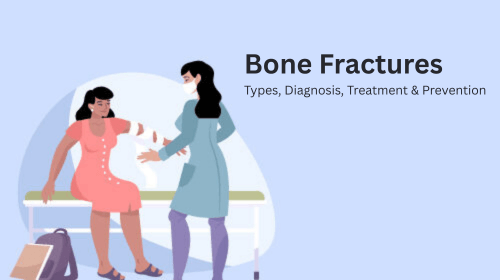
Bone fractures are frequent injuries that can occur at any age. If you’re over fifty or have a family background of osteoporosis, discuss quickly with your physician getting a bone density test. If you fracture a bone, surgery might be necessary for healing. Others may require a splint, cast, brace, or sling to support recovery. Full recovery time varies based on the specific bone broken, the location of the fracture, and the cause of the injury.
Types
There are several forms of fractures. Your physician will diagnose a particular fracture type based on the few factors discussed below.
Based on Pattern or Shape
The pattern of certain fractures is used to classify them. This can be the direction of the break (if it’s a straight light across your bone) or the form of the break (if it’s more than a single-line break).
The following fractures feature a single straight-line break:
- Oblique fractures
- Transverse fractures
- Longitudinal fractures
The following fracture patterns do not shatter your bone in a single straight line:
- Greenstick fractures
- Comminuted fractures
- Segmental fractures
- Spiral fractures
Based on the Cause
Some types of fractures are identified or classified according to their cause. These are some examples:
- Fractures caused by stress
- Fractures caused by avulsion
- Fractures of the buckle
Based on Location or Body Part
Many fractures are particular to the location in your body where they occur. In certain circumstances, a location-based fracture might coexist with one of the above categories. A violent fall, for example, may result in a comminuted tibia (shin bone) fracture.
Fractures of the chest, arms, and upper body include
- Clavicle fractures (broken collarbones)
- Shoulder fractures
- Humerus (upper arm bone) fractures
- Elbow fractures
- Rib fractures
- Compression fractures
- Facial fractures
Some examples of hand or wrist fractures are:
- Barton fractures
- Chauffeur fractures
- Colles fractures
- Smith fractures
- Scaphoid fractures
- Metacarpal fractures
The following are examples of fractures that harm the bones in your lower body and legs:
- Pelvic fractures
- Acetabular fractures
- Hip fractures
- Femur fractures
- Patella fractures
- Growth plate fractures
- Tibia and fibula fractures
Open vs Closed Fractures
A fracture is classified as either open or closed. An open fracture occurs when your bone breaks through your skin. Open fractures are sometimes known as complex fractures. They typically take longer to heal and are more prone to infections and other problems. Closed fractures are still dangerous, but the bone does not protrude through the skin.
Displaced vs Non-Displaced Fractures
Your physician will also classify your fracture as either displaced or non-displaced. When your bone cracked, the fragments of your bone migrated so far apart that a gap developed around the fracture. Non-displaced fractures are still shattered bones, but the fragments were not shifted far enough to be out of alignment during the break. Displaced fractures are far more likely to require surgical correction.
Symptoms
The symptoms of a bone fracture may vary depending on the location and severity of the injury. However, some common signs can help identify a fracture.
Pain: Severe pain at the injured area that may increase when you move or press it.
Swelling: The area around the injury may swell due to tissue damage.
Bruising: The skin around the fracture may turn blue or purple.
Tenderness: The injured part may feel painful when touched.
Difficulty Moving: You may find it hard or impossible to move the affected body part.
Deformity: The bone or limb may look bent, out of place, or have a visible bump.
In severe cases, the broken bone may also come out through the skin and require immediate medical attention.
Diagnosis
Anyone can suffer from a bone fracture. It’s difficult to predict when someone may break a bone because they’re frequently caused by traumas like falls, vehicle accidents, or sports injuries. If your bones are compromised by osteoporosis, you are more susceptible to fracture. Your clinician will use a physical exam and imaging tests to identify a bone fracture.
If you’re admitted to the hospital following a trauma, this may be done in the emergency room. In the emergency room, a medical team will first stabilize you and address your injuries based on their severity, prioritizing life-threatening conditions. Once stabilized, imaging tests will be performed to confirm any fractures.
Tests performed to diagnose bone fractures are
- X-rays: An X-ray can confirm the presence of fractures and show the extent of damage to your bones.
- Magnetic Resonance Imaging (MRI): Your provider may utilize an MRI to obtain a comprehensive view of the damage to your bones and the surrounding region. An MRI will also reveal tissue such as cartilage and ligaments around your bones.
- CT scan: Unlike an X-ray, a CT scan provides your physician or surgeon with a more complete view of your bones and surrounding tissue.
- Bone Scan: Doctors may use a bone scan to identify fractures that do not appear on an X-ray. This scan takes longer (often two visits, four hours apart), but it can aid in the detection of certain fractures.
Treatment
The treatment of bone fractures focuses on restoring the bone’s alignment, ensuring stability, and promoting proper healing. The approach varies based on the type, severity, and location of the fracture.
Non-Surgical Methods
- Immobilization: Mild to moderate fractures often require immobilization to prevent movement and facilitate healing. This can be done using:
- Casts or splints to hold the bone in place.
- Braces for controlled movement in specific cases.
- Manual Realignment (Closed Reduction): In cases where bones have shifted out of position but do not require surgery, a healthcare provider may physically manipulate the bone back into alignment before applying a cast or splint.
- Traction: This method uses a steady pulling force to align the bones properly. It is generally used for more complex fractures and may serve as a temporary measure before surgery.
Surgical Interventions
- Internal Fixation: For severe fractures, internal fixation techniques stabilize the bone using:
- Metal rods are inserted through the bone’s center.
- Plates and screws are used to stabilize and secure bone fragments.
- Pins and wires for smaller bone pieces.
- External Fixation: In cases where soft tissue damage prevents immediate internal fixation, an external frame connected by pins or screws stabilizes the bone from the outside.
- Bone Grafting: When a fracture fails to heal properly or involves significant bone loss, a graft from the patient’s own body, a donor, or synthetic material may be used to promote bone regeneration.
- Joint Replacement: If a fracture affects a major joint, such as the hip or shoulder, the damaged area may be replaced with an artificial joint to restore function.
Post-Treatment Recovery
Healing time depends on the bone involved and individual factors such as age, nutrition, and overall health. After immobilization or surgery, rehabilitation through physical therapy helps restore mobility and strength. Refraining from smoking and drinking alcohol excessively can support a faster, smoother recovery.
Prevention
Reducing the risk of bone fractures involves a balanced diet, regular exercise, and safety precautions. Consuming calcium-rich foods like dairy and leafy greens, along with vitamin D from sunlight or food sources, strengthens bones. Weight-bearing exercises and strength training improve bone density and coordination, reducing fracture risks. Preventing falls by keeping living spaces clutter-free, using assistive devices, and wearing proper footwear is crucial. Regular bone density tests help detect early signs of weakness, especially for those over 50 or with osteoporosis risk. Refraining from smoking, limiting alcohol consumption, and managing hormonal changes contribute to better bone health. Consult an orthopedist if you are over the age of fifty or have a family history of osteoporosis.
Complications
Most bone fractures heal well with proper treatment. However, some complications may occur during the healing process.
Delayed Healing: Sometimes the bone takes longer than usual to heal.
Nonunion: In rare cases, the broken bone may not heal even after several months.
Malunion: The bone may heal in the wrong position, causing pain or deformity.
Infection: Open fractures can lead to infection if bacteria enter the wound.
Damage to Nearby Tissues: Muscles, nerves, or blood vessels around the fracture may also get injured.
Compartment Syndrome: Severe swelling can increase pressure in the muscles and reduce blood flow.
Joint Stiffness or Long-Term Pain: Some people may experience stiffness or pain even after the bone heals.
Frequently Asked Questions
1. Are broken bones and fractured bones the same?
Broken bones and fractured bones refer to the same injury and can be used interchangeably. Since “fracture” is the medical term for a broken bone, healthcare professionals typically classify and refer to it by its specific type after diagnosis.
2. What is the difference between a bone fracture and a bone bruise?
Both bone fractures and bone bruises result from a strong impact, such as a fall, car accident, or sports injury. The main distinction is the extent of damage to the bone.
Bones, like skin, are living tissue and can bruise when subjected to force. However, bruising a bone requires significantly more impact than bruising the skin. A bone bruise happens when blood collects beneath the bone’s surface due to an injury, without causing a break.
In contrast, a bone fracture happens when an impact is strong enough to break the bone at one or more points. Fractures are usually more serious than bone bruises and need more time to heal.
If you experience pain near or on a bone after trauma, seek medical attention promptly. Early evaluation is crucial to determine the extent of the injury and ensure proper treatment.
3. What is the difference between a sprain and a bone fracture?
Both bone fractures and sprains are common sports injuries, but they affect different structures in the body. While a fracture means the bone has broken, a sprain happens when a ligament is damaged through stretching or tearing. Bones cannot be sprained, but a fracture and a sprain can occur together, especially in joint injuries like those affecting the knee or elbow.
4. What factors affect bone fracture healing time?
Bone fracture healing time usually falls between 6 and 8 weeks, but may differ depending on factors such as severity, location, age, overall health, and lifestyle. Larger or complex fractures take longer to heal, while children’s bones heal faster. The bone healing process consists of three stages: inflammatory, reparative, and remodeling. Proper medical care, a healthy diet, and avoiding smoking can support faster recovery.