 Health
  Find a
  Book an
 Pacemakers: How They Work, Conditions Treated, and What You Need to Know
March 20, 2026
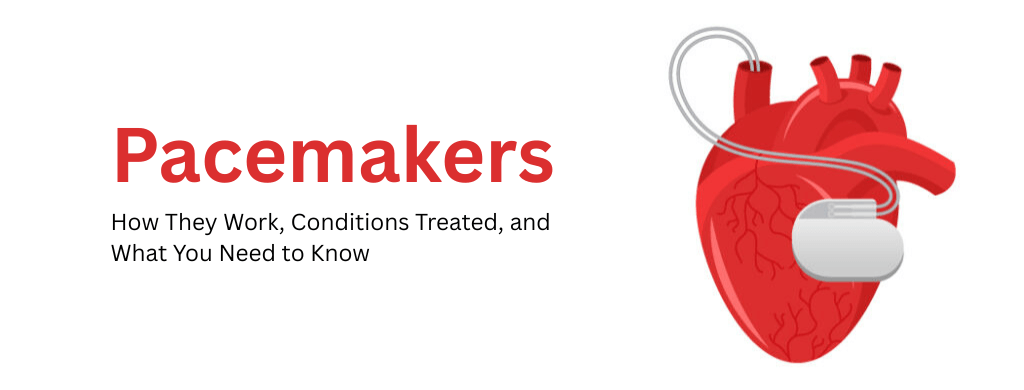
A pacemaker is a small device implanted in the chest or abdomen that helps regulate an irregular heartbeat by generating electrical impulses to restore a normal heart rhythm. Pacemakers are commonly used to treat arrhythmias or other heart conditions that cause the heart to beat too slowly or irregularly. In this blog, we will explore the basics of pacemakers, including how they work, the conditions they treat, and what you need to know if you are considering getting one.
What is a Pacemaker?
A pacemaker is a tiny device placed beneath the skin of the chest or abdomen. It’s connected to the heart by one or more wires (also known as leads) that are inserted into a vein and guided to the heart. The pacemaker’s job is to monitor the heartbeat and generate electrical impulses to regulate it when necessary.
How Do Pacemakers Work?
Pacemakers work by detecting when the heart is beating too slowly or irregularly. When this happens, the pacemaker sends a small electrical impulse to the heart muscle to stimulate a heartbeat. The impulse is delivered through the wires that are connected to the heart.
What Conditions Do Pacemakers Treat?
Pacemakers are commonly used to treat arrhythmia or other heart conditions that cause the heart to beat too slowly or irregularly. Some of the conditions that may be treated with a pacemaker include:
- Bradycardia: a slow heartbeat that can cause dizziness, fatigue, or fainting
- Tachycardia-bradycardia syndrome: a condition in which the heart alternates between a fast and slow heartbeat
- Heart block: A condition where the heart’s electrical signals are disrupted or blocked.
What are the Signs You Need a Pacemaker?
Some of the signs that you may need a pacemaker include:
- Feeling dizzy or lightheaded
- Fainting or feeling like you’re going to faint
- Fatigue or weakness
- Shortness of breath
- Chest pain
- Irregular heartbeat or palpitations
If you’re experiencing any of these symptoms, it’s important to see your doctor as soon as possible.
Types
There are several types of pacemakers, including:
- A leadless pacemaker is a miniature device, approximately the size of a large pill, that is implanted into the heart using a catheter-based procedure. Unlike traditional pacemakers, it does not require wires, as it is directly attached to the inner wall of the heart.
- Single-chamber pacemakers have a single wire that is connected to either the right atrium or the right ventricle of the heart.
- Dual-chamber pacemakers have two wires connected to the right atrium and ventricle of the heart.
- Biventricular pacemakers are equipped with three leads that link to the heart’s right atrium, right ventricle, and left ventricle. These are used to treat heart failure.
What’s the Difference Between a Pacemaker and an ICD?
While pacemakers are used to regulate an irregular heartbeat, implantable cardioverter-defibrillators (ICDs) are used to treat life-threatening arrhythmias. ICDs are similar to pacemakers in that they’re implanted under the skin and connected to the heart by wires. However, ICDs also have a defibrillator function that can deliver a shock to the heart if it’s beating dangerously fast or irregularly.
Possible Benefits
Pacemakers can improve the symptoms associated with an irregular heartbeat, such as dizziness, fainting, and fatigue. Pacemakers can also enhance overall quality of life and lower the risk of serious issues such as stroke or heart failure.
How to Prepare for the Procedure
Before getting a pacemaker, your doctor will check your heart health with a few tests. These may include an ECG to study your heartbeat, a Holter monitor to record your heart rhythm over time, an echocardiogram to see how your heart works, and sometimes a stress test to check how your heart responds to activity.
To prepare for the procedure, share your full medical history with your doctor. Tell them about any medicines, supplements, or allergies you have. Also inform them if you have bleeding problems or take blood-thinning medicines.
You may need to stop eating and drinking for a few hours before the procedure. Your doctor may also ask you to stop certain medicines for a short time.
Plan ahead for your hospital visit. Arrange for someone to take you home after the procedure. Carry your ID and medical documents, and bring basic personal items if you need to stay overnight.
Following your doctor’s instructions carefully can help make the procedure safe and smooth.
What Happens During the Procedure
A pacemaker procedure is usually done in a hospital. You will be given local anesthesia to numb the area, and sometimes medicine to help you relax.
The doctor makes a small cut under the collarbone. Then, one or more thin wires (called leads) are inserted into a vein and guided to the heart using imaging. These wires are placed in the correct position and tested to make sure they work properly.
Once the leads are in place, they are connected to a small device called a pulse generator. This device is placed under the skin in the chest area. After checking everything, the doctor closes the cut.
In some cases, a leadless pacemaker is used. In this method, the device is placed directly into the heart using a thin tube inserted through a blood vessel, usually in the groin. No wires are needed in this type.
The procedure usually takes about one to a few hours, depending on the type of pacemaker used.
After the Procedure
After the pacemaker is placed, you may stay in the hospital for a day so your doctor can monitor your condition. The device is checked and adjusted to match your heart rhythm before you go home.
You may feel some pain, swelling, or soreness at the site where the device was placed. Your doctor may give you medicine to relieve the pain. It is important to keep the area clean and dry to prevent infection.
For a few weeks, avoid heavy lifting and sudden arm movements, especially on the side where the pacemaker is placed. Do not put pressure on that area. Move slowly when getting up to avoid dizziness.
Most people can return to normal daily activities within a few days, but your doctor will guide you based on your condition. You may need to wait before driving or going back to work.
Regular follow-up visits are important to check if the pacemaker is working properly. Always contact your doctor if you notice pain, swelling, or any unusual symptoms.
Possible Complications or Side Effects
Although pacemakers are typically safe and effective, they may sometimes cause complications or side effects, such as:
- Infection at the site of the implant
- Bleeding or bruising around the site of the implant
- Injury to nearby blood vessels or nerves at the site of implantation
- Dislodgement or malfunction of the wires or device
- You should talk with your doctor about the possible risks and benefits of a pacemaker before deciding on implantation.
When to Call the Doctor?
If you have a pacemaker and you experience any of the following symptoms, you should contact your doctor right away:
- Chest pain or discomfort
- Shortness of breath
- Redness, swelling, or fluid discharge around the pacemaker implant site
- Fainting or feeling like you’re going to faint
- Rapid or irregular heartbeat
Your doctor will likely refer you to a cardiologist or electrophysiologist, who is a specialist in diagnosing and treating heart rhythm disorders.
Considering a Pacemaker: What You Should Know
A pacemaker is a small device that’s implanted under the skin to regulate an irregular heartbeat. It’s commonly used to treat conditions such as bradycardia, tachycardia-bradycardia syndrome, and heart block. Pacemakers can improve symptoms and quality of life, but also have potential risks and side effects. Before opting for a pacemaker, consult your doctor to review its advantages, possible risks, and get answers to all your questions.
Frequently Asked Questions
1. What exactly does a Pacemaker do?
A pacemaker is a compact, battery-operated device designed to maintain a regular heartbeat. It sends electrical signals to your heart when your natural heartbeat is too slow, too fast, or irregular. The pacemaker consists of two parts: a generator and one or more leads (wires) that transmit the electrical signals to the heart. The generator is usually implanted beneath the skin on the left side of the chest, with leads threaded into the heart via a vein.
2. Is a pacemaker a serious surgery?
Implanting a pacemaker is considered a relatively safe and routine surgery. However, like all surgeries, it may involve risks such as infection, bleeding, or harm to surrounding blood vessels or nerves. The majority of individuals with a pacemaker can return to their usual activities within several days to a few weeks.
3. What is the life expectancy of a person with a pacemaker?
Having a pacemaker usually does not affect a person’s life expectancy. Most pacemakers are designed to last between 5 and 15 years, depending on the type and how often it is used. When the battery starts to run low, a minor surgery is needed to replace the device. Regular check-ups with a cardiologist are important to make sure the pacemaker is working properly and to adjust the settings if necessary.