 Health
  Find a
  Book an
 Newborn Jaundice: Causes, Symptoms, and Treatments
July 23, 2025
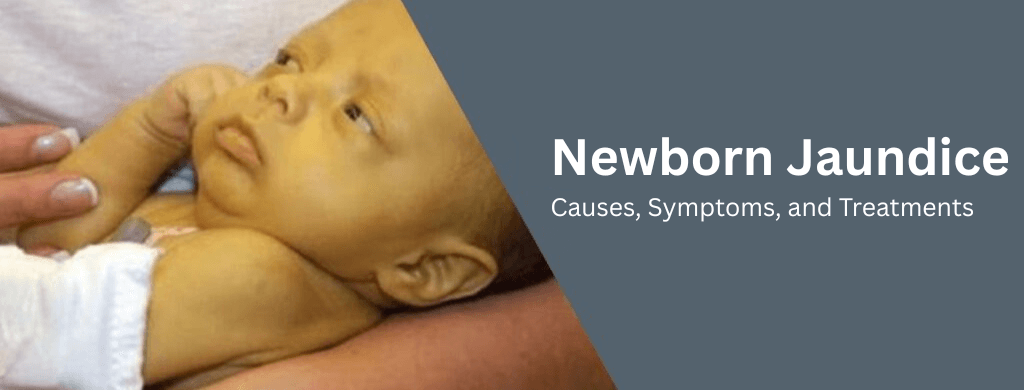
Jaundice occurs when there is a high level of bilirubin in the blood. When the red blood cells are broken down, the byproducts are metabolized by the liver and removed. The liver also detoxifies toxins in the body and secretes them into the intestine, called bile.
When there is excessive breaking of red blood cells, a problem occurs in the liver in secreting bile, and the bilirubin in the blood increases. This increased bilirubin causes yellowish discolouration of the skin and eyes. Jaundice is not a disease, but rather a sign of an elevated blood bilirubin level.
Newborn babies are born with high hemoglobin (16 to 18 gms/dl) due to low oxygen in the mother’s blood. When they are exposed to normal air after birth, there is increased breakdown of red blood cells so that the haemoglobin comes down to normal values ( around 12 -13 gm/dl). This increased breakdown is the cause of jaundice in newborn babies.
What are Physiological Jaundice and Pathological Jaundice in Newborns?
All Newborn babies get jaundice, which usually peaks 3 days after birth. This clears 7 days after birth in term babies and within 14 days in preterm babies. This is called physiological jaundice. It is a natural phenomenon that happens in all newborn babies.
But, in certain conditions, the level of bilirubin shoots up, requiring some form of treatment. This is called pathological, as there would be some underlying problem causing it. Some of the causes of infant jaundice are:
- Babies born preterm (before 37 weeks)
- Babies are bruised during birth
- Babies who have a sibling with a history of newborn jaundice.
- Babies whose mothers are Rh-negative and/or have type O blood
- If a mother and baby’s blood group and type are different (or “incompatible”), the mother’s immune system may damage the baby’s red blood cells
- Infants of Middle Eastern, East Asian, or Mediterranean descent.
- Overall, bilirubin is also more slowly removed in the newborn compared to adults because a baby’s liver and intestines are not fully functional. In Asian babies, the ability to remove bilirubin takes longer to develop.
Management
Any baby can develop jaundice, but if severe jaundice goes untreated, it can lead to brain damage. Your baby should be screened for jaundice while in the hospital and again within 48 hours after discharge. Talk to your doctor or nurse about getting a bilirubin test for jaundice.
How Can I Tell if My Baby Has Jaundice?
Before leaving the hospital, ask for a bilirubin test. The most reliable way to check your baby’s bilirubin levels is through a blood sample. Your doctor or nurse will then compare the test results to the normal range for a baby of the same age in hours.
Signs
Some babies with jaundice may appear yellow or even orange, but it can be difficult to detect in all infants, especially those with darker skin tones. Contact your doctor or nurse right away if your baby:
- Produces fewer than four wet or soiled diapers in 24 hours
- Has difficulty breastfeeding or bottle-feeding
- Is overly drowsy and hard to awaken, even for meals
- Cries with a high-pitched or shrill sound, or seems inconsolable
- Appears unusually floppy or lacks muscle tone
Levels
Bilirubin levels in newborns vary depending on their age, and monitoring these levels is essential in assessing the severity of jaundice. Below is a general guideline based on age and total serum bilirubin (TSB) levels:
- Less than 24 hours old: TSB above 10 mg/dL
- 24 to 48 hours old: TSB above 15 mg/dL
- 49 to 72 hours old: TSB above 18 mg/dL
- Older than 72 hours: TSB above 20 mg/dL
Normal Bilirubin Range:
- Within the first 24 hours of birth, normal bilirubin levels range from 0.3 mg/dL to 1.0 mg/dL.
Most newborns experience physiological jaundice, which is generally harmless and peaks around the 4th or 5th day after birth. However, if jaundice persists beyond these timeframes, particularly after 2 weeks for formula-fed babies or 4 weeks for breastfed babies, it’s important to consult a doctor.
What Else Can I Do to Keep My Jaundiced Baby Healthy?
Take jaundice seriously and follow the recommended care plan and follow-up appointments closely. Ensure your baby is feeding well, as waste elimination helps remove bilirubin from the body. If you are breastfeeding, try to feed your baby at least 8 to 12 times a day during the first few days. This supports healthy milk production and helps lower bilirubin levels. If you’re facing challenges with breastfeeding, speak to your doctor or nurse for assistance.
Complications
When a baby’s blood bilirubin levels become dangerously high, the bilirubin can reach the brain and cause damage. This can result in short-term complications known as acute bilirubin encephalopathy or long-term, permanent damage referred to as kernicterus (also called chronic bilirubin encephalopathy). Regular monitoring and prompt treatment of babies at risk for jaundice are essential to prevent severe hyperbilirubinemia.
What is Kernicterus?
Kernicterus is a form of brain damage that can occur if jaundice is not treated appropriately. Children affected by kernicterus may develop cerebral palsy, hearing loss, vision, and dental problems, and, in some cases, intellectual disabilities. However, proper treatment of jaundice can effectively prevent kernicterus.
Jaundice Treatment in Newborns
The goal of treating jaundice is to efficiently and safely reduce the level of bilirubin. Babies with mild hyperbilirubinemia may need no treatment at all. Babies with elevated bilirubin levels may require short-term treatment, as outlined below.
Jaundice is common in premature babies (those born before 38 weeks). Premature babies are more susceptible to hyperbilirubinemia, as their brains can be affected by lower bilirubin levels compared to full-term infants. Therefore, premature babies receive treatment at lower bilirubin levels, using the same methods described below.
Frequent feeding – Providing adequate breast milk is an important part of preventing and treating jaundice because it helps in the elimination of bilirubin in stools and urine. If your baby isn’t getting enough milk through breastfeeding alone, your doctor may suggest options like supplementing with formula or donor breast milk. Signs that your baby is feeding well include having at least six wet diapers a day, a change in stool color from dark green to yellow, and appearing content after feeds.
Phototherapy – Phototherapy, or “light” therapy, is the most commonly used medical treatment for hyperbilirubinemia in infants. In most cases, it is the only treatment needed. During phototherapy, the baby’s skin is exposed to special blue light that breaks down bilirubin into substances that can be more easily removed through urine and stool. This treatment is effective for nearly all babies.
Phototherapy is usually given in the hospital, but in certain cases, it can be done at home if the baby is healthy and at low risk of complications.
Babies should have as much skin as possible exposed to the light. During phototherapy, babies are usually undressed except for a diaper and placed in an open bassinet or under a warmer. To shield their eyes from the light, they wear protective eye patches or a specially designed mask (image 1). Phototherapy should be continuous and stopped only for feeding and skin-to-skin care of the baby. Some hospitals have special phototherapy blankets that allow treatment to continue while you hold or feed your baby.
Although sunlight was once considered beneficial, it is no longer recommended because of the risk of sunburn, unless ultraviolet rays are filtered. Phototherapy lights, however, do not cause sunburn.
Phototherapy is discontinued once bilirubin levels reach a safe range. It’s common for babies to still look jaundiced for some time after phototherapy ends. Bilirubin levels can rise again within 18 to 24 hours of stopping treatment. Although this is uncommon, follow-up is important in case additional treatment is needed.
Side effects – Phototherapy is generally very safe, though it may cause temporary side effects such as skin rashes and loose stools. Overheating and dehydration can occur if a baby does not get enough breast milk or formula. Therefore, a baby’s skin color, temperature, and number of wet diapers should be closely monitored.
In rare cases, some babies may develop ‘bronze baby’ syndrome, which causes a dark, grayish-brown tint to the skin and urine. This condition is harmless and typically fades on its own within a few weeks.
Breastfeeding during phototherapy – It is important for babies receiving phototherapy to drink adequate fluids (ideally breast milk) since bilirubin is excreted in the urine and stool. Breastfeeding should be continued throughout phototherapy, and there is no need to give oral glucose water. In babies with serious dehydration, intravenous (IV) fluids may be necessary to correct the loss of fluid.
Babies who aren’t getting enough breast milk, are losing excessive weight, or show signs of dehydration may temporarily require additional expressed breast milk or a doctor-recommended formula. Mothers who supplement with formula should continue to breastfeed and/or pump regularly to maintain their milk supply.
The use of supplemental formula for exclusively breastfed babies remains a topic of debate. If you are considering doing this, it’s a good idea to talk to your baby’s doctor or nurse first. (See “Patient education: Breastfeeding guide (Beyond the Basics).)
Exchange transfusion – Exchange transfusion is a critical, life-saving procedure occasionally required to quickly lower bilirubin levels. The transfusion replaces a baby’s blood with donated blood to quickly lower bilirubin levels (2 to 3 hours). “Exchange transfusion is reserved for babies who do not respond to other treatments and show signs of, or are at high risk for, neurological damage from bilirubin toxicity.
Cholestatic Jaundice in Newborn
This is a different type of jaundice due to liver disease (Not due to excessive red blood cell breakdown or immature liver). There are several diseases that can cause jaundice in newborns, such as biliary atresia (blockage in the bile duct), metabolic disorders, genetic disorders, etc.
How to Differentiate Cholestatic Jaundice from Physiological Jaundice?
We can request the lab to perform split bilirubin, where they will look at the indirect fraction and the direct fraction of bilirubin. If the indirect fraction is more than 10% of total bilirubin, it is suggestive of cholestatic jaundice. All cholestatic jaundice has to be thoroughly investigated as it always indicates underlying liver disease.
Can We Prevent Jaundice in Newborns?
No. Newborn jaundice is common and often normal. In most cases, it cannot be fully prevented. However, you can lower the risk of severe jaundice by taking simple care steps early.
- Feeding your baby often is the most important step. Frequent feeding helps the baby pass stools regularly. This helps remove bilirubin from the body.
- Breastfed babies should be fed 8 to 12 times a day during the first week of life. Formula-fed babies should receive 1 to 2 ounces of formula every 2 to 3 hours. Make sure your baby has at least eight feeds in 24 hours.
- Pregnant women should get their blood type tested during pregnancy. If the mother has a different blood type from the baby, doctors can watch the baby closely after birth. This helps detect problems early.
- Doctors usually check the baby’s bilirubin level before discharge from the hospital. A follow-up visit should be scheduled within the first week of life to recheck the level, especially if the baby is sent home early.
- Parents should watch the baby carefully during the first five days after birth. Look for yellowing of the skin or eyes. If you notice these signs or have concerns, contact your doctor immediately.
With proper feeding, regular checkups, and early monitoring, most problems related to newborn jaundice can be prevented or managed safely.
When to See a Doctor
While mild jaundice is common in newborns and often resolves on its own, certain signs require medical attention. Parents should closely monitor their baby’s skin tone, feeding habits, and overall behavior to detect any concerning symptoms early.
Seek Immediate Medical Care if your Baby:
- Develops a deep yellow or orange tint on the skin, especially on the abdomen, arms, legs, or soles of the feet.
- Has yellowing in the whites of the eyes.
- Appears excessively sleepy, difficult to wake, or unusually irritable.
- Shows poor feeding or refuses to eat.
- Has a weak suck or struggles to latch during breastfeeding.
- Displays slow weight gain or sudden weight loss.
- Cries with a high-pitched or unusual tone.
- Develops fever or signs of illness alongside jaundice.
Routine Check-ups for Jaundice:
Newborns should have their bilirubin levels monitored during hospital stay and after discharge. If your baby is sent home within the first 72 hours of birth, schedule a follow-up visit within two days to check for worsening jaundice. Babies at higher risk, such as preterm infants or those with difficulty feeding, may need additional monitoring.
Early detection and treatment of severe jaundice can prevent complications, so contact your Pediatrician if you notice any worsening symptoms.