 Health
  Find a
  Book an
 Minimally Invasive Varicose Vein Treatments
November 4, 2025
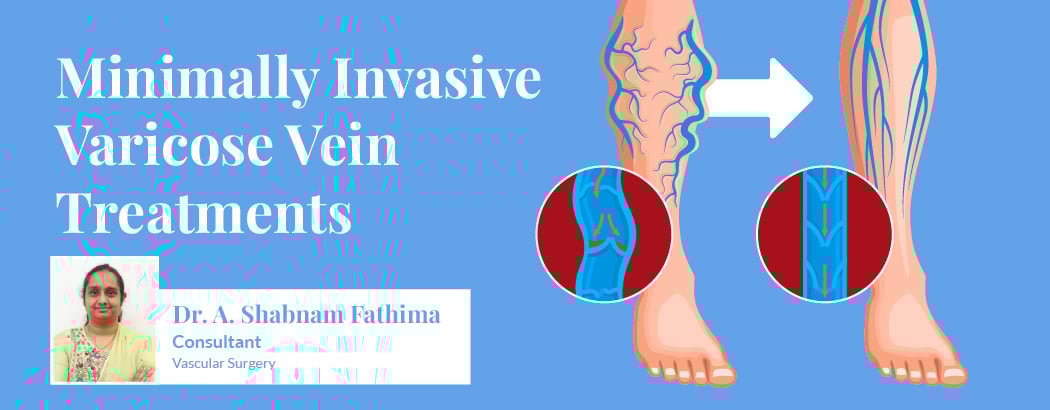
Varicose veins are a common problem, and are normally treated by an operation. Recently, minimally invasive techniques have emerged as alternatives to traditional surgery, aiming to lower complications and speed up recovery. Radiofrequency ablation and endovenous laser ablation (using laser or radiofrequency heat to close the vein) are the most promising of these new techniques. These techniques offer quicker recovery times and less discomfort than traditional surgery, allowing for a rapid return to normal activities, though some patients may need to wear compression stockings afterward.
Laser Therapy for Varicose veins
Endovenous Laser Ablation (EVLA), also called EVLT, is a minimally invasive procedure that applies laser energy to collapse and close varicose veins. Using local anesthesia, a fine laser fiber is inserted into the vein with the help of ultrasound, and as it is gradually withdrawn, the heat effectively closes the vein. This diverts blood to healthier veins, alleviating symptoms and enhancing appearance, with most patients resuming normal activities within a few days.
Advantages of this Treatment:
- Minimally Invasive: The procedure uses a small cut, avoiding large surgical incisions and scarring.
- Outpatient: It is an outpatient procedure performed under local anaesthesia, not general anaesthesia.
- Duration: The procedure itself typically takes less than an hour.
Post-Procedure:
- Compression Stockings: Wearing compression stockings may be suggested to improve leg circulation and decrease swelling.
- Activity: Patients are often encouraged to walk immediately after the procedure.
- Recovery: Most patients are able to resume their regular activities within a few days, while more intense physical activities may be restricted for a couple of weeks.
- Bruising: Some bruising is normal and typically subsides within a couple of weeks.
Benefits:
The procedure is highly effective, with research showing strong success rates and excellent long-term outcomes. The recovery is very quick and patients can often resume daily activities quickly. The symptoms are reduced and there is an improvement in leg heaviness, swelling, and itching. The appearance is improved and the appearance of enlarged and twisted veins is reduced.
Radiofrequency Ablation for Varicose Veins
Radiofrequency ablation (RFA) is a minimally invasive outpatient procedure that closes faulty veins using radiofrequency heat, enabling blood to flow through healthy veins as the treated veins dissolve naturally. Performed under ultrasound guidance, the procedure involves inserting the catheter into the affected vein, numbing the area with local anaesthetic, and delivering controlled heat to collapse the vein wall. RFA is a proven, safe, and effective treatment that offers benefits such as minimal scarring, rapid recovery, and prompt relief from symptoms.
Benefits of RFA:
- Minimally Invasive: Requires only a small skin nick, not large incisions, resulting in virtually no scars.
- Outpatient Procedure: It generally takes less than an hour and can be done on an outpatient basis without needing hospitalization.
- Quick Recovery: The majority of patients are able to resume their regular daily activities with minimal or no discomfort.
- Effective: Addresses the underlying cause of varicose veins, leading to symptom relief.
- Safe: A well-established and proven procedure with a low complication rate.
Risks and Side Effects:
While generally safe, potential side effects include:
- Some discomfort, bruising, or tenderness in the days following the procedure.
- Numbness or weakness at the treatment site.
- Light-brown pigmentation along the treated vein in some cases.
- In rare instances, small or large blood clots in the treated vein.
Post Procedure:
- Patients are advised to start walking immediately following the procedure, and they can generally carry on with their regular daily activities. Strenuous activities, like gym workouts, should be avoided.
- Mild soreness and bruising may occur, and any discomfort can be managed with over-the-counter non-steroidal anti-inflammatory medications, but only after consulting a doctor.
VenaSeal for Varicose Veins
VenaSeal is a minimally invasive, medical adhesive (glue)-based treatment for varicose veins, where a catheter is inserted into the diseased vein to inject the glue, permanently closing it off under ultrasound guidance. VenaSeal uses a unique medical adhesive, a form of glue, to seal the faulty vein shut. It’s considered highly effective, with published success rates up to 98.9%, and typically offers a faster recovery than traditional surgery or other heat-based endovenous laser ablation (EVLA) or radiofrequency ablation (RFA) treatments, requiring minimal post-procedure activity restrictions like walking an hour daily.
Advantages:
- Causes minimal discomfort since tumescent anesthesia injections along the vein are not required.
- No need for compression stockings.
- Minimal time off from work.
- Return to normal activities.
- No hospital stay or general anesthesia is needed for the procedure.
- Eliminates the risk of nerve damage or thermal injuries.
Disadvantages:
- Treated veins may become quite inflamed and require anti-inflammatories and time to settle. This is, however, no different from Endovenous Laser Treatment of veins.
- VenaSeal may not be covered by Insurance and is quite an expensive procedure.
Sclerotherapy for Varicose Veins
Sclerotherapy is a procedure in which a medical professional injects a solution into varicose veins, leading them to collapse and fade over time. This outpatient procedure is effective for small to medium-sized varicose and spider veins, but large veins may require different treatments. While generally safe, some discomfort or side effects like mild pain or bruising can occur, especially with larger veins.
For small spider veins, there is usually little discomfort, but larger varicose veins may cause some mild pain. Post-treatment, you might be advised to wear compression stockings to support healing and reduce the risk of complications.
Advantages:
- No anaesthesia
- Good results for most people
- Fairly quick results for small veins
- When treatment is successful, varicose or spider veins are unlikely to return.
Summary
The choice of treatment depends on factors like the size of the vein, the patient’s overall health, and symptoms. A medical professional can best assess the condition and recommend the most suitable minimally invasive option for each patient. Discussing with your healthcare provider can help you understand available treatment options and choose the one best suited for you. It’s good to know what to expect from a procedure. For the best results, be sure to follow all of your healthcare provider’s instructions before and after a treatment.
Frequently Asked Questions
1. Who is a good candidate for these treatments?
If you experience visible varicose or spider veins, leg heaviness, pain, swelling, or skin changes from poor circulation, these treatments may help. A vein specialist can confirm after an evaluation.
2. Are these procedures painful?
Most treatments are well-tolerated and performed under local anaesthesia. Patients may feel mild discomfort, but pain is significantly less compared to traditional vein surgery.
3. Will my varicose veins come back?
Once treated, the targeted veins are permanently closed or removed. However, new varicose veins may develop over time, especially if risk factors (like genetics, standing jobs, or pregnancy) continue.