 Health
  Find a
  Book an
 Varicose Veins: Causes, Symptoms, Types, Prevention & Treatment
April 24, 2026
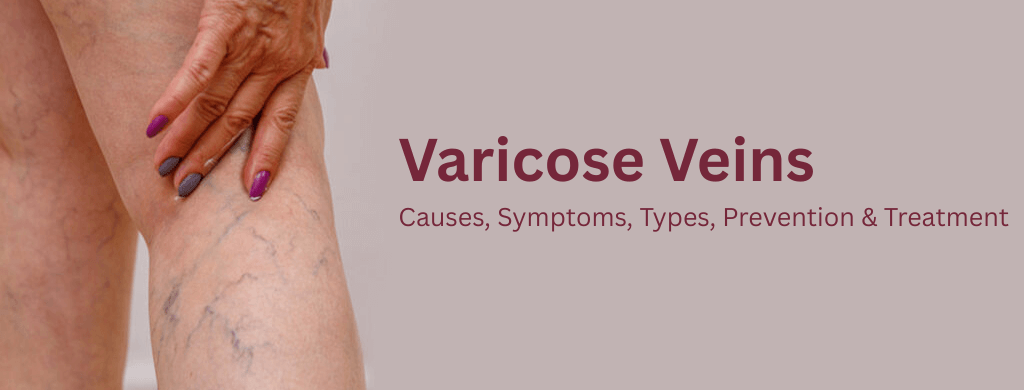
Varicose veins occur when the veins widen, dilate, and fill with blood. In other words, varicose veins are abnormally enlarged veins that can occur in any part of the body. Varicose veins often look swollen and elevated, with a bluish-purple or reddish appearance. The condition is prevalent, especially in women. This may occur because female hormones can relax the vein walls, leading to valve leakage. Varicose veins most often develop in the lower legs. While not typically dangerous, varicose veins can still cause pain and discomfort. Additionally, they can cause emotional distress, as some people may feel unpleasant and embarrassed.
Causes
Varicose veins develop when the veins fail to function properly. Healthy veins carry blood to the heart. When the valves in the veins malfunction, varicose veins can develop, causing blood to flow backwards and pool inside the vein. As a result, the blood pressure increases in the vein and causes it to become stretched, swollen, and enlarged.
Some causes for varicose veins include:
- Pregnancy
- Menopause
- Age over 50
- Standing for a long duration
- Smoking
- Obesity
- Family history of varicose veins
- Birth control pills
- Being inactive
Varicose veins are more common in women than in men. This might be because female hormones relax the vein walls, which can lead to valve leakage. Hormones are chemicals produced by the body, and the changes can be caused by pregnancy, PMS, or menopause. During pregnancy, blood increases to help support the baby inside the womb. Unfortunately, this strains your veins. As the womb enlarges, varicose veins may also form. As the uterus grows, it also places pressure on the veins in the pelvic area, which may sometimes lead to varicose veins. Although pregnancy can raise the risk of varicose veins, many women find that their condition significantly improves after childbirth.
Additionally, excess weight adds extra strain on the veins, forcing them to work harder to pump blood back to the heart. This can increase the pressure on the valves, making them more prone to leaks. Body weight seems to have a stronger influence on the development of varicose veins in women.
Risk Factors
Many factors can raise the risk of developing varicose veins.
- Family history: The risk is higher if varicose veins run in your family.
- Age: Veins and valves become weaker with age.
- Female sex: Women are more likely to develop varicose veins because of hormonal changes.
- Pregnancy: Extra blood volume and pressure during pregnancy can enlarge veins.
- Overweight or obesity: Extra body weight puts more pressure on the veins.
- Long sitting or standing: Remaining in one position for a long time can reduce healthy blood flow.
- Lack of exercise: Low physical activity can reduce healthy circulation.
- Smoking: Smoking may damage blood vessels and affect circulation.
- Hormonal medicines: Birth control pills or hormone therapy may increase risk.
- Leg injury or vein problems: Previous leg injury or vein disease can raise the chance of varicose veins.
Symptoms
- Large, bumpy veins that look like snakes
- A feeling of tired legs
- Painful veins
- Itching in the leg and ankle
- Itchiness after wearing socks
- Redness or rash is often mistaken for dry skin
- The feeling of tired legs
- Painful veins
- Burning and pulsating in the legs
- Skin color changes
Sometimes, varicose veins may cause complications. These may include:
- Red, scaly, itchy rash on the inside of the leg above the ankle
- Clotting in a superficial vein
- Damage to the veins of the legs leads to a blood circulation problem
- Leg ulcer
Types
There are numerous types of varicose veins, such as:
- Trunk varicose veins develop close to the surface of the skin and appear thick, twisted, and bulging. They are often long and may look noticeable.
- Reticular varicose veins: These are usually blue or purple in appearance. They often appear on the backs of the knees, inner thighs, or around the ankles.
- Telangiectasia, or spider veins, are tiny, widened blood vessels close to the skin’s surface, often appearing as fine red, blue, or purple lines, and may be linked to varicose veins.
Diagnosis and Treatment
Varicose veins are visible and located near the skin’s surface. During a physical examination, medical professionals can make a diagnosis. While you sit and stand, they will feel and analyze your veins. Your doctor can suggest an ultrasound to obtain precise pictures of your veins and look for any issues. Using sound waves, this painless and safe diagnostic creates images of the tissues inside your body. Ultrasounds can reveal blood clots and the health of your valves.
If treatment is needed, your doctor may initially recommend wearing compression stockings, exercising regularly, and elevating the affected area during rest. If your varicose veins are causing you aches or discomfort or they cause complications, they may be dealt with in several ways.
The most common treatment options include:
- Endothermal ablation, in which heat is used to seal affected veins.
- Sclerotherapy uses special foam to close the veins.
- Ligation and stripping of the affected veins are surgically removed.
Different Ways to Prevent Varicose Veins
Varicose veins can occasionally be unavoidable. Keeping an active, healthy lifestyle can help reduce your chances of developing them. The following actions are recommended by medical practitioners to prevent and treat varicose veins.
- Regular exercise helps to enhance leg circulation, which facilitates the flow of blood that has accumulated in the veins. Another factor that causes varicose veins is blood pressure, which can be lowered with exercise. Effective low-impact exercises are yoga, walking, cycling, and swimming.
- Compression stockings, readily available at pharmacies, help by applying gentle pressure to the legs. This facilitates the blood’s passage through the veins and muscles and toward the heart.
- Clothes that are too tight can impede blood flow. Wearing loose-fitting clothing that does not impede the blood flow to the lower body may help someone’s circulation.
- Leg varicose veins may also be lessened by switching to flat shoes from high heels.
- Maintaining your legs elevated, ideally at or above the heart, will improve circulation. Because of the decreased venous pressure in the legs, gravity will facilitate the blood’s simple return to the heart.
One should make an effort to keep their legs elevated when seated for prolonged periods of time, such as when working or unwinding.
- Apply a light massage to the veins to encourage blood flow. Nonetheless, it is essential to avoid directly pressing on the veins as this may injure sensitive tissues.
- Sitting still for long periods can reduce blood flow, potentially contributing to the development of varicose veins. If a person must sit for extended periods of time at work, they should strive to get up and move around or change positions frequently to maintain proper blood flow.
- Any excess weight loss helps lessen the strain on veins and lowers the chance of developing varicose veins.
- Reducing salt consumption might help avoid water retention. Foods high in potassium can assist.
- Consuming foods high in flavonoids can aid in lessening the appearance of varicose veins. They lessen the chance of varicose veins by relaxing blood vessels and lowering arterial blood pressure. Nuts high in flavonoids include grapes, citrus fruits, and horse chestnuts.
Varicose veins are a prevalent condition that may lead to pain, discomfort, and aesthetic concerns. Although not typically a serious medical condition, varicose veins can cause complications if left untreated. Adopting a healthy lifestyle with consistent exercise, a nutritious diet, and circulation-enhancing habits can help prevent or reduce varicose veins. If symptoms worsen, consulting a doctor and considering treatment options can help alleviate discomfort and support better vein health.
Complications
Varicose veins are often not serious, but in some cases they can lead to problems if left untreated.
- Pain and swelling: The legs may feel heavy, sore, or swollen.
- Skin changes: The skin near the veins may become dry, itchy, thick, or discolored.
- Ulcers: Painful open sores may develop, especially near the ankles.
- Bleeding: Veins close to the skin may burst and bleed.
- Inflammation of veins: The veins may become red, tender, and swollen.
- Blood clots: Clots can form in surface veins or deeper veins in the legs.
- Deep vein thrombosis (DVT): A serious clot in a deep vein that needs urgent treatment.
- Pulmonary embolism: In rare cases, a clot can travel to the lungs and become life-threatening.
- Chronic venous insufficiency: Damaged veins may struggle to send blood back to the heart properly.
Frequently Asked Questions
1. What happens if varicose veins are left untreated?
Varicose veins can cause ulcers (open sores), bleeding, and skin discoloration if left untreated. They can also lead to serious health complications. These complications can range from mild to serious problems, such as superficial venous thrombophlebitis, bleeding, and deep vein blood clots.
2. Can varicose veins go away?
Varicose veins do not go away on their own but can sometimes become less noticeable. You may also find that the symptoms go away temporarily, especially if you lose weight or increase your physical activity. However, your vein symptoms will likely return over time.
3. Are spider veins and varicose veins the same?
Varicose veins and spider veins have some similarities in appearance, but they differ in various ways. Varicose veins are large, twisted, and swollen veins that often look like thick blue lines beneath the skin. On the other hand, spider veins are smaller, closer to the surface of the skin, and can be red or blue in color.