 Health
  Find a
  Book an
 Migraine: Types, Causes, Symptoms, and Treatment
October 30, 2025
Migraine is one of the most common neurological illnesses in the world. It is underdiagnosed, under-recognised, and undertreated. Patients suffering from migraine lose out on the good quality of life associated with decreased work productivity. So it becomes necessary to have an idea of whether the frequent headaches that you get are Migraines or not, and whether or not you should be consulting a Neurologist.
Migraine is defined as an episodic disorder with a severe headache associated with nausea and or light and noise sensitivity. Many theories have been floated in Neurology for the aetiology of Migraine, like genetic factors, Vascular factors, Migraine generator, cortical spreading depression, involvement of the trigeminocervical system, and hyperexcitable brain.
Types
- Acute Migraine – Acute migraine lasts anywhere between 4 and 72 hours.
- Chronic Migraine – Chronic migraine is having headaches for 15 days a month for more than 3 months.
- Migraine with brainstem aura – A combination of visual, sensory, and language symptoms with at least two brainstem symptoms, including slurring of speech, vertigo, ringing or buzzing sensation in the ears, double vision, imbalance, and decreased level of consciousness. Some patients do not present with an aura and end up with headaches.
Symptoms
- Prodromal Symptoms
- Fatigability
- Irritability
- Noise & light sensitivity
- Excessive yawning
- Thirst
- Craving for certain foods
- Feeling hyper or cranky
- Urinating more often
- Getting constipated or having diarrhoea
- Sensory Symptoms: Sensory aura is usually unilateral, involving the hand, arm, shoulder, and face. It can be felt as a tingling sensation or a numb sensation in the aforementioned body parts. The post-normal period includes visual, motor, sensory, language, and brainstem manifestations. All the symptoms felt during the aura are fully and completely reversible within 60 minutes.
- Visual Aura: Visual aura is seeing wavy lines and flashing lights.
- Language Aura: Language aura is of mild severity and includes the wrong usage of a word or using a word that does not exist, commonly called paraphasic errors.
- Motor Aura: Motor aura is characterised by transient weakness of the hand and arm.
On the other hand, a few patients present only with the aura, without the headache. The aura is followed by a unilateral throbbing headache in the majority of patients, though a bilateral headache may also be present. After the headache, during the post-normal period, patients usually have a migraine hangover wherein they feel extremely tired and wrung out.
Causes
The exact reason migraines occur is still uncertain, but they are thought to arise from temporary disturbances in brain function that impact nerves, chemicals, and blood vessels. Many patients can identify their migraine triggers. Exposure to a trigger ends up precipitating a migraine attack. Triggers can be sunlight, weather factors, coffee, chocolate, missed meals, emotional stress, menstruation, sleep disturbances, strong odours, alcohol, visual stimuli, muscle tension, and physical exercise.
Emotional Causes
- Stress
- Anxiety
- Tension
- Shock
- Depression
- Excitement
Physical Causes
- Bright lights
- Changes in climate
- Loud noises
- Flickering screens like a television or computer screen
- Strong smells
- A stuffy atmosphere
- Smoking or smoky rooms
Food Causes
- Missed, delayed, or irregular meals
- Dehydration
- Alcohol
- Caffeine products, such as tea and coffee
- Vinegar
Treatment
- Lifestyle modification
- Abortive treatment
- Preventive treatment
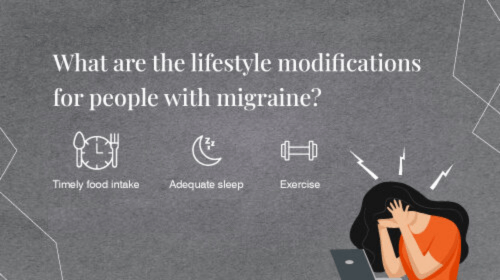
Lifestyle modifications for managing migraines include maintaining a headache diary, eating on time, getting adequate sleep, and identifying and avoiding migraine triggers. Additionally, incorporating home remedies can provide relief. The headache diary includes the frequency of headaches in a week, the nature of pain, the duration of the headache, and the precipitating and relieving factors.
The abortive treatment gives immediate relief of headaches and includes the usage of paracetamol, NSAIDs, and triptans.
Preventive therapy helps decrease how often migraine attacks occur and can eventually stop them from happening altogether. Triptans, beta-blockers, antidepressants, and antiepileptics are some of the drugs used to prevent migraine attacks. To achieve better patient compliance, the triptans are available as nasal sprays and orally disintegrating strips. Botox injections are another mode of treatment for chronic migraine. Recently, monoclonal antibodies were introduced as a form of treatment for migraine.