 Health
  Find a
  Book an
 Meniere’s Disease: Symptoms, Causes, and Treatment
January 14, 2026
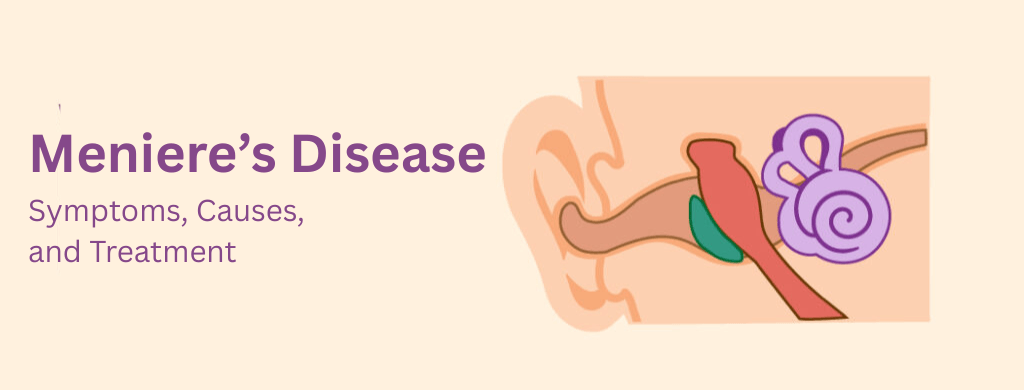
An inner ear disorder called Meniere’s disease can cause vertigo, hearing loss, and a ringing sensation in the ears. Think of an individual who walks on eggshells and experiences a constantly changing tune during the process of listening. Meniere’s disease destabilizes balance and equilibrium, making it hard for persons with the disorder to find stable ground among waves of symptoms. However, treatment is aimed at alleviating the discomfort while striving for a better quality of life. The ongoing investigation should reveal the secrets of Meniere’s and allow for less turbulent sailing on the ocean of this disease.
Symptoms
A whirlwind of symptoms emanating from Meniere’s disease, a disorder of the inner ear, can affect physical and mental health. Below is a brief exploration of the telltale signs:
Vertigo: Meniere’s disease is characterized by its sudden and severe dizziness attacks with accompanying spells in which there is spininess or unsteadiness.
Hearing Loss: Sometimes, a person with Meniere’s disease experiences irregular deafness that is usually only one-sided. It may feel like fullness or pressure in the afflicted ear.
Tinnitus: Such persistent auditory symptoms as persistent ringing, buzzing, or roaring sounds in the ear commonly occur in Meniere’s disease. Such sounds can be either transient or continuous.
Aural Fullness: Some patients with Meniere’s describe “fullness” or “pressure” in the affected ear, as someone feels at a time during a flight or high mountains.
Nausea and Vomiting: Nystagmus may cause nausea or even lead to vomiting on top of everything a patient is going through in Meniere’s.
The signs of Meniere’s disease should be recognized to ensure early treatment and management. Therefore, if one has these symptoms, he or she should consult a medical doctor to find an approach that will enable them to lead a balanced and controllable life. The first step in overcoming Meniere’s is to become a part of it by learning to embrace the rough waters that come with life.
Causes
Although nothing is known about its specific origin, various things have been suggested as contributing causes of Meniere’s disease.
Inner Ear Fluid Imbalance
There is frequently an abnormality relating to fluid homeostasis in the internal ear linked to the condition. Such imbalances lead to a rise in pressure, which in turn affects the sensitive organs used to hear and maintain body equilibrium.
Genetic Predisposition
Research indicates that Meniere’s disease has a hereditary aspect. People who have this disease in their families may have a higher predisposition towards the condition.
Vascular Issues
Other researchers suggest that there may be an issue on how blood flows to inner ear and associate it with Meniere’s disease. The inner ear tissues could experience poor health with a reduced amount of blood being channeled to those areas.
Autoimmune Factors
Meniere’s may result from an excessive immune reaction. For example, autoimmune disorders, which are caused by the body attacking its own tissues, may also include targeting of the inner ear.
Allergies and Infections
Therefore, some allergies and infections, particularly of the ear, can provoke or aggravate Meniere’s signs. These conditions may affect the functioning of the inner ear, depending on how the body responds to them.
Risk Factors
Ménière’s disease can affect anyone, but some people have a higher chance of developing it. The common risk factors include:
- Age: Ménière’s disease is more common in people between 40 and 60 years. Many cases start in the 40s or 50s.
- Sex: Some studies show that females may have a slightly higher risk than males.
- Family history: You may have a higher chance of getting Ménière’s disease if someone in your family has had it. This suggests the condition can run in families.
- Autoimmune diseases: People with autoimmune disorders may have a higher risk. These include conditions like rheumatoid arthritis, lupus, and ankylosing spondylitis.
Even with these risk factors, anyone can develop Ménière’s disease. There is currently no cure, but early diagnosis and treatment can help manage symptoms.
Diagnosis
The classic presentation of Meniere’s disease is episodes of vertigo that recur, the loss of hearing on one or both sides in one or more spells, tinnitus, and aural fullness and discomfort. Initial steps include a thorough medical history and a comprehensive physical examination.
Hearing levels are determined using Audiometric tests like pure-tone audiometry that show alterations associated with Meniere’s. There are special vestibular function tests, such as electronystagmography or videonystagmography, which analyze eye movements to identify imbalances in the balance system. The radiology tests will rule out the need for an MRI for imaging studies in some cases.
It is a challenge because Meniere’s symptoms are similar to other conditions; hence, it is important to have the correct diagnosis for effective treatment. In most cases, a multidisciplinary assessment that involves an otolaryngologist, an audiologist, and a neurosurgeon is carried out. Early identification and treatment of the symptoms improves the general health status of the persons and reduces interference with their normal routines.
Treatment
This section outlines various treatment options aimed at managing the symptoms of Ménière’s disease and improving the patient’s quality of life.
Medication
For instance, doctors can give drugs that flush out excess fluids, reducing pressure on the inner ear. Other drugs that may help relieve the effects, such as vertigo and nausea, are anti-vertigo and anti-nausea drugs, respectively.
Lifestyle Changes
Making the right lifestyle choices could be a lifesaver for Meniere’s. A low-salt diet should also be encouraged since too much salt may result in fluid loss. Additional suggestions could include caffeine and alcohol reduction, which tend to worsen some symptoms of schizophrenia.
Physical Therapy
One such type of physical therapy is vestibular rehabilitation, which can help improve balance and minimize dizziness attacks. The brain is trained to work with these changed signals in the inner ear through such exercises.
Invasive Procedures
When it becomes unbearable, surgical options like endolymphatic sac decompression and vestibular nerve section, respectively, are taken into account, in severe cases. The procedures focus on relieving symptoms but target the problems at the level of the inner ear.
Hearing Aids and Cochlear Implants
Hearing loss may require a hearing aid or CI to restore auditory function, which affects quality of life and communication in general.
However, a combination of these personalized treatments tailored according to specific cases can only relieve but not cure the disease. One is always advised to seek medical advice and prescribed medication to formulate an appropriate line of treatment, taking into consideration a person’s peculiarities.
Complications
Ménière’s disease can lead to several complications over time. These problems can affect daily life, safety, and emotional health.
- Sudden vertigo attacks: Vertigo can happen without warning. It can cause loss of balance and increase the risk of falls and accidents. Activities like driving, climbing stairs, or using ladders may become unsafe.
- Hearing loss: Over time, Ménière’s disease can cause long-term or permanent hearing loss, especially after many years of the condition.
- Difficulty with daily activities: Vertigo and hearing problems can make it hard to work, travel, or take part in normal daily tasks.
- Mental health problems: Living with unpredictable symptoms can cause stress, anxiety, and depression. Worry about future attacks may affect confidence and social life.
- Fatigue: Repeated vertigo episodes and stress can lead to constant tiredness.
It is important to talk to a healthcare provider about both the physical and emotional effects of Ménière’s disease. Early support can help reduce these complications and improve quality of life.
Prevention
While it is challenging to control Meniere’s disease, some activities can aid in the management of this condition and the prevention or alleviation of its symptoms. It is important always to have a balanced lifestyle for one to observe proper nutrients, a low salt diet, and controlling stress dramatically helps. In addition, regular physical activity involving exercises for improving blood flow and stability may be quite important.
Drinking lots of water in the daily plan may be vital because it helps with the water balance inside the inner ear that leads to Meniere’s disease. It is also important to monitor and control any health problems like hypertension or diabetes that may worsen the situation.
If it has to be effective, the control must also consider mindful management of environmental factors. Protect your ears by not exposing them to noise and by wearing earplugs. It is important to undergo periodic visits with a physician specializing in ear, nose, and throat disease for early detection of the sickness, which will require urgent treatment.
Finally, a total approach to a healthy lifestyle concerning proper diets, stress control, physical exercises, and protection from environmental factors is a strong protection against Meniere’s disease. Adopting these preventative measures in empowering can lead to a healthier life balance.
Hence, the course of Meniere’s disease is fraught with difficulties, including dizziness, deafness, and constant noise inside one’s ear. Going through various mood swings is like tiptoeing over uncharted territory. The specific etiology is not clear, but a new study is coming out that will explore the mysteries behind this inner ear disease. The pain is lessened through medicines, lifestyle changes, and, if necessary, surgery. Early diagnoses and a multi-disciplinary approach improve the quality of life of people who are infected. We must adopt a balanced lifestyle, including proactive prevention, in our fight against Meniere’s to sail calmly in the waves of life.
Frequently Asked Questions
1. Should I see an ENT or neurologist for Meniere’s?
For Meniere’s disease, it is advised first to visit an ENT specialist because these specialists handle conditions that concern the ear and conduct various examinations to manage the Meniere’s disease.
2. Can Ménière’s disease disappear over time?
Ménière’s disease may go into remission for months or even years, but it typically returns. While healthcare providers offer medications and treatments to reduce vertigo symptoms, there is no cure. Ménière’s disease is a chronic condition that persists throughout life.
3. Can I lower my chances of getting Ménière’s disease?
No, you cannot prevent Ménière’s disease. However, if you have the condition, you can take measures to prevent it from getting worse. If you experience sudden dizzy spells or vertigo, seek medical attention without delay. Prompt diagnosis and treatment can improve symptom management.