 Health
  Find a
  Book an
 Knee Pain: Causes, Symptoms, Remedies, and When to See a Doctor
August 21, 2025
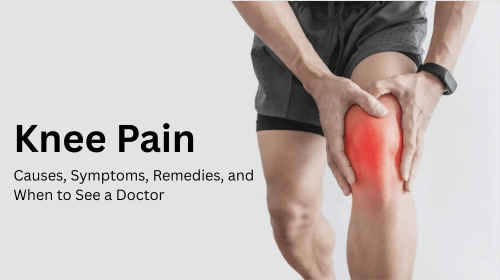
Knee pain is the discomfort or aching felt in or around the joint where the thigh bone (femur) meets the shin bone (tibia). As the largest joint in the body, the knee plays a crucial role in supporting body weight and absorbing impact during movement. Due to this, it is one of the most frequently injured joints. Knee pain may be temporary and resolve on its own. However, if it becomes chronic, a proper diagnosis and treatment from a healthcare professional are necessary to relieve knee pain.
Common Causes
Knee pain is a common complaint among people of all ages. It could be caused by various reasons, from acute injuries to complicated medical conditions.
- Osteoarthritis – The cartilage in the knee slowly diminishes and causes Osteoarthritis.
- Rheumatoid arthritis – Rheumatoid arthritis can cause swelling in the knee and lead to cartilage damage.
- Ligament injuries – Ligaments are bands of strong tissue in a person’s body that connect bones. The knee has four ligaments that are commonly at risk of injury.
- The ACL (Anterior Cruciate Ligament) is the ligament most prone to injury, especially in sports such as basketball and soccer, where quick turns and sudden changes in direction are common.
- PCL (Posterior Cruciate Ligament): One common cause of a PCL injury is hyperextension of the knee, which often happens during athletic activities such as jumping. A PCL injury can also occur from a direct blow to the knee while it is bent or flexed.
- The LCL (Lateral Collateral Ligament) is often injured during activities that involve bending, twisting, or sudden changes in direction. For instance, a blow to the inside of the knee during sports like football or soccer can damage the LCL.
- MCL (Medial Collateral Ligament) tears happen most often during sports involving turning, cutting, and pivoting, like skiing, soccer, football, basketball, and tennis.
- Tendon injuries or Sports Injuries – These injuries can vary from simple inflammation to a complete tear, often caused by overuse in sports or a fall.
- Cartilage injuries and disorders – Cartilage in the kneecap can soften due to injury, overuse, muscle weakness, or knee misalignment. In some cases, a direct blow to the knee may even tear off a piece of cartilage.
- Broken kneecap – The small, round bone (patella) that sits over the front of the knee joint breaks, usually as a result of a fall or a direct blow to the knee.
- Fractures – People with weakened bones from osteoporosis may experience a knee fracture even from something as simple as a misstep.
Symptoms
The cause of knee pain often affects where it occurs and how severe it feels. Some common symptoms that may accompany it are:
- Swelling and stiffness
- Redness and warmth when touched
- Weakness or instability in the knee
- Popping or crunching sounds during movement
- Difficulty fully straightening the knee
Remedies
Knee pain treatments will vary depending on what exactly is causing it. Some of the remedies for knee pain include
- Hot and Cold Packs – Applying hot packs, such as hot water bags or warm towels, or using ice packs is one of the easiest and most effective home remedies for reducing inflammation. Always avoid placing ice directly on the skin; instead, wrap it in a towel or cloth before applying it to the knee.
- (Price) Protection, Rest, Ice, Compression, and Elevation – This method helps relieve mild knee pain, such as from a sprain. Protection means preventing further injury, for example, by pausing the activity that caused the pain.
- Aromatherapy – Essential oils have been used for centuries to treat many symptoms. They are often used in aromatherapy. Applying a massage with ginger- and orange-based oils may ease discomfort and enhance mobility in knees affected by moderate to severe osteoarthritis.
Using an ointment made with cinnamon, ginger, mastic, and sesame oil can similarly reduce pain, stiffness, and improve joint movement. - Compression – A compression bandage that is light in weight and breathable can be a huge relief. It should be tight enough to support the knee but should not hamper the circulation.
- Elevation – To help reduce swelling, try bolstering up the injured leg on pillows, or sitting in a recliner will also help.
- Stay physically active: Resting too much is not advisable. Do not remain seated in one position for too long. If you have a desk job, make it a habit to stand up every 45 minutes and walk around for at least a minute. Leading a sedentary lifestyle can weaken the muscles and increase strain on the knees during activities like standing, walking, or running.
When to See a Doctor?
Not all knee pain requires orthopedic medical treatment; in many cases, self-help measures can provide relief. However, if you need assistance with knee pain treatment, consulting a physiotherapist or a general physician may be necessary.
Guidelines to Seek Medical Attention
- Immediate Care: If your knee injury leads to a deformed joint, a popping sound, an inability to bear weight, severe pain, or sudden swelling, seek medical attention right away.
- Doctor’s Appointment: If your knee injury results from a strong impact or you experience significant swelling, redness, tenderness, warmth, intense pain, or fever, schedule a doctor’s appointment.
Self-Care
Not all knee pain requires medical intervention. If the pain develops gradually, stems from a minor injury, or follows strenuous activity, self-care can help. Non-prescription pain relievers, along with the RICE method (Rest, Ice, Compression, Elevation), are effective ways to ease discomfort.
Consult a doctor if:
- The pain is severe.
- Your knee is swollen.
- The pain persists for several weeks.
- You have difficulty moving your knee.
- You can’t put weight on your knee.
- Your knee locks, clicks painfully, or gives way (painless clicking is usually harmless).
Avoid self-diagnosing your condition. See a medical professional if you’re unsure or the pain does not improve. If knee pain is new, consulting a doctor early can help prevent further damage and ensure proper treatment.
Frequently Asked Questions
1. What can cause knee pain without surgery?
Knee pain without an injury can result from several factors, including overuse, arthritis, tendinitis, bursitis, or underlying conditions such as iliotibial band syndrome or Baker’s cyst.
2. Can I walk with knee pain?
You can often walk with knee pain, and in some cases, walking may help manage it, especially for conditions like osteoarthritis. However, it’s essential to listen to your body and avoid activities that trigger severe pain or worsen the condition.