 Health
  Find a
  Book an
 Innovations in Vascular Surgery: How Technology is Changing Varicose Vein Treatments in 2025
November 4, 2025
Varicose veins are both unsightly and uncomfortable. However, there is no need to suffer with them anymore. Latest advancements in varicose vein treatments offer a variety of options to get rid of your varicose veins or reduce their appearance. Varicose vein treatments are being revolutionised by technology, moving towards more minimally invasive, effective, and personalised approaches. Furthermore, new innovations and a deeper understanding of genetics are paving the way for targeted prevention and novel therapies. Let us explore the various technologies that are currently being used to treat varicose veins in 2025.
Endovenous Ablation
Endovenous ablation uses heat energy, delivered via laser or radiofrequency energy, to treat varicose veins by collapsing and closing the diseased vein. In this outpatient, minimally invasive procedure, a thin catheter or laser fibre is placed into the affected vein under ultrasound guidance, and energy is applied to close the vein. It’s a safe and effective treatment for painful, swollen, or heavy legs caused by varicose veins, offering advantages like less scarring and a shorter recovery time compared to traditional surgery.
Sclerotherapy
Sclerotherapy for varicose veins entails injecting a sclerosing solution into the vein, which makes the vein walls swell, adhere, and close completely. This minimally invasive procedure effectively treats small to medium varicose and spider veins, relieving symptoms such as pain, swelling, and discomfort. Over the course of weeks or months, the treated vein gradually fades as blood is rerouted to healthy veins, improving overall vascular health.
Varithena
Varithena is a non-surgical foam treatment for varicose veins caused by issues with the great saphenous vein (GSV) and related veins. It uses a polidocanol injectable foam to collapse the affected vein, redirecting blood to healthy veins and improving the appearance and symptoms of the varicose veins. The procedure is minimally invasive, administered through small injections, and often allows patients to return to normal activities the same day, though compression stockings are typically worn for two weeks after treatment.
VenaSeal
VenaSeal uses a medical-grade adhesive to seal off diseased veins, treating varicose veins by closing the vein and rerouting blood through healthier vessels. It is a minimally invasive, non-thermal procedure performed using a small catheter guided by ultrasound, offering advantages like quick recovery, minimal bruising and pain, and a high success rate with no need for compression stockings or general anaesthesia. The procedure is fast and generally painless, requiring neither anaesthesia nor stitches. Recovery time is also shorter when compared to traditional surgery, and patients can return to their normal activities within a few days. The VenaSeal system is safe, effective, and offers a great alternative for patients seeking a non-traditional approach to vein treatment.
Ambulatory Phlebectomy
Ambulatory phlebectomy is an outpatient, office-based surgical procedure that removes large, superficial varicose veins through a series of tiny skin incisions under local anaesthesia.
Also known as stab phlebectomy or microphlebectomy, the procedure uses specialised hooks to extract the diseased vein segments and allows for immediate ambulation and a quick return to daily activities. It can be used alone or in conjunction with other treatments, such as endovenous ablation, to treat varicose veins and is known for its cosmetic results due to the micro-incisions.
Telehealth in Vascular Care
Telemedicine has the potential to improve the management of patients in vascular surgery through digital platforms, allowing teleconsultation, telemonitoring or telecoaching. Teleconsultation allows remote access to vascular surgeons to facilitate triage or follow-up of patients.
Robotic-Assisted Vein Procedures
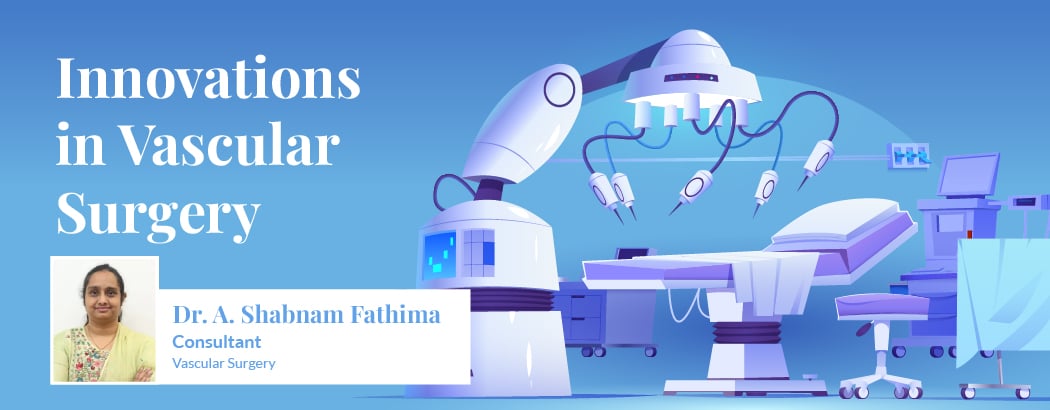
Robots are very popular and entering every sphere. It has been found that they are also useful in treating vein disorders. Robotic vascular surgery provides exceptional precision, improved dexterity, and the advantage of smaller incisions. This makes the procedure smooth for the patient, enables faster recovery times, and potentially even better long-term outcomes. It is still under development for widespread vein treatment. Nevertheless, robotic assistance represents an exciting step forward in surgical technology.
Nanotechnology in Vein Care
Generally, nanotechnology involves manipulating matter at the atomic and molecular level. For varicose vein treatment, tiny “nanobots” are introduced into the bloodstream to deliver precise therapy directly to the affected veins. These nanobots can dissolve clots, repair damaged vessel walls, or even deliver medication directly to the source of the problem. This technology is still largely in the research phase, but it holds immense potential for treating complex vascular conditions in the future.
AI in Vascular Care
AI is revolutionising vascular care by enabling faster, more accurate diagnosis through image analysis and risk prediction, enhancing surgical precision with tools like robotic-assisted interventions and digital twins, and improving patient outcomes through early disease identification and personalised monitoring. Applications include detecting conditions like peripheral artery disease (PAD) and abdominal aortic aneurysms (AAA), predicting patient risk, assisting in surgical planning, and optimizing workflow efficiency.
AI algorithms examine extensive patient data, including medical records, genetic information, and ultrasound results, to design tailored treatment plans. This helps doctors tailor your treatment specifically to your individual needs and circumstances, maximising its effectiveness and minimising potential side effects. AI technology helps forecast your likelihood of developing vein issues, enabling proactive and preventive care.
Summary
Key innovations like endovenous laser ablation (EVLA) and radiofrequency ablation (RFA), which use heat to seal problematic veins under ultrasound guidance, are very popular. VenaSeal, a medical adhesive glue, provides a less invasive, scar-free alternative. Telehealth is increasingly used for remote consultations and patient monitoring, while Artificial Intelligence (AI) is improving diagnosis and recurrence prediction.
Frequently Asked Questions
1. How long does the procedure take?
Most procedures take 30–60 minutes, and patients can usually walk soon after the procedure.
2. What is the recovery period?
You can usually return to normal activities within 1–2 days. Doctors may recommend compression stockings for a short period.
3. Are the results permanent?
The treated veins are permanently closed or removed. However, new veins may appear later if risk factors like standing jobs, obesity, or family history remain.
4. Are these treatments painful?
Most patients experience very little pain. Mild bruising or discomfort may occur but usually resolves quickly.