 Health
  Find a
  Book an
 Degenerative Disc Disease: Causes, Symptoms, and Treatments
October 14, 2025
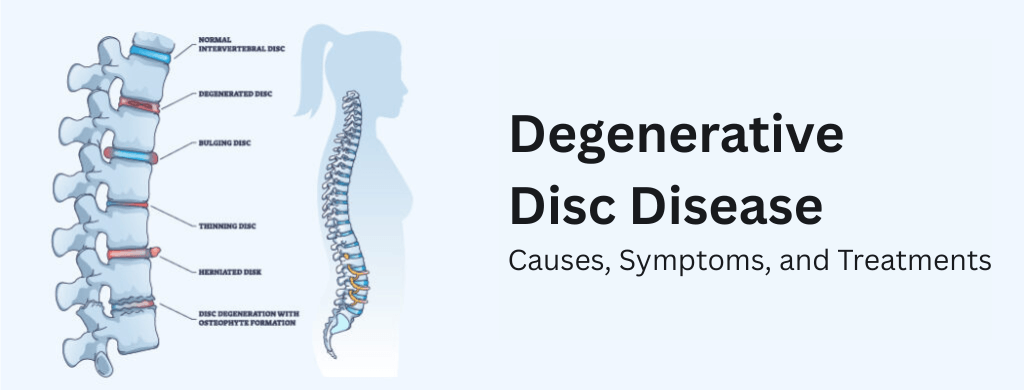
The vertebrae that form the spine are separated by discs, which are soft, cushiony pads. These discs function as cushions, helping us move, bend, and twist easily while safeguarding the spine.
These discs may degrade or lose their cushioning and flexibility over time. This illness is referred to as degenerative disc disease. Despite the word “disease,” this is not an infectious disease. It’s more of a natural ageing process that occasionally causes discomfort or pain.
Symptoms
Degenerative disc disease doesn’t always produce noticeable symptoms. Many people may not even be aware that they have disc alterations. However, when symptoms do show up, they might be anything from minor discomfort to more obvious discomfort.
Some common signs include:
- Back or neck pain: The pain may be a constant dull ache or a sharp sensation in the neck, upper back, or lower back.
- Pain that worsens with movement: Activities like bending, twisting, or sitting for long periods might increase discomfort.
- Numbness or tingling: If a worn disc presses on nearby nerves, it might cause tingling or numbness in the arms, legs, hands, or feet.
- Weakness in muscles: In some cases, nearby muscles might weaken if the nerves are affected.
- Pain that eases when you walk or lie down: Certain positions might help relieve the pressure on the spine.
Symptoms may differ widely between individuals. Some people might have occasional discomfort, while others might feel ongoing pain that affects daily activities.
Causes
Degenerative disc disease often occurs naturally with age, but certain factors can speed up or worsen the wear on the discs:
- Ageing: As we grow older, the discs in our spine naturally lose water content, making them less flexible and more prone to wear.
- Injury: Accidents or injuries to the back or neck can speed up the breakdown of spinal discs.
- Repetitive movements: Certain jobs or hobbies that involve heavy lifting, twisting, or repetitive motions can put extra strain on the spine.
- Genetics: Some people may be genetically inclined to develop problems with their spinal discs.
- Lifestyle choices: Habits such as smoking, being inactive, and maintaining poor posture can raise the chances of disc wear and tear.
Though it’s hard to completely prevent this condition, certain habits and choices can help keep the spine healthier for longer.
Diagnosis
When a patient complains of neck or back pain, the doctor typically asks about his or her symptoms, daily activities, and injury history. A physical examination helps to discover problem areas, movement limits, and muscular strength.
In many cases, imaging procedures such as MRI scans or X-rays may be recommended to examine the discs’ appearance and provide a clear image of the spine. These tests can help determine whether disc degeneration is causing the discomfort by ruling out alternative possibilities.
Treatment Options
The good news is that many people with degenerative disc disease find relief through simple, non-surgical treatments. The approach often depends on how severe the symptoms are and how they affect daily life.
Here are some of the common ways to manage the condition:
1. Lifestyle Changes
Staying active with regular, gentle exercise can strengthen the muscles around the spine and improve flexibility. Low-impact activities like walking, swimming, or stretching can be very helpful. Steering clear of heavy lifting, keeping a healthy weight, and using proper posture can significantly help.
2. Physical Therapy
A trained therapist can design a set of exercises and stretches tailored to an individual’s needs. These exercises work to build stronger back and core muscles, enhance posture, and lessen pressure on the spine.
3. Heat and Cold Therapy
Using a hot or cold pack on the sore area can relieve muscle tension and lessen pain.
4. Rest and Positioning
Sometimes, simply changing how you sit or sleep can bring relief. Sitting in supportive chairs, arranging your workspace properly, or placing a pillow under your knees while lying down can relieve spinal pressure.
5. Supportive Devices
In certain cases, braces or supportive belts might be recommended for short-term use to stabilise the spine during healing.
6. Surgical Options
When non-surgical treatments are ineffective and symptoms seriously impair a person’s ability to function, doctors may consider surgical options. These are usually used as a last resort to ease nerve pressure or stabilise the spine.
While degenerative disc disease cannot be corrected, this does not mean that life must slow down. Many people successfully control the illness through a mix of medications and lifestyle changes. The goal is to keep active, listen to your body, and seek assistance when discomfort interferes with regular activities.
Surrounding oneself with supportive family, friends, and healthcare providers can help you retain a positive mindset. It’s also beneficial to be knowledgeable and proactive about your spinal health.
Conclusion
Many people experience degenerative disc disease as they age, but it doesn’t have to control your life. It is possible to manage discomfort and carry on with daily activities by identifying the symptoms, comprehending the underlying causes, and investigating the range of available therapy alternatives.
Don’t disregard back or neck pain if you or someone you know is experiencing it. Protecting the health of your spine and enhancing your general well-being can be achieved with early care, easy adjustments, and expert advice.