 Health
  Find a
  Book an
 Crigler-Najjar Syndrome: Causes, Symptoms, Diagnosis, and Treatment
November 13, 2025
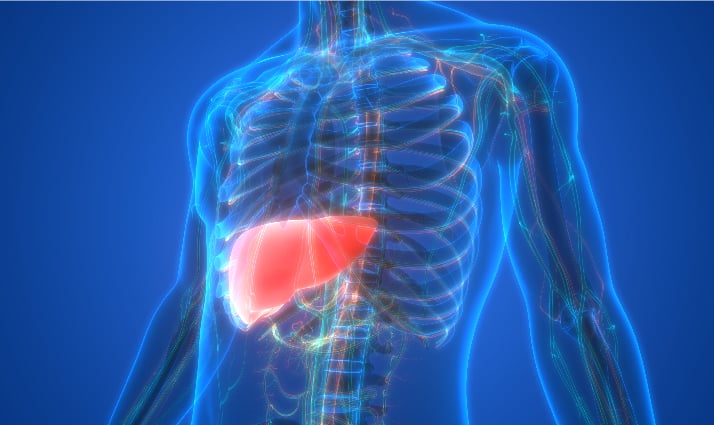
Crigler–Najjar syndrome is a rare genetic condition that prevents the normal breakdown of bilirubin in the body. This condition leads to an excessive buildup of a toxic substance called unconjugated bilirubin in the blood, resulting in hyperbilirubinemia. Under normal conditions, the breakdown of red blood cells produces bilirubin, which the liver converts into a harmless, water-soluble substance that is eliminated from the body through bile and stool.
In individuals with Crigler–Najjar syndrome, this conversion process does not occur properly because of a deficiency or absence of a liver enzyme called uridine diphosphate glucuronosyltransferase (UGT1A1). As a result, bilirubin accumulates in the bloodstream, leading to jaundice (yellow discoloration of the skin and eyes) and, in severe cases, brain damage (kernicterus).
Types
There are two types of this disease:
- Glucuronyl transferase deficiency (Type I Crigler–Najjar), which starts early in life and is the most severe form.
- Arias syndrome (Type II Crigler–Najjar), which may start later in life and tends to be milder.
In Type I (CN1), the enzyme is completely inactive, leading to dangerously high levels of unconjugated bilirubin. Infants with this form often show severe jaundice within a few days of birth and may not survive beyond early childhood without aggressive management or liver transplantation.
In Type II (CN2), some enzyme activity (less than 20% of normal) is retained. This allows partial breakdown of bilirubin, resulting in milder symptoms. Individuals with Type II often lead normal lives with medical management.
Causes
Crigler–Najjar syndrome results from mutations in the UGT1A1 gene, which is responsible for directing the production of the bilirubin-UGT enzyme in liver cells. This enzyme performs a chemical process called glucuronidation, in which bilirubin is converted from its toxic, unconjugated form to a non-toxic, conjugated form that the body can eliminate.
When the gene is defective, the enzyme either doesn’t work (Type I) or works at a significantly reduced rate (Type II). Crigler–Najjar syndrome is inherited when both parents pass down a faulty gene, as the disorder occurs only if two defective copies are present. Individuals carrying a single defective gene usually do not show any symptoms, but they can transmit the gene to their offspring.
A milder related condition, known as Gilbert’s Syndrome, occurs when only one copy of the UGT1A1 gene is affected.
Prevalence
Crigler–Najjar syndrome is an extremely rare condition, affecting fewer than one in a million newborns worldwide. Because it is genetic, it can affect any population regardless of region or ethnicity.
How the Disease Affects the Body
Under normal conditions, the liver processes bilirubin and eliminates it from the body safely. In Crigler–Najjar syndrome, the absence or deficiency of the UGT1A1 enzyme leads to the accumulation of toxic unconjugated bilirubin in the blood and tissues. This buildup can cross into the brain and nervous system, potentially leading to kernicterus, a serious neurological condition that can cause irreversible brain damage.
Infants and children with this disorder typically present with persistent jaundice that does not resolve after the newborn period.
Symptoms
Symptoms depend on the type and severity of the disease.
Common symptoms include:
- Yellow skin (jaundice) and yellowing of the whites of the eyes (icterus), which begin a few days after birth and worsen over time.
- Lethargy and extreme tiredness.
- Poor feeding and vomiting.
- Confusion or changes in mental state (especially in later stages).
Kernicterus symptoms may develop if bilirubin levels rise dangerously high and include:
- Muscle stiffness or weakness (hypertonia or hypotonia).
- Twisting or writhing body movements (choreoathetosis).
- Clumsiness and trouble with fine motor skills.
- Hearing loss and developmental delays.
- High-pitched cry, fever, and seizures in severe cases.
If untreated, severe cases (Type I) can lead to death in infancy or early childhood.
Diagnosis
The diagnosis is determined through a combination of clinical assessment, family history, and laboratory investigations.
Common tests include:
- Blood tests to measure total, conjugated, and unconjugated bilirubin levels.
- Liver function tests to assess liver enzyme activity.
- Enzyme assay to measure glucuronyl transferase function.
- Genetic testing to identify UGT1A1 gene mutations.
- Liver biopsy (rarely needed) to assess liver structure.
Healthcare providers may also recommend newborn screening if the baby presents with persistent jaundice or family history of similar conditions.
Treatment and Management
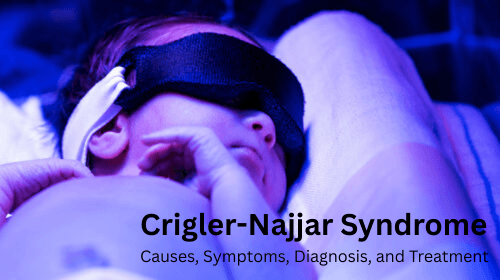
Phototherapy remains the cornerstone of treatment, especially for Type I patients. This involves exposing the skin to special blue LED lights, which help convert bilirubin into a form that the body can excrete without enzyme conversion.
- Infants may require daily phototherapy, especially during the early months.
- Over time, phototherapy becomes less effective as the skin thickens and body mass increases.
Other treatments include:
- Blood transfusions or plasmapheresis to remove bilirubin from the bloodstream.
- Phenobarbital, a medication used in Type II cases, helps stimulate the remaining enzyme activity and reduce bilirubin levels.
- Calcium compounds to bind bilirubin in the intestines and aid its removal.
- Liver transplantation, which is considered the only curative treatment for Type I disease. The new liver restores normal enzyme activity and prevents life-threatening complications such as kernicterus.
Gene therapy and liver cell transplantation are currently under research and hold promise for future curative options. These aim to replace or repair the defective UGT1A1 gene or introduce healthy liver cells capable of producing the enzyme.
Prognosis
The outlook for patients with Crigler–Najjar syndrome depends on the type:
- Type I: Without a liver transplant, life expectancy is severely limited, as bilirubin buildup can cause fatal brain damage. With effective management and transplant, survival into adulthood is possible.
- Type II: Individuals generally have a normal life expectancy with appropriate treatment, including periodic phototherapy and medication.
Prevention
Since Crigler–Najjar syndrome is genetic, it cannot be prevented. However, genetic counseling and carrier testing for parents planning a pregnancy can help assess the risk of passing the condition to their child.
When to Seek Medical Attention
Parents should contact a healthcare provider if a child with known or suspected Crigler–Najjar syndrome shows:
- Persistent jaundice despite treatment
- Poor feeding or growth
- High fever
- Developmental delays
- Unusual muscle stiffness or weakness
Early diagnosis and continuous medical supervision are critical to prevent complications.
Why Rela Hospital?
Genetic liver disorders such as Crigler–Najjar syndrome require ongoing monitoring and specialized care. Rela Hospital is widely recognized as the best hospital for Crigler–Najjar syndrome treatment in Chennai. In severe cases (Type I), which may require a liver transplant, Rela Hospital is considered India’s leading center for pediatric liver transplantation.
Our paediatric liver unit is equipped with advanced diagnostic tools, expert hepatologists, and a dedicated transplant team, ensuring world-class care for children affected by rare liver conditions.