 Health
  Find a
  Book an
 Bell’s Palsy: Causes, Symptoms, and Recovery
August 7, 2025
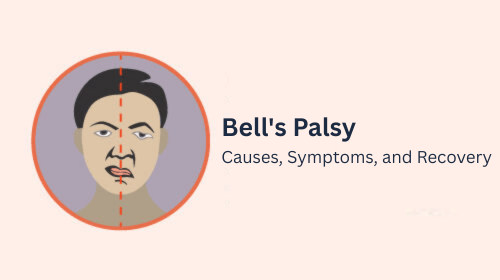
Bell’s palsy causes temporary weakness or paralysis of facial muscles. This paralysis, or palsy, is caused by a pinched facial nerve. People with this form of facial nerve palsy get a drooping look on one or both sides of their faces. The ailment isn’t dangerous and usually goes away after a few months.
Bell’s palsy causes one or both sides of your face to sag. You can have a crooked smile or an eyelid that won’t close. These side effects usually persist for many months and disappear on their own. Sir Charles Bell, a Scottish surgeon who initially characterised the illness in the nineteenth century, gave it its name.
Risk Factors
Bell’s palsy affects men and women equally. It usually affects people aged between 15 and 60. If you are pregnant or have one of the following conditions, you may be more susceptible to Bell’s palsy:
- Autoimmune disease
- Diabetes
- Pregnancy
- Upper respiratory ailments
- Preeclampsia
- Sleep deprivation
- Damage to the myelin sheath
- Family history of Bell’s palsy
- Cold sores (herpes simplex virus)
- High blood pressure (hypertension)
- Mononucleosis (Epstein-Barr virus)
- Shingles (herpes zoster virus)
Can One Person Get Bell’s Palsy More Than Once?
It is uncommon to experience Bell’s palsy more than once in one’s life. However, a repeat event is probable within a few years of the first. Facial nerve palsy can affect the face’s same or opposite side. If there is a family history of this condition, you are more likely to have a recurrence.
Causes
A variety of viruses can cause Bell’s palsy. The condition arises when inflammation or swelling exerts pressure on a nerve that controls the facial muscles. This pressure inhibits nerve function, making it harder to regulate facial muscles or expressions. The nerve begins to function again when the inflammation decreases. However, symptoms may not disappear for several months.
Many scientists believe something might awaken a latent viral infection, causing Bell’s palsy. If you’re concerned or have recently been sick, these could be possible causes. A prior physical trauma or even sleep deprivation might also play a role. Finally, an autoimmune disorder might potentially be a trigger.
The facial nerve is hypothesized to respond to infection by swelling, which produces pressure in the bone tube (known as the Fallopian canal) via which the facial nerve travels to the side of the face.
Symptoms and Signs
Bell’s palsy symptoms often appear rapidly and peak in severity within 48 to 72 hours. Some folks have only minor signs. Others are completely paralyzed.
Symptoms begin to improve gradually in three weeks. Within three months, up to 80% of patients entirely recover and exhibit no evidence of Bell’s palsy.
Bell’s palsy symptoms include, in addition to face drooping:
- Difficulty speaking, eating, or drinking
- Drooling
- Dry eyes
- Discomfort around the jaw or in the ear, including behind it, on the affected side
- Headache
- Loss of taste
- Ringing in ears (tinnitus)
- Variations in tear and saliva production
- Sensitivity to sounds
The symptoms generally develop suddenly, and you could experience them as you wake up or try to drink or eat.
Bell’s palsy is distinguished by a drooping look on the side of the face and the inability to open or close the afflicted eye. Bell’s palsy can damage your entire face in rare situations.
Diagnosis
Your surgeon will first undertake a medical examination to establish the extent of your facial muscle weakness. They will also ask about your symptoms, including when they started and when you first noticed them.
Although there isn’t a single lab test to definitively diagnose Bell’s palsy, your doctor can use various tests to help confirm the diagnosis.
These tests can also help rule out other potential causes of facial paralysis, such as Guillain-Barré syndrome or Lyme disease.
Among these tests are:
- Blood tests to see if you have a bacterial or viral illness. Diabetes and other diseases are also detected by blood testing.
- A CT scan or MRI can help evaluate the facial nerves and eliminate the chance of a stroke or brain tumor.
- An electromyography (EMG) test involves a doctor inserting thin wire electrodes into a muscle to determine if the nerves controlling the facial muscles are damaged. This test can also identify the extent of the damage.
- If Lyme disease is suspected, a lumbar puncture may be performed.
Treatment
In most cases, the symptoms of Bell’s palsy get better naturally over time without special treatment. However, your facial muscles may take weeks or months to restore their enduring power. Nevertheless, the remedies listed below may aid in your recovery.
Medication
- Doctors will prescribe corticosteroid medications to reduce inflammation.
- If a virus or bacterium causes your Bell’s palsy, you may be offered antiviral or antibacterial medicine.
- OTC pain relievers, such as ibuprofen or acetaminophen, can help reduce minor discomfort.
- To keep your afflicted eye moist, use eye drops.
Home Remedies
- An eye patch (for your dry eye)
- Using a warm, wet cloth on your face can help soothe discomfort and reduce pain.
- Facial massage
- Physical therapy exercises stimulate your facial muscles.
Complications
Most people with Bell’s palsy recover completely. However, in some cases, complications may occur, especially if the paralysis is severe.
Permanent nerve damage: In rare cases, the facial nerve may not fully recover. This can cause long-term facial weakness.
Eye problems: Many people cannot fully close one eye on the affected side. This can lead to dryness, irritation, infections, or corneal damage. If not treated properly, severe dryness may affect vision.
Synkinesis (abnormal movements): Sometimes the nerve heals in an irregular way. This may cause involuntary movements. For example, the eye may close when a person smiles.
Facial spasms or weakness: A small number of people may continue to have facial muscle weakness or uncontrolled muscle movements.
Proper eye care and medical follow-up can help reduce the risk of these complications. If symptoms do not improve after a few months, consult a healthcare provider for further evaluation.
When to See a Neurologist
Bell’s Palsy is generally diagnosed by clinical observation. If feasible, consult a neurologist within 72 hours of the onset of symptoms because they can arise quickly. The appearance of a deformed face and the inability to move the facial muscles on one side are two of the first symptoms to check for.
Frequently Asked Questions
1. How long does Bell’s palsy last?
Most patients fully recover within six months, though some may take longer. In rare cases, facial weakness or paralysis can be permanent. If no improvement occurs after three weeks, follow up with your neurologist.
2. Does stress cause Bell’s palsy?
Stress is considered a contributing factor to Bell’s Palsy, as it may damage the facial nerve and cause facial weakness. The extent of nerve damage depends on the duration and intensity of the stress.
3. What are the first signs of recovery from Bell’s palsy?
As Bell’s palsy heals, signs of recovery include regained muscle tone, reduced facial drooping, and the gradual return of facial movements, though they may start weak and inconsistent.