 Health
  Find a
  Book an
 Assisted Reproductive Technology (ART): Comprehensive Guide to Fertility Solutions
October 24, 2025
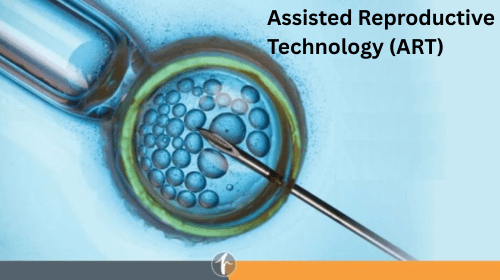
If you have been trying to conceive for over a year without success, don’t lose hope. Today, advanced medical interventions offer a variety of solutions for infertility. Assisted Reproductive Technology (ART) provides hope to millions of couples facing fertility challenges, including those with unexplained infertility, genetic concerns, or complications that prevent natural conception.
What is Assisted Reproductive Technology (ART)?
ART is the branch of medicine that helps individuals achieve pregnancy by manipulating eggs, sperm, and embryos to increase the chances of fertilization. During natural conception, fertilization takes place in the fallopian tube, and the embryo then moves to the uterus to implant. Any disruption in this delicate process can lead to infertility. ART allows conception to occur when natural methods are unsuccessful or unsuitable. It is also referred to as fertility treatment or medically assisted reproduction.
The very first successful In Vitro Fertilization (IVF) was carried out in England in 1978. Since then, ART techniques have advanced significantly, increasing success rates from the initial 6% to around 50–60% today.
Causes of Infertility
Both men and women can experience infertility, which may result from a variety of factors.
Male Causes:
- Erectile or ejaculatory problems that affect sperm delivery
- Low sperm count or absence of sperm (oligospermia or azoospermia)
- Poor sperm quality, including abnormal shape or reduced motility
- Increasing age leading to reduced sperm count and quality
Female Causes:
- Ovulation disorders such as polycystic ovary syndrome (PCOS)
- Conditions affecting the uterine lining, including endometriosis
- Blocked or damaged fallopian tubes preventing fertilization
- Advanced maternal age causing a decline in egg quality
Who Should Consider ART?
ART is usually recommended for couples who:
- Have been trying to conceive for over a year without success.
- Have female infertility issues, such as blocked fallopian tubes or ovulation problems.
- Have male infertility issues, including low sperm count or poor sperm quality.
- Want to prevent genetic disorders or reduce the risk of complications in pregnancy.
- Have unexplained infertility, which occurs in 20–30% of couples without any identifiable physical cause.
Consulting a healthcare provider or fertility specialist is the first step to exploring available ART options.
ART Procedures
Modern ART encompasses a variety of procedures tailored to different causes of infertility:
1. Ovulation Induction
If ovulation is irregular or absent, hormone therapy and oral medications can stimulate the ovaries to produce eggs. Ultrasound monitoring tracks follicle development, and a trigger injection is given to induce ovulation, increasing the chance of natural conception.
2. Intrauterine Insemination (IUI)
Intrauterine insemination is a fertility procedure that places specially prepared sperm into the uterus to enhance the likelihood of conception. This method is commonly recommended for cases of unexplained infertility or minor male fertility issues. IUI may be carried out in a natural cycle or following ovulation stimulation, with up to six attempts suggested before considering IVF.
3. In Vitro Fertilization (IVF)
IVF is the most common and effective ART procedure. The process includes:
- Treatment using hormones to encourage the ovaries to generate multiple eggs.
- Retrieval of mature eggs under anaesthesia.
- Eggs and sperm are joined in a controlled laboratory environment to allow fertilization.
- Culturing embryos for 3–5 days before selecting the best for transfer into the uterus.
- Freezing surplus embryos for future use if needed.
IVF success rates average around 50–60%, with subsequent cycles often improving outcomes.
4. Intracytoplasmic Sperm Injection (ICSI)
ICSI is a specialised IVF technique for severe male infertility. A single sperm is directly injected into a mature egg, improving fertilisation chances when sperm count or quality is low.
5. Intracytoplasmic Morphologically Selected Sperm Injection (IMSI)
IMSI is an advanced variation of ICSI. Using powerful microscopes, embryologists select sperm with the best morphology for injection into the egg, increasing the chances of successful fertilisation in couples with severe sperm abnormalities.
6. Assisted Hatching
This procedure involves creating a small opening in the embryo’s outer layer to facilitate implantation in the uterus. It is especially useful for older women to improve implantation rates.
7. Blastocyst Transfer
The embryos are grown for an extra 2 days, totalling 5–6 days, to develop into the blastocyst stage. This process helps embryologists choose the strongest embryos, optimizes the uterine lining, minimizes the number of embryos transferred, and decreases the risk of multiple pregnancies while boosting success rates.
8. Cryopreservation
Cryopreservation involves freezing embryos for later use. It is beneficial for women undergoing cancer treatment, surgery, or medical treatments, or when the uterine lining is not optimal for implantation. Delayed transfer can also help prevent ovarian hyperstimulation syndrome in women with PCOS.
9. Preimplantation Genetic Testing (PGT/PGS/PGD)
PGT allows screening embryos for genetic abnormalities before implantation, reducing the risk of inherited diseases. Healthy embryos are selected for transfer, improving the chances of a successful pregnancy.
10. Zygote Intrafallopian Transfer (ZIFT)
ZIFT involves placing a fertilized egg (zygote) directly into the fallopian tube instead of the uterus. It is used when tubal damage prevents natural fertilization.
11. Gamete Intrafallopian Transfer (GIFT)
In GIFT, eggs and sperm are placed together in the fallopian tube, allowing fertilization to occur naturally inside the body, unlike IVF where fertilization occurs in the lab.
12. Donor Programs
ART can also involve donor eggs, sperm, or embryos for couples with genetic issues, egg/sperm production problems, or infertility affecting both partners. Fertilized donor embryos are transferred to the woman’s uterus, and if using frozen embryos, hormone therapy prepares the uterus for implantation.
Benefits of ART
- Provides options for couples with fertility or genetic challenges.
- Improves the likelihood of conception through tailored medical interventions.
- Offers cryopreservation for future family planning.
- Helps lower the chance of transmitting genetic disorders by screening embryos with PGT.
Limitations of ART
- Increased risk of multiple pregnancies (twins or more)
- Rare risk of ovarian hyperstimulation syndrome (OHSS) from fertility medications
- High treatment costs, with limited or no insurance coverage in some cases
- Physical and emotional stress, especially if multiple treatment cycles are needed
- Slightly higher risk of ectopic pregnancy compared to natural conception
Rela Hospital Fertility Services
Rela Hospital is one of India’s leading fertility centres, offering the full spectrum of ART procedures. With advanced technology, expert specialists, and a caring environment, our IVF success rate ranges between 50–60%. Our services include:
- Intrauterine Insemination
- Invitro fertilization
- Intracytoplasmic sperm injection
- Laser Assisted hatching
- Freezing & Vitrification
- Donor Program
- Pre-Genetic diagnosis
- Pre-Genetic screening
- Embryo donation & adoption
- Surrogacy
- Male infertility services
- Advanced assisted reproductive techniques
- Operative Services
- Uterine Transplants
- Onco fertility & Fertility preservations
Conclusion
ART offers hope to couples facing infertility or genetic challenges, using advanced techniques like IVF, ICSI, and PGT to improve conception chances. Rela Hospital, a leading institute of reproductive medicine, provides expert care and high success rates, helping couples achieve their dream of parenthood.