 Health
  Find a
  Book an
 Pulmonary Function Tests: Purpose, Procedure, and Types
September 10, 2025
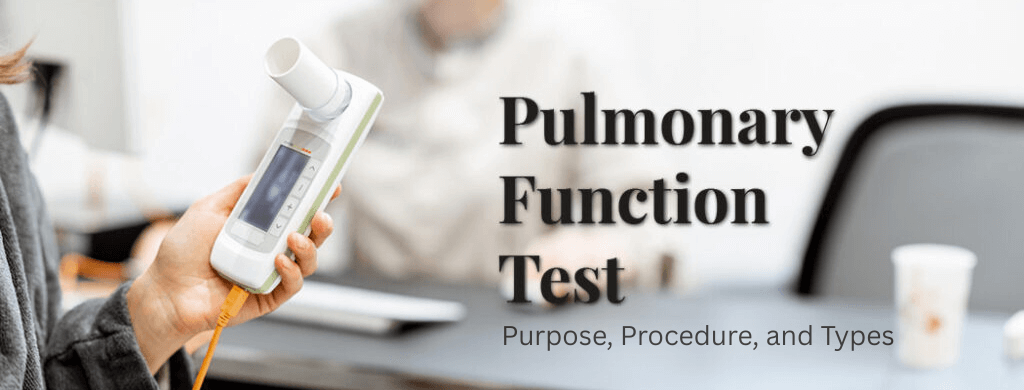
Pulmonary function tests (PFTs) determine how well the lungs work. They can measure the volume of air entering and leaving your lungs, the transfer of air from your lungs to your bloodstream, and how effectively your lungs function during physical activity.
What are Pulmonary Function Tests?
Pulmonary function tests are various tests that measure how well your lungs exchange air. You will know that our lungs help take in air (inhale) and breathe air out (exhale) to survive. There are many different types of PFTs, and they are extremely safe and non-invasive (no tools or instruments are inserted into your body). PFTs are also called lung function tests. A pulmonary function test (PFT) is very simple. This test uses a sealed, transparent chamber, a mouthpiece, soft nose clips, and an electronic spirometer to measure the flow of air in and out of your lungs.
The way the test is done may vary. The process followed is:
- For the test, please wear comfortable, loose clothing and take off any jewelry that might interfere with the procedure.
- Those wearing dentures will have to wear them during the test.
- You should empty your bladder before the test.
- You will sit on a chair. A soft clip will be placed on your nose. All you breathe from now on will be done through your mouth, not your nose.
- A disposable mouthpiece will be given to you that is attached to a spirometer.
- You will create a tight seal around the mouthpiece with your lips. You will then be guided to breathe in and out using various techniques.
- The healthcare provider will watch you carefully to see if you have dizziness, breathing trouble or any other problems.
- After some tests, you will be given a bronchodilator. It is a medication that widens the bronchi, the large airways connecting the trachea (windpipe) to the lungs.
- The tests will be repeated after the bronchodilator has taken effect.
PFTs are done for a variety of reasons. Healthy people can be given PFTs as part of routine physical check-ups. They are also done in certain work environments, like graphite factories or coal mines, to ensure employee health. They could also be used to diagnose a health problem.
Risks
Pulmonary function testing is generally considered safe. However, some people may experience temporary symptoms like dizziness, lightheadedness, fatigue from deep breathing, or coughing due to blowing forcefully into the mouthpiece. If needed, you can request a break during the test.
In very rare instances, the test may lead to a collapsed lung (pneumothorax). Additionally, PFTs can cause an increased heart rate. Be sure to inform your healthcare provider if you’ve recently had a heart attack or have any existing heart conditions.
Types
Pulmonary function tests (PFTs) are used to evaluate how effectively your lungs are functioning by checking lung volume, airflow, capacity, and gas exchange. Here are some of the most commonly performed PFTs:
Spirometry
Spirometry measures the amount of air flowing in and out of the lungs. It also gives a rough estimate of the size of the patient’s lungs. To do this test, a soft clip will be placed on your nose, and you will breathe in and out through your mouth. A mouthpiece will be inserted into your mouth and connected to a spirometer. Your healthcare provider will provide directions on how to perform inhalation and exhalation during the procedure. Spirometry can tell whether a patient has a breathing problem caused by an obstruction of air entering the lungs.
Lung Volume Testing
The amount of air in the lungs is measured at various stages of the breathing cycle. Lung volume testing, also called plethysmography, is like spirometry, but is done in a small, air-tight booth with clear walls. The test is conducted using a device known as a plethysmograph. You are seated during the test. You are asked to breathe in and out and, at times, to pant. This test is useful to distinguish whether you have a restrictive lung disease (pulmonary fibrosis) or an obstructive lung disease like asthma.
Gas Exchange Testing
This measures how effectively oxygen moves from the lung’s air sacs into the bloodstream. You will be asked to breathe normally, take deep breaths, and hold your breath briefly. Several lung diseases can be assessed with this test.
Maximal Voluntary Ventilation (MVV)
This test evaluates the quantity of air a person can breathe in and out over the course of one minute. You will be asked to breathe in and out as forcefully as possible. The test can assess the overall functioning of the respiratory system. If you have asthma, upper airway obstruction, stiffness of the respiratory system, and respiratory muscle weakness, your MVV will be reduced.
Oxygen Titration Test
This test helps assess whether a patient requires supplemental oxygen and ensures that those already on oxygen therapy are receiving the correct dosage. The saturation of the oxygen is measured using a device called the oximeter, and the heart rate is also recorded. Oxygen flow is regulated to keep blood oxygen levels within a safe and acceptable range.
Cardiopulmonary Exercise Testing
This is to assess your capacity to exercise. You will be instructed to pedal on a stationary bike. Your heart and lungs will be monitored at rest, during warm-up, during a short exercise period, and during recovery when you are no longer pedalling. The test can evaluate causes of shortness of breath and or decreased exercise tolerance. Instead of a bike, a treadmill can also be used.
Several more types of pulmonary tests can be administered. We have seen only a few basic types.
Preparing for a Pulmonary Function Test
Before taking a pulmonary function test, your healthcare provider will advise you to:
- Stop taking your breathing medicines for a short period
- Wear loose-fitting, comfortable clothing that allows free movement of your chest.
- Do not do any heavy exercise before your test
- Avoid tobacco products before your test
- You must not eat a heavy meal before your PFT
- You must avoid taking any caffeine before your PFT
Interpreting PFT Results
Results of the pulmonary function test will be available within a few days. PFT results can indicate several things:
- Lung disease: Abnormal PFT results can indicate a chest or lung disease. Certain lung diseases like asthma, chronic bronchitis, can cause the lungs to contain too much air and therefore the lungs take longer to empty. Certain lung diseases can make the lungs smaller, causing them to contain very little air.
- Before surgery, A PFT can be performed to check lung function.
- Lung damage: PFTs can assess lung damage due to exposure to chemicals or other substances.
- Treatment response: A PFT can be used to determine how well your lungs are responding to treatments.
Conditions Diagnosed with PFTs
Pulmonary function tests are useful for diagnosing and monitoring various lung conditions. These could include:
- Asthma
- Bronchitis
- Chronic obstructive pulmonary disease
- Pulmonary fibrosis
- Emphysema
- Pulmonary hypertension
- Allergies
- Damaged or scarred lung tissue
- Lung cancer
- Infections
- Thickening or hardening of the connective tissues, a condition known as scleroderma
- Weakness of the muscles that make up the chest wall
- Stretched and enlarged airways
- Sarcoidosis is the buildup of inflammatory cells around organs
Pulmonary function tests are important when you have been diagnosed with a breathing problem or when doctors think that you may be having one. A PFT helps your healthcare provider diagnose any conditions that affect your lungs. PFTs do take a long time and are not painful. PFTs are often used to rule out any lung condition.
Frequently Asked Questions
1. What are the possible side effects of a PFT?
You may feel dizzy, lightheaded, or tired after the test, or you may cough from blowing into the mouthpiece. These symptoms should go away shortly after the test.
2. What are the benefits of PFT?
Pulmonary function tests (PFTs) are tests that show how well your lungs are working. The tests assess lung volume, capacity, airflow rates, and gas exchange. This information helps your healthcare provider diagnose and determine treatment for specific lung disorders.
3. How much time does a pulmonary function test usually take?
A pulmonary function test typically lasts between 15 and 45 minutes. If you feel fatigued during the test, inform your healthcare provider that you can pause and take breaks as needed.
4. Does a pulmonary function test hurt?
No, pulmonary function testing is not painful.