 Health
  Find a
  Book an
 Dislocated Shoulder: Causes, Symptoms, Treatment, and Recovery Guide
September 23, 2025
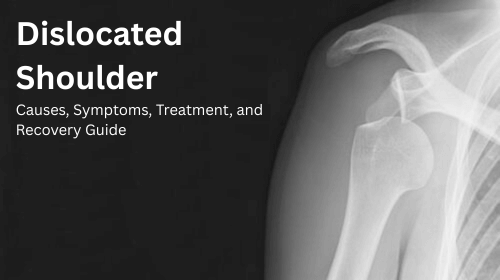
A shoulder can get dislocated as a result of a fall or trauma to the shoulder. Because of its mobility and ball-in-socket structure, the shoulder is the most prone joint in the body to dislocate. When the spherical ball at the upper end of the arm bone, or humerus, slips out of the socket in the shoulder blade, or scapula, this is referred to as a shoulder dislocation. That indicates the shoulder’s ball and socket bones are separated, and the humerus ball is out of place.
Muscles, tendons that link muscles to bones, and ligaments that connect the shoulder bone to the shoulder blade are all damaged tissues that keep the bones together. Cartilage is a rubbery substance that protects and covers the ends of bones. A partly dislocated shoulder, also known as a shoulder subluxation, occurs when just a portion of the upper arm bone is out of place.
Why Might a Shoulder Get Dislocated?
The most mobile joint in the body is the shoulder joint, a ball-and-socket mechanism with the circular top of the arm bone fitting into a shoulder blade groove. It can turn in a variety of directions. Even though muscles, tendons, and ligaments support the shoulder, it can make it unstable.
Causes
A fall or blow to the shoulder is frequently the cause of a shoulder dislocation. This can occur during sporting events. Shoulder dislocations are more prevalent in teenagers than in younger children.
Symptoms
Among the signs of a dislocated shoulder are:
- Extreme pain or weakness
- Swelling
- Bruising or redness
- Muscle spasms
- Numbness, tingling, or weakness in the arm, hand, or fingers
- Immobility of the arm or difficulty moving it
- Shoulder visibly out of place
If you feel your shoulder has dislocated, follow these steps:
- First, keep the arm still and close to the body. Try not to force the shoulder back into position since this can cause injury to blood vessels, muscles, ligaments, and nerves.
- Place a cold compress on the affected area. Ice might help to lessen swelling and discomfort.
- For pain, take ibuprofen, naproxen, or acetaminophen. It’s usually preferable to talk with a doctor before taking pain medicine, especially if you have heart disease, high blood pressure, or renal illness, or if you’ve had stomach ulcers or internal bleeding.
Who is at Risk for Shoulder Dislocation?
A dislocated shoulder can occur in anybody, although it is more prevalent in young men, who are more likely to participate in sports and other vigorous activities. Older folks, particularly women, are more vulnerable since they are more likely to fall.
Diagnosis
To alleviate discomfort, the doctor may prescribe muscle relaxants. X-rays, an MRI scan to detect tissue damage, or a computerised tomography (CT) scan to identify any fractured bones not visible on the X-ray are among the procedures the doctor may request. A dislocation may be discovered simply by touching the top of the arm bone.
Treatment
If a shoulder dislocation is found, the doctor will gently insert the arm bone back into the shoulder socket and ensure proper alignment, a procedure known as “closed reduction.” It is closed since surgery is not required.
If spasms have not begun, the patient might not require pain medication. Instead, the doctor may numb the patient and immobilise the shoulder. Any acute discomfort is relieved after the shoulder surgery. The doctor will schedule another X-ray.
To encourage recovery, you may need to wear a sling or splint for at least a week. The doctor may advise icing the damaged shoulder three or four times daily. You may conduct mild workouts to keep your shoulders from tightening or freezing. The injured shoulder will resume normal function after a few weeks.
The doctor will direct the patient to an orthopaedic surgeon, or bone expert, about a week after the accident to examine the shoulder’s bones, muscles, tendons, and ligaments. After the shoulder has healed, a physical therapist will prescribe exercises to extend it and restore mobility. The therapist will then add activities to strengthen the shoulder muscles and ligaments. This therapy aids in the prevention of future shoulder dislocations.
Complications
A dislocated shoulder can cause damage to the surrounding tissues and structures. Muscles, ligaments, and tendons may stretch or tear, leading to pain and weakness. Bone fractures can also occur during the injury.
Injury to the nerves or blood vessels near the shoulder can lead to numbness, tingling, or poor circulation in the arm. Some people may experience repeated shoulder dislocations, especially if the ligaments become loose.
In certain cases, a Hill-Sachs lesion can develop, where a small dent forms in the ball of the upper arm bone due to pressure against the shoulder socket. Severe tissue damage may require surgery for repair.
Frequently Asked Questions
1. Can dislocated shoulders heal themselves?
No, the dislocated shoulders cannot heal themselves. You will continue to feel discomfort unless your doctor inserts the humerus again. The longer you wait to address the injury, the more harm you inflict on the surrounding muscles and ligaments.
2. How long does a dislocated shoulder take to heal?
Although you may remove the sling within a few days, it takes 12 to 16 weeks to heal from a dislocated shoulder fully. Most activities may generally be resumed within two weeks, although heavy lifting and sports involving shoulder motions should be avoided for three to three months. If you have a strenuous job, you will most likely be out of commission for 2 to 4 weeks, if not more. Talk to your medical team about it. If your arm or shoulder is also fractured, you may need to keep the sling on for up to 6 weeks, and recovery may take longer.
3. Is the dislocated shoulder severe?
Complications of a dislocated shoulder may include tears in the muscles, ligaments, and tendons that support the joint, as well as damage to nearby nerves or blood vessels. Repeat dislocations are becoming increasingly common, especially if the damage is severe.