 Health
  Find a
  Book an
 Difference Between Bypass and Open Heart Surgery
October 8, 2025
Surgery may be required to restore normal heart function in severe cases of heart disease, a common health concern. People are often informed about two major surgical procedures: open-heart and bypass. Although the heart is engaged in both, their roles and techniques are distinct. In this blog post, we will explore the difference between bypass and open-heart surgery, helping you understand how each procedure works and when they are typically recommended.
What is Bypass Surgery?
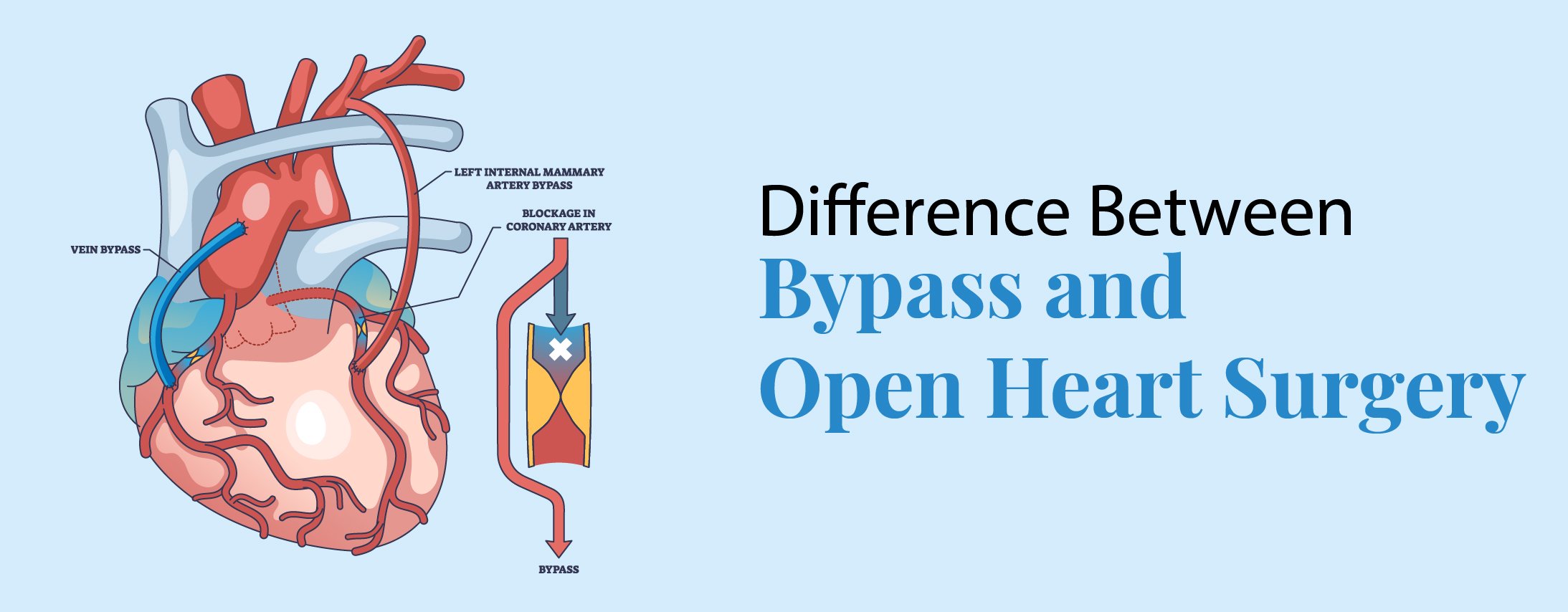
The purpose of bypass surgery, also known as coronary artery bypass grafting (CABG), is to improve the heart’s blood flow. It is performed when plaque formation causes the coronary arteries to narrow or become clogged, limiting the amount of oxygen reaching the heart muscle.
In bypass surgery, a healthy blood vessel often taken from the arm, leg, or chest is grafted to form a new pathway around the blocked artery. This improves overall heart function and reduces the likelihood of heart attacks by enabling blood to circulate freely.
What is Open-Heart Surgery?
Any surgical approach that requires opening the chest to operate on the heart is referred to as “open-heart surgery.” It refers to a variety of heart procedures, including bypass surgery, rather than a single surgery.
A heart-lung machine may be utilised to replace the heart’s pumping action while the treatment is being administered. During open-heart surgery, the surgeon makes an incision in the chest. Open-heart surgery can be used for many conditions, such as:
- Heart valve repair or replacement
- Congenital heart defect correction
- Heart transplant
Key Differences Between Bypass and Open-Heart Surgery
- Purpose: Bypass surgery is specifically performed to restore blood flow by bypassing blocked arteries, while open-heart surgery is a general term for multiple heart procedures.
- Procedure Type: Bypass surgery is a specific type of open-heart surgery, whereas open-heart surgery encompasses various operations that require opening the chest.
- Use of Heart-Lung Machine: In bypass surgery, the use of a heart-lung machine depends on the technique used. Open-heart surgery, especially complex procedures, often requires it.
- Conditions Treated: Bypass surgery is mainly used to treat coronary artery disease (CAD), while open-heart surgery is performed for various heart conditions, including valve disease, congenital defects, and heart transplants.
Bypass vs Open Heart Surgery Recovery
Similarities
- ICU stay and close monitoring
- Early walking and light activity
- Wound care and medications
- Healthy lifestyle and regular follow-ups
Differences
- Bypass surgery: Focus on strict care in the first 6–8 weeks (no heavy lifting, limited activity)
- Open heart surgery: Broader recovery, includes fatigue, sleep issues, and gradual return to routine
Bypass surgery is a type of open-heart surgery, so recovery steps are mostly similar.
How to Know Which Surgery is Needed?
The patient’s heart condition dictates whether bypass surgery or another sort of open-heart surgery is appropriate. Typically, bypass surgery is recommended if the condition is congested coronary arteries. Other types of open heart surgery may be required if the heart has structural issues, such as congenital abnormalities or valve failure.
Doctors use imaging scans, stress tests, and other diagnostic tools to decide on the best course of treatment.
Conclusion
Although they are related, open-heart surgery and bypass surgery are not identical. Open-heart surgery is a general term for various heart procedures, whereas bypass surgery is a specific type used to bypass blocked arteries. Knowing these distinctions will help you and your loved ones make informed decisions and discuss your options with your doctor if you or they require heart surgery.
Preventing the need for these surgeries in the first place is possible by maintaining good heart health through regular exercise, a balanced diet, and health screenings. However, modern medical advancements provide safer surgeries and better recovery results if surgery is required.
Frequently Asked Questions
1. Is a heart-lung machine always used in these surgeries?
Not necessarily. In bypass surgery, a heart-lung machine may or may not be used, depending on the technique. In complex open-heart surgeries, the machine is often required.
2. What lifestyle changes are needed after heart surgery?
Patients should maintain a heart-healthy diet, engage in regular exercise, avoid smoking, and manage stress to help prevent further heart complications.
3. Are there risks involved in these surgeries?
Like any major surgery, both bypass and open-heart surgery carry some risks, such as infection, bleeding, or complications related to anaesthesia. However, advancements in medical care have improved safety and recovery outcomes.