 Health
  Find a
  Book an
 Bladder Cancer: Causes, Symptoms, Types, and Treatment
September 22, 2025
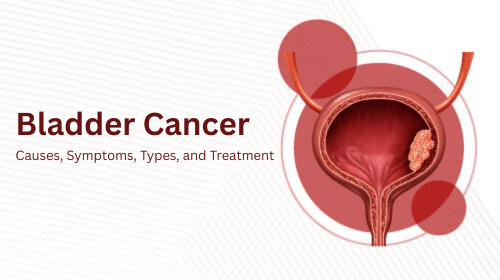
Bladder cancer develops when bladder cells start to grow and divide in an uncontrolled manner. The bladder is a hollow, balloon-shaped organ situated in the lower abdomen. It sits between the hip bones, just above the urethra and beneath the kidneys, and its main job is to store urine.
Urine from the kidneys flows into the bladder, which is lined with a special tissue called urothelium. This lining is made of stretchy cells that expand as the bladder fills and shrink back when it’s empty. On average, the bladder can hold about two cups of urine.
Bladder cancer develops when some of the cells in the lining of the bladder change or mutate, becoming abnormal and growing uncontrollably. These cells can form tumors inside the bladder. If not treated, the cancer can spread beyond the bladder wall to nearby lymph nodes and eventually to other parts of the body, like the bones, lungs, or liver.
Types
Bladder cancer comes in several types, each named after the specific cell type in the bladder wall where the cancer originates. The main types include:
- Transitional Cell Carcinoma (Urothelial Carcinoma): This is the most common form, making up about 90% of all bladder cancers. It starts in the transitional cells that form the inner lining of the bladder. As the cancer advances, it can invade the deeper layers of the bladder wall and potentially extend into the surrounding fatty tissue.
- Squamous Cell Carcinoma: This cancer arises from the thin, flat squamous cells that line the interior of the bladder. It accounts for around 5% of bladder cancers and usually develops in people who’ve experienced long-term bladder irritation or inflammation.
- Adenocarcinoma: This uncommon form of bladder cancer originates in the glandular cells and accounts for roughly 1% to 2% of all cases.
- Small Cell Carcinoma: An extremely rare form, this cancer affects approximately 1,000 people in the U.S. It develops in neuroendocrine cells, which secrete hormones into the bloodstream in response to signals from the nervous system.
- Sarcoma: Also rare, sarcoma starts in the muscle or connective tissue of the bladder wall.
Healthcare providers also classify bladder cancer based on how deeply it invades the bladder:
- Noninvasive bladder cancer remains on or near the surface and hasn’t grown into deeper layers.
- Non-muscle-invasive bladder cancer spreads below the surface but hasn’t reached the muscle layer.
- Muscle-invasive bladder cancer grows into the muscle wall and may extend into surrounding fat or nearby organs.
Symptoms
Some changes you may encounter in your body are symptoms. Signs are changes in a measurable aspect, such as your blood pressure or the results of a lab test. The symptoms and signs that a person experiences can help diagnose a medical problem. Sometimes, people with bladder cancer don’t have any symptoms or signs.
- Blood or blood clots in the urine
- Pain or burning during urination
- Frequent urination
- Not being able to urinate when you feel/want to
- Low back pain on one side of the body
Causes
Bladder cancer starts when bladder cells undergo changes (mutations) in their DNA. DNA contains the instructions required for a cell to carry out its functions. The differences signal the cell to multiply rapidly and continue living, whereas healthy cells would normally die. Instead, the abnormal cells form a tumor that can invade and damage normal body tissue. Over time, the abnormal cells may break away and spread, or metastasize, throughout the body.
Risk Factors
- Smoking: Smoking cigarettes, cigars, or pipes can raise the risk of bladder cancer by allowing harmful chemicals to build up in the urine. This can lead to cancer development. In addition, smoking produces chemicals in the smoke that your body processes and then eliminates through your urine. These harmful chemicals may damage the bladder lining, increasing cancer risk.
- Exposed to certain chemicals: Your kidneys filter harmful chemicals from the bloodstream and transfer them into the bladder. Consequently, exposure to certain chemicals is thought to raise the risk of developing bladder cancer. Chemicals associated with a higher risk of bladder cancer include arsenic and substances used in making dyes, rubber, leather, textiles, and paints.
- Chronic Bladder Inflammation: Repeated or long-term urinary infections or inflammation (cystitis), sometimes resulting from prolonged use of a urinary catheter, may raise the risk of squamous cell bladder cancer. In certain regions, squamous cell carcinoma is frequently associated with long-term bladder inflammation due to Schistosoma infection.
- Previous treatment for cancer: Using the anticancer medication cyclophosphamide can raise the risk of developing bladder cancer. In addition, people who have received radiation therapy directed to the pelvis for previous cancer have a higher risk of developing bladder cancer.
- Family history of cancer: Having a previous diagnosis of bladder cancer increases the likelihood of it recurring. If a blood relative, like a parent, sibling, or child, has had bladder cancer, your risk may be higher, although familial cases are uncommon.
Prevention
While bladder cancer cannot be completely prevented, certain measures can help lower your risk. Don’t smoke cigarettes. If you smoke, talk to your doctor about a plan to help you quit smoking. Support groups, medications, and other methods may help you successfully quit smoking. Second, take care when handling chemicals. If you work with them, follow all safety instructions to avoid exposure. Third, add various fruits and vegetables to get a healthy and balanced diet. Opt for a diet rich in a variety of colorful fruits and vegetables. Antioxidants present in fruits and vegetables may help lower the risk of cancer.
Treatment
Bladder cancer can be treated using various approaches, depending on the cancer type, tumor grade, and stage. Treatment options may also depend on your overall health and your preferences.
- Surgery to remove the cancer cells
- Intravesical chemotherapy, or chemotherapy delivered directly into the bladder, is used to treat cancers confined to the bladder lining that have a high risk of recurrence or progression.
- Radiation therapy destroys cancer cells and is a treatment procedure used when surgery is not desired.
- Immunotherapy can help the body boost its immune system to fight cancer cells.
- Targeted therapy treats advanced cancer when other treatments haven’t worked.
Frequently Asked Questions
1. What is the survival rate of a person with bladder cancer?
Bladder cancer is not always fatal, as many patients live for years. The outcome depends on the cancer’s stage, grade, overall health, and response to treatment. Early-stage cases are often curable, but advanced cancer has lower survival rates.