 Health
  Find a
  Book an
 Actinic Keratosis: Causes, Symptoms, Treatment, and Prevention
February 14, 2026

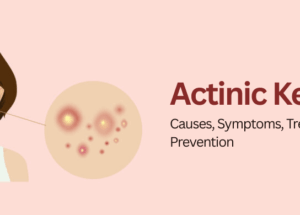
Actinic keratosis (solar keratosis) is a skin disorder caused by long-term exposure to UV light, leading to rough, scaly patches. These lesions typically affect people over the age of 40 and develop on sun-exposed areas such as the face, lips, ears, forearms, scalp, neck, and hands. Even though AK is not lethal, it is classified as precancerous and has a 5-10% probability of progressing to squamous cell carcinoma if not treated. Shielding the skin from UV radiation helps prevent actinic keratosis, while early detection and treatment are vital to avoid complications.
Actinic keratosis (AK) is the most common type of skin precancer. The major cause is prolonged exposure to UV light from the sun or tanning beds. Even short-term, repeated exposure can lead to skin damage.
Who Is at Risk for Actinic Keratosis?
- Individuals with blue, green, or grey eyes, fair skin, and red or blonde hair.
- Those who have already endured severe or frequent sunburns.
- Senior citizens who are older than 40.
- Individuals with suppressed immune systems from conditions like cancer, HIV/AIDS, or organ transplants.
- Individuals with rare UV-sensitive illnesses, such as xeroderma pigmentosum or albinism.
- People who work outdoors.
Although everyone exposed to UV radiation without sufficient protection can develop AK, the risk can be reduced by using sunscreen and protective clothing.
Causes
The primary cause of actinic keratosis is repeated or prolonged exposure to UV light from tanning beds or the sun. Rough, precancerous patches are caused by UV radiation damage to keratinocytes, the skin’s outermost cells.
Symptoms
AK’s earliest signs are typically rough, raised pimples on sun-exposed areas of the face, scalp, neck, hands, forearms, and lips. Essential qualities include:
- Texture: Scaly, dry, or rough regions that are usually smaller than 1 inch (2.5 cm).
- Red, brown, pink, grey, or the same colour as the skin, sometimes with a brown or yellow crust.
- Patches that are flat to slightly raised and resemble horns or warts.
- Additional symptoms may include burning, itching, pain, crusting, or bleeding.
- Lip symptoms: Actinic cheilitis symptoms may include dryness, color loss, scaly patches, or cracking.
Lesions grow progressively over time in areas that are often exposed to UV light. People typically get several sore, or prickly sores. Early detection and treatment are necessary to prevent the development of skin cancer.
Treatment
Doctors usually remove actinic keratosis (AK) because it can turn into skin cancer. Treatment depends on how many spots you have and where they are.
Common office treatments include:
- Cryotherapy: Freezing the spot with liquid nitrogen so damaged skin peels off.
- Curettage: Scraping away the damaged skin, sometimes using heat to destroy remaining cells.
- Laser therapy: Using focused light to remove abnormal skin.
- Photodynamic therapy: Applying a light-sensitive cream and using special light to destroy damaged cells.
- Chemical peel: Removing the top damaged skin layer so healthy skin can grow.
- Surgical excision: Cutting out the spot after numbing the area.
Medicated creams or gels may be prescribed for several weeks if you have multiple spots. These treatments destroy abnormal cells or help your immune system clear them.
Skin may become red, peel, or feel irritated during treatment. Regular skin checkups are important because AKs can return.
Prevention
- Limit sun exposure, especially between 10 a.m. and 2 p.m., when UV rays are strongest.
- Wear broad-spectrum sunscreen with a 30 SPF or more and reapply often.
- Put on sunglasses, caps, and protective gear.
- Avoid tanning beds.
- Check your skin periodically for new or changing growths, and get medical attention if necessary.
The majority of Actinic Keratosis is curable and treatable, but regular skin examinations are required to prevent recurrence and the development of malignancy.
Complications
The main concern with actinic keratosis (AK) is the risk of skin cancer. If not treated, some AK spots can turn into squamous cell carcinoma (SCC). This type of cancer is usually not life-threatening when found and treated early, but early care is important.
The risk is higher in people who have many AK spots. Changes such as a spot becoming thick, painful, ulcerated, or growing quickly can be warning signs that it may be turning into skin cancer.
AKs also show that the skin has had a lot of sun damage. Because of this, people with AKs have a higher chance of developing other types of skin cancer, including basal cell carcinoma, melanoma, and some rare skin cancers.
Regular skin checks help find problems early and reduce the risk of serious complications.
When Should I See My Healthcare Provider?
Immediate treatment of actinic keratosis lowers the risk of skin cancer. You should notify your doctor if you notice:
- Skin that is itchy, stinging, blistering, or bleeding.
- Horn-like growths.
- patches of rough, raised, or red skin.
Actinic keratosis is a common yet preventable skin condition that highlights the risks of prolonged sun exposure. Although it is not life-threatening right away, the chance that it will advance to skin cancer highlights the significance of remaining attentive. You can significantly reduce your risk by applying sunscreen, wearing protective clothing, and steering clear of tanning beds. If you notice any unusual or lasting skin changes, consult a dermatologist promptly for timely treatment and improved outcomes. You can protect your skin’s health and lower the risk of actinic keratosis by focusing on prevention and routine skin exams.
Frequently Asked Questions
1. How long does it take for actinic keratosis to go away?
Actinic keratoses (AKs) might take up to three months to resolve following therapy, depending on their size and quantity. Once the AKs have subsided, you will need to visit your doctor once or twice a year for a checkup. If you have a weakened immune system and are more vulnerable to AKs, you may need to see your dermatologist four to six times per year.
2. What is the outlook for people with actinic keratosis?
The majority of actinic keratoses (AKs) are treated and vanish. Skin cancer does not develop in around 90% of patients with actinic keratosis. However, AKs were the primary diagnosis in the vast majority of squamous cell carcinoma cases. If you suspect an AK, you must consult your healthcare practitioner right away.
3. Does actinic keratosis return after treatment?
Actinic Keratosis can return after treatment if sun exposure is not managed.